
By Bex Hadfield (u7522737), Word Count: 500
A day of work experience sampling and recording water bugs to measure the water quality of freshwater rivers in the ACT and upper Murrumbidgee catchment area. This is part of long-term citizen-science research project by Waterwatch ACT.
Water bugs to water quality: An indicator species
Our waterways are the world’s unsung heroes of biodiversity. Not only do plants and birds depend on freshwater ecosystems to survive, but so do we. The health of such waterways directly and indirectly impacts all the species relying on them, and fortunately there is something that tells us exactly how healthy the freshwater ecosystem is…the water bug.
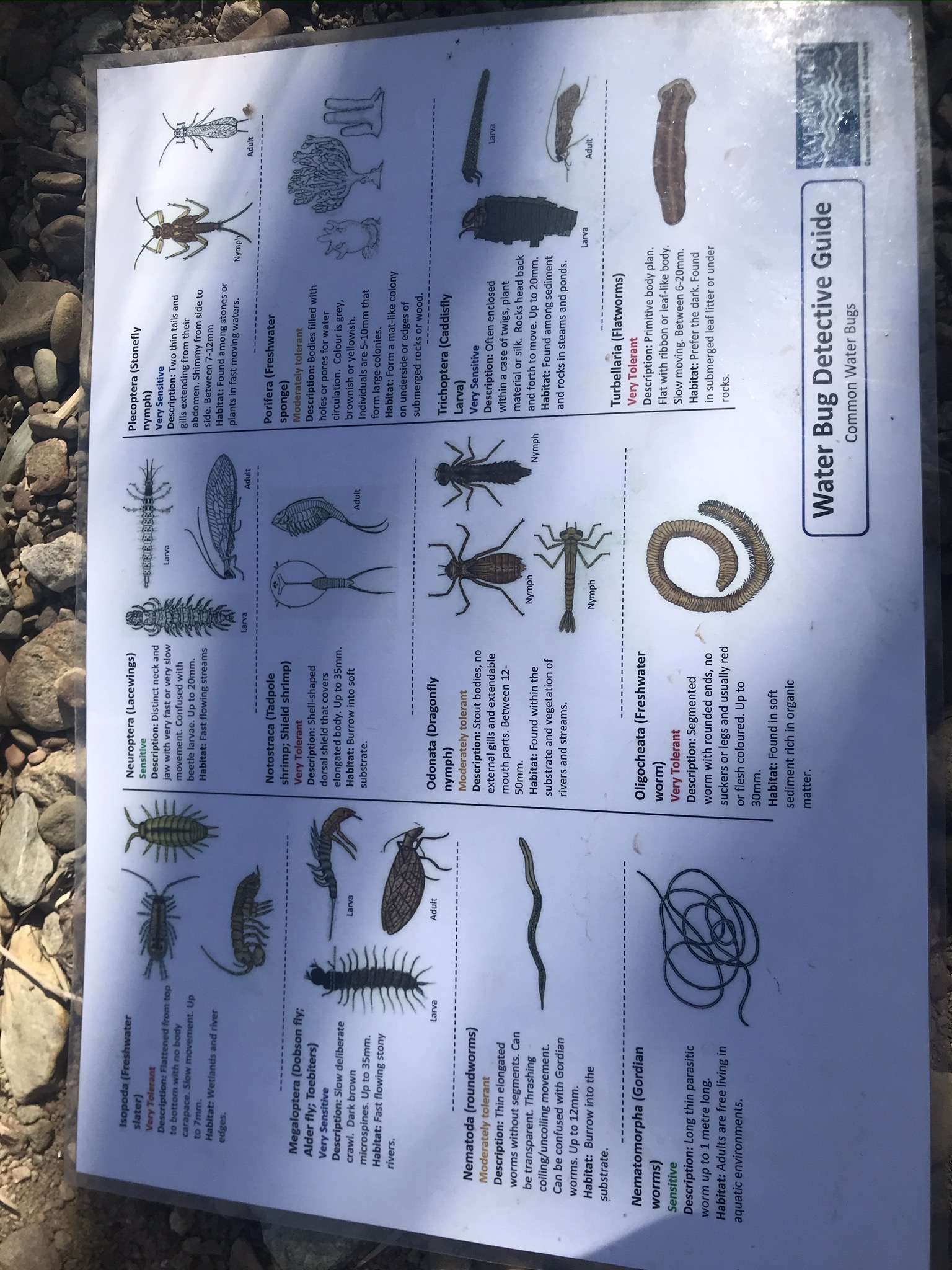
These water bugs are aquatic macroinvertebrates – small creatures that can be seen with the naked eye and have varying sensitivity to environmental changes. Ranging from ‘Very Tolerant’ to ‘Very Sensitive’, these water bugs (shown in Figure 1 and Figure 2) tell us how healthy a section of a river is, making them a useful indicator species for pollution in freshwater.

Quality over quantity? Rather quantity over quality
Healthy waterways positively correlate with high biodiversity and there are three common ‘Very Sensitive’ water bugs that are of most use when determining the health of freshwater: Trichoptera (Caddisfly Larva), Plecoptera (Stonefly nymph) and Ephemeroptera (Mayflies). A low abundance indicates to us that there has been a wave of pollution through a section of the river causing these highly sensitive creatures to move away or be killed. On the flip side, a high abundance and diversity of these water bugs tells us that the stretch of freshwater being sampled is healthy and has favourable stable conditions.
Anyone can be involved! A citizen-science approach collecting data
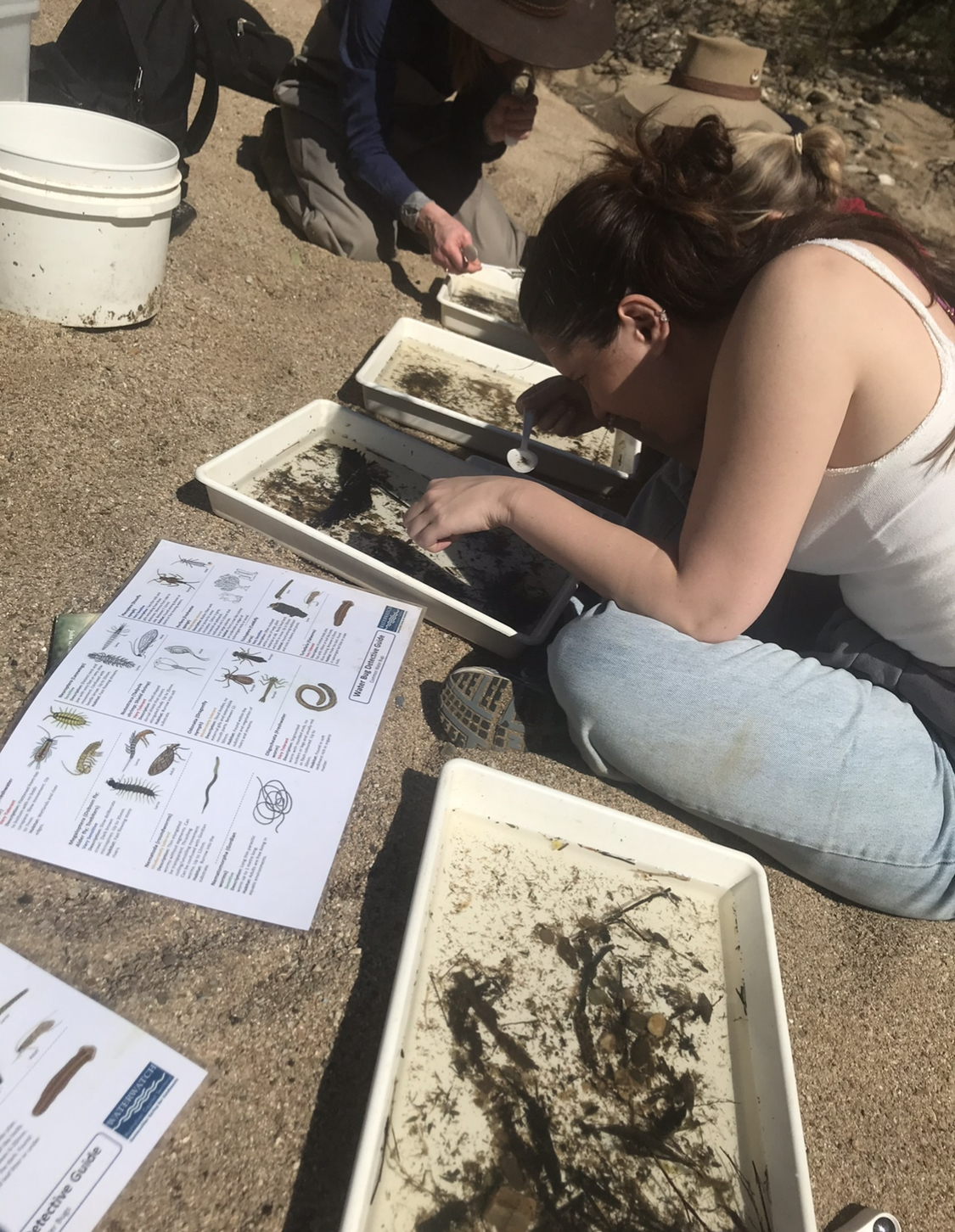
Waterwatch ACT was generous enough to let me to spend a day with them sampling water bugs from different sections of waterways in the ACT and upper Murrumbidgee catchment area. I met citizen scientists who help collect data in their local area as well as learn how to catch and record the data on water bugs myself. The sweep sampling method (Figure 3) is an easy and accessible way of collecting water bugs from a river.
Once collected in the net, pour the suspended material into a (white) tray along with water and use an identification card (such as the ‘Water Bug Detective Guide’ shown in Figure 1 and in Figure 2) to detect the water bugs present.

How is the information used?
Waterwatch ACT collects data each year from over 200 citizen-scientists (Figure 4) and summarised into report cards for each section of river. These are then combined into the annual Catchment Health Indicator Program (CHIP) report. The published CHIP report is used as a communication tool to inform policymakers regarding biodiversity, water resource and water protection throughout the ACT and upper Murrumbidgee catchment area.
Acknowledgements
Thank you to Woo O’Reilly for taking the time out of her busy schedule to facilitate this work experience through Waterwatch ACT
I would also like to acknowledge the Traditional Custodians of the land on which I carried out my research, and pay my respect to Elders past, present and emerging.
References
All images: Hadfield, Bex, 20 September 2022. JPG.

 Biodiversity Conservation