
u7278791, 509 words

Eucalyptus blakelyi is running out of time.
We are running out of time.
Freepik (2022). Beautiful eucalyptus arrangement. Available at: https://www.freepik.com/free-photo/beautiful-eucalyptus-arrangement_27589004.htm#query=eucalyptus%20blakelyi&position=4&from_view=search&track=ais [Accessed 20 Oct. 2022].
E. blakelyi, is in danger of becoming extinct.
So what? It is just one species, right?
Wrong.
E. blakelyi is part of a biodiverse landscape; an ecosystem of interlocking links that rely on each other to survive. Biodiversity is thus integral to ecosystems and is proven to benefit human wellbeing. Many species depend on E. blakelyi for survival in the form of shelter, food and other resources (unpublished). Therefore, not only E. blakelyi would suffer if it were to die out.
In recent years, the condition and quantity of E. blakelyi has diminished drastically (unpublished). This leads to the reduction of quality, resilience and survivability of entire ecosystems that E. blakelyi are a part of. The rate at which this is happening is increasing, and soon it will be too late to reverse the damages (unpublished).

![Freepik (2022). Digital screen with environment day. Available at: https://www.freepik.com/free-photo/digital-screen-with-environment-day_12976397.htm#query=biodiversity&position=25&from_view=search&track=sph [Accessed 20 Oct. 2022].](https://biodiversityconservationblog.com/wp-content/uploads/2022/10/digital-screen-with-environment-day_23-2148884835.webp)
(Left) Freepik (2022). Big tree and blue sky. Available at: https://www.freepik.com/free-photo/big-tree-blue-sky_5016767.htm#query=eucalyptus%20blakelyi%20landscape%20biodiversity&position=11&from_view=search&track=ais [Accessed 20 Oct. 2022].
(Right) Freepik (2022). Digital screen with environment day. Available at: https://www.freepik.com/free-photo/digital-screen-with-environment-day_12976397.htm#query=biodiversity&position=25&from_view=search&track=sph [Accessed 20 Oct. 2022].
To prevent this from happening, we have to understand the root of the problem.
While nitrogen is integral to the survival of flora and fauna, too much can be an issue. Increased levels of it in the soil result in E. blakelyi’s leaves being highly nitrous. This is many herbivorous insects’ ideal food source. The consequence of this is that the tree is subject to increased herbivory and insect attack. This inevitably leads to dieback, the slow killing of a tree.
This is a widespread issue for E. blakelyi; it is in serious danger of extinction.

Freepik (2022). Flat lay hands with soil and copy space. Available at: https://www.freepik.com/free-photo/flat-lay-hands-with-soil-copy-space_6403153.htm#query=soil&position=6&from_view=search&track=sph [Accessed 20 Oct. 2022]. 
Freepik (2022). A swarm of ants on a green leaf nature background close up macro photography premium photo. Available at: https://www.freepik.com/premium-photo/swarm-ants-green-leaf-nature-background-close-up-macro-photography-premium-photo_29386682.htm#query=insects%20leaves%20swarm&position=31&from_view=search&track=sph [Accessed 20 Oct. 2022]. 
Freepik (2022). Dead tree. Available at: https://www.freepik.com/premium-photo/city-cehegin-murcia-spain_19703617.htm#query=eucalyptus%20tree%20dying&position=12&from_view=search&track=ais [Accessed 20 Oct. 2022].
What can be done?
First, some background… Increased microbial population in soil decreases the nitrogen content via consumption. Decreased nitrogen means the E. blakelyi leaves are less susceptible to insect attack and thus dieback and death.
I got involved with The ParkCare Initiative in the ACT to address this. There are three sites for studying in Canberra; Mulanggari woodlands, Redhill and Farrer Ridge. This Ranger Assist program focuses on research that encourages microbial activity to reduce nitrogen content and dieback. Carbohydrates, such as mulch and sugar, can be used to provide sustenance for microbes and promote their growth. This program is part of a bigger research study that aims to determine whether mulch, sugar or a combination of both increases microbial population (and thus decreases nitrogen content) best (unpublished).
Several E. blakelyi of varying levels of health, due to dieback, were selected to investigate. Their response to different carbohydrate treatments will be explored over five years to determine what plan of action can protect the species.
This could be the start of the end of E. blakelyi dieback issues.
Research is being conducted all over the southeast coast of Australia just like in Canberra, racing to save E. blakelyi.
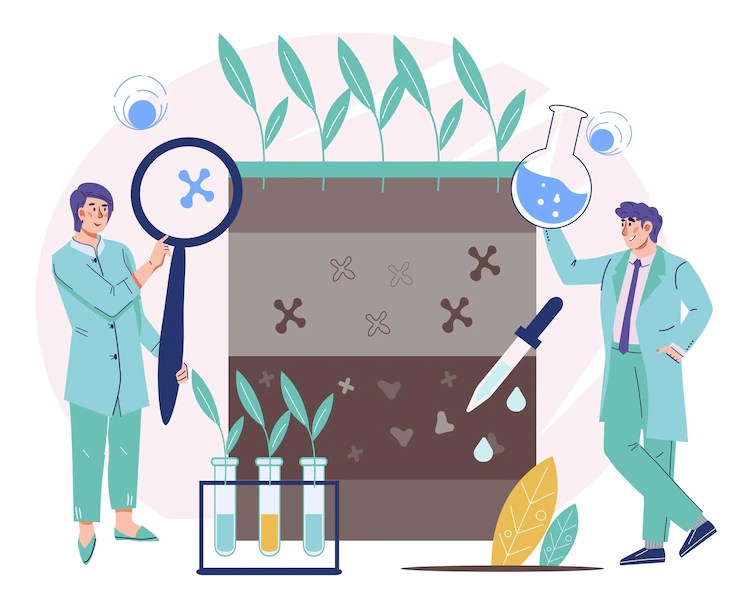
Freepik (2022). Soil analysis and land pollution control with agronomy and ecology specialists vector. Available at: https://www.freepik.com/premium-vector/soil-analysis-land-pollution-control-with-agronomy-ecology-specialists-vector_27149940.htm#query=microbes%20soil&position=5&from_view=search&track=sph [Accessed 20 Oct. 2022].
Except it is not just about E. blakelyi. This research could save entire ecosystems from collapse.
It is a volunteer-based program that needs support, however. It cannot be done alone. If you have time, get involved via the ACT ParkCare!
Eucalyptus blakelyi is running out of time.
We are running out of time.
Get involved!

 Biodiversity Conservation