
by Matilda Needle (u6664597)
With all this talk of climate change and greenhouse gas emissions it can be overwhelming to think anything we do on an individual level will make a difference. I try to limit waste and compost, but it can be disheartening at the supermarket when everything is packaged in plastic. It is difficult to see the difference our little choices make if any at all.
After volunteering with Park Care in ACT, I was able to see a physical impact that I was improving habitat for invertebrates, more than any other effort I make to limit my impact. Park Care offer a range of opportunities to get your hands dirty and become involved in biodiversity conservation. Climate change is impacting habitat for native species by changing the weather systems that impact Australia.
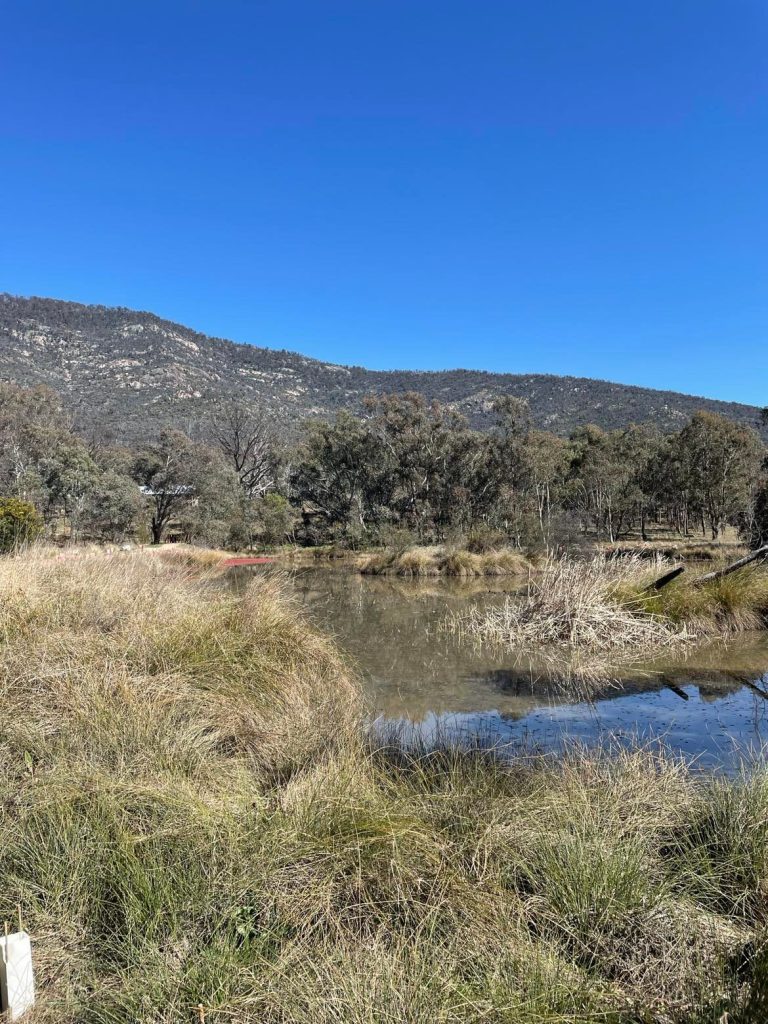
Wetlands at Namadgi Visitor Centre
Coleman et al. (2021, https://pubmed.ncbi.nlm.nih.gov/34854175/ ) highlights that climate change, including long-term warming, is a significant threat to biodiversity. A topical example is the Pygmy Possum (Burramys parvus), which is currently becoming endangered because the Bogong Moth (Agrotis infusa), it’s primary food source, relies on a cold climate and will have lower survival rates in the warmer climate in alpine areas in Kosciusko (Gibson et al, 2018, CSIRO PUBLISHING | Wildlife Research). These changes impact fauna and flora across Australia. While it may be too difficult to stop climate change altogether, we can help protect and improve habitat for existing species in our local area and this is where Park Care ACT come in.
Volunteering Experience
I went on a Park Ranger Assist with ACT Care and improved habitat surrounding the wetlands at the Namadgi Visitor Centre. At first it seemed as though we were just moving rocks to the side of the wetlands but as I spoke to our Ranger Chris Evans, the benefits seemed endless. The rocks provide habitats for all sorts of invertebrates including lizards, frogs, and other small mammals. The foliage and rocks protect insects and small mammals from birds, and creates a soil microclimate (Yates et al. 2000, Grazing effects on plant cover, soil and microclimate in fragmented woodlands in south-western Australia: Implications for restoration — the UWA Profiles and Research Repository). The rocks catch the silt when it floods and slows the flow of water to protect this area from soil degradation (Xiong et al. 2018, Effects of soil conservation techniques on water erosion control: A global analysis – PubMed (nih.gov)). Putting in this area provides a corridor between the wetland to the box-gum grassy woodland habitat, allowing it to operate as an ecological network between habitats (Whytock et al. 2017, The Society for Conservation Biology (wiley.com)).
All these benefits from a relatively small task of transferring rocks and foliage to the wetlands edge. Habitat creation provides substantial benefits to biodiversity in the region. The immediate impact and ability to revisit the area to see the natural vegetation contribute to the biodiversity makes the experience one of the most rewarding and I highly recommend it to anyone feeling disillusioned with climate change.
Word Count: 514


 Biodiversity Conservation