

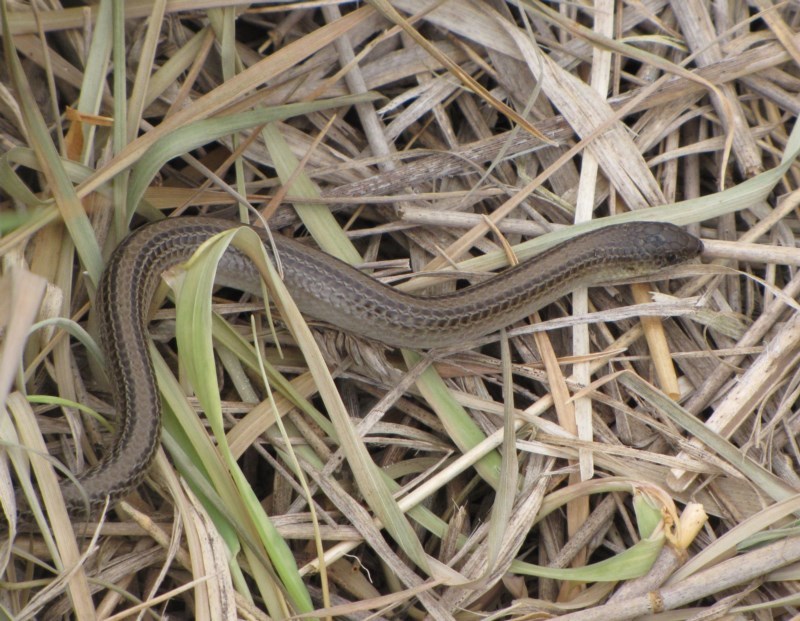


Here is the (adorable) Striped Legless Lizard (Delma impar), which roams in small populations across remnant grasslands in the ACT, Australia.
Current State
Currently, the Striped Legless Lizard is listed as Threatened in the ACT and nationally and as Endangered by the IUCN. Our lizard is one of 21 Delma species in Australia, and found throughout native temperate grassland fragments in the Canberra region as seen on the map. Their importance to grasslands is twofold, they are an integral part of the food web, managing insect populations and being prey for native birds and mammals. They are also an indicator species for grassland health.

Native grasslands are a heavily threatened ecosystem, 99.5% of this ecosystem has been altered since European invasion, and of what remains only 2-10% is in high ecological condition. The remaining populations are isolated from each other due to the expanse of roads and urban areas between remains.
How did this happen?
It is thought that the Striped Legless lizard was once present throughout the native temperate grasslands of New South Wales, Victoria, South Australia and the Australian Capital Territory. With European arrival, the land-use of these grasslands was altered. Grasslands were converted to cropping and pasture land, degrading them, and more recently increased urban development is the driver of grassland loss. Striped Legless Lizards prefer high density grass of ~20cm height, this habitat does not persist with grazing or urban development. So what’s being done?
The Project
What is the Project?
The volunteer project is part of the ongoing Striped Legless Lizard monitoring on biodiversity offset sites that was outlined in the Action Plan. I joined Emily and Emma (who exclusively referred to each other as Em) to turn tiles and tally these tiny noodles (technical term).
The monitoring is currently related to the various populations. Annually, each site is visited 5 separate times to count the lizards and compare them to previous years to establish if the populations are stable or not.
How do we do this?
Roof tiles. Roof tiles have been laid out in groups of 8, as shown below, each plot has three groups, and sites have between 3-8 plots. We lifted each tile, again shown below, and counted what was underneath. Sadly when I joined no Striped Legless Lizards were interested in the tiles but we did count multiple Delicate Skinks (Lampropholis delicata) and three chubby Spotted Marsh Frogs (Limnodynastes tasmaniensis). This data is saved into Survey123 to be analysed at the end of the season. My only quam, this data is not possible to find online so interested members of the public cannot keep up to date. Ensuring accountability in monitoring actions increased biodiversity outcomes so this is an important aspect that this project currently is not meeting.


So?
These lizards are often found in landscapes alongside the Golden Sun Moth (Synemon plana) and the Grassland Earless Dragon (Tympanocryptis pinguicolla). By monitoring them, and continuing to conserve their habitat, other species benefit and a critically threatened ecosystem persists a little longer.
Acknowledgements
I want to thank Emily Sutcliffe and Emma Carlson for taking me with them and answering all my questions. Thank you for your kindness and all the reptile related information I now know.
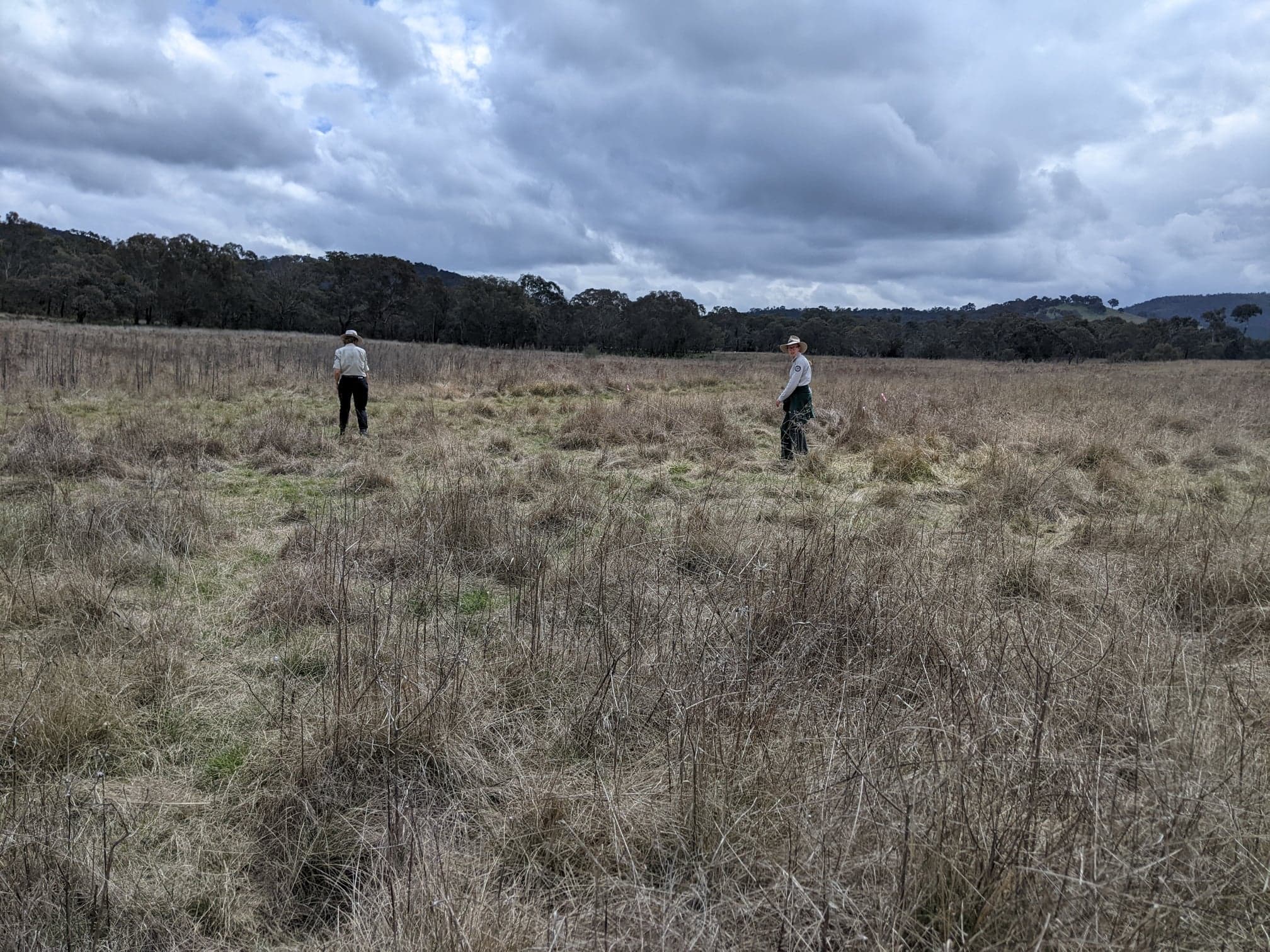
By P. Roebers, U6984090
509 Words

 Biodiversity Conservation