
Olivia Stansfield – U6939957
The gift that just keeps giving
The 2021 State of the Environment Report found that invasive species in Australia affected 82% of threatened taxa making it the most significant threatening process. In Australia, invasive species are estimated to have cost at least $389.59 billion since the 1960s. Eradication of invasive species has had success on smaller islands but is near impossible to achieve on mainland areas. Therefore, invasive species management has shifted from aiming for eradication to controlling populations, reducing spread into new ‘clean’ areas, and prioritising areas of higher value for eradication works.
“An invasive species is a species occurring as a result of human activities, beyond its accepted normal distribution and which threatens valued environmental, agricultural or other social resources by the damage it causes.”
Invasive plant species are called weeds and they cause significant problems for biodiversity, agricultural production and in aquatic ecosystems. Approximately 2,800 terrestrial plant species have naturalised in Australia and 10% of these are now considered invasive plants. These invasive species dominate landscapes and significantly reduce native ground cover biodiversity.
What the Ginninderry Conservation Trust is doing
The Ginninderry Conservation Trust is the organisation that manages the Ginninderry Conservation Corridor, see Figure 1. Still a bit lost? Ginninderry is a new suburban development being developed as a highly sustainable, Green Star accredited community and will extend across the ACT border into NSW on the western edge of the ACT. The corridor showcases science based biodiversity restoration, innovative community engagement and management, opportunities for sustainable recreation and active learning opportunities.

Figure 1: Looking along the Murrumbidgee River from Shephards Lookout over the Ginninderry Conservation Corridor towards the ACT/NSW Border (Stansfield, 2022)
Like most other landscapes in Australia, the corridor has many exotic species, including invasive weed species. Our target for our morning of work experience: Verbascum thapsus, common name Mullein, see Figure 2. This biennial species is a medium to high risk weed in the corridor. It likes areas with bare dirt where it can create a large monoculture plot, outcompeting any native ground cover species, typically in grasslands, or grassy woodlands. A single plant can produce greater than 100,000 seeds and the seedbank viability is greater than 100 years.
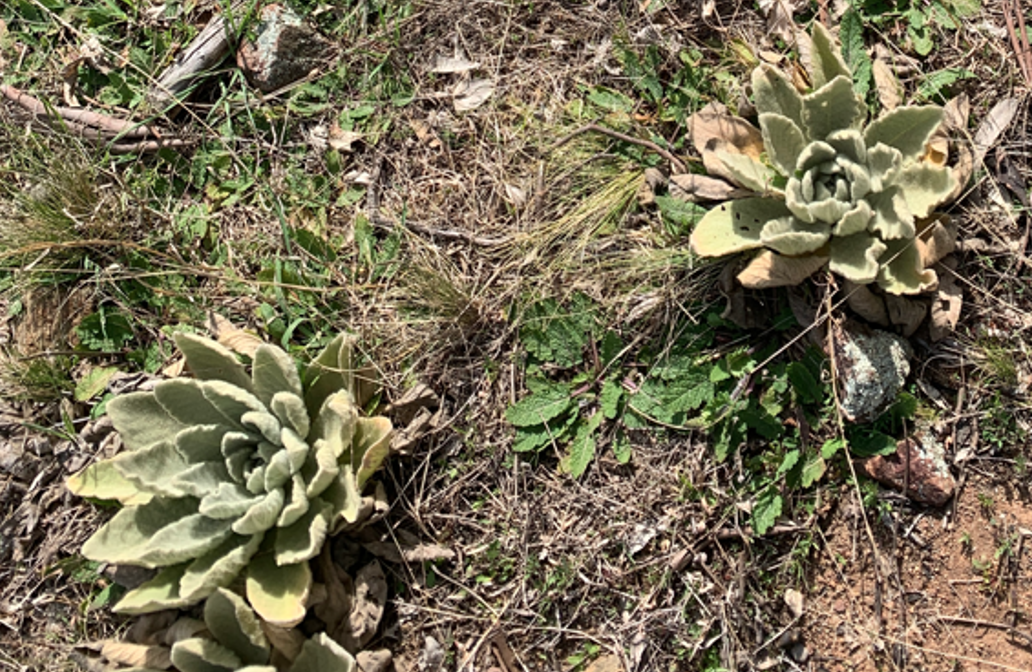
Figure 2: Verbascum thapsus within the Ginninderry Conservation Corridor (Stansfield, 2022).
Many hands make light work
We removed the weed species manually using small mattock tools so that the taproot was removed with the plants. The plants are then turned upside down and laid on the ground, so their roots are facing up towards the sun to dry out and die. Considering the large size of the conservation corridor the Trust works on small areas at a time to try and control the species. We worked in this area as it was part of a critically endangered ecological community of Box-Gum Woodland and is known habitat for the vulnerable Pink-Tailed Worm Lizard. Generally, this is an extremely time-consuming task considering how prevalent the species was in the area we were in, but a bigger group made it significantly easier, see Figure 3. However, for the Trust it is a never-ending job.

Figure 3: Before and after photo of area of Box-Gum Woodland ecological community where high numbers of Verbascum was present (Stansfield, 2022).
References
Belgeri, A., Bajwa, A. A., Shabbir, A., Navie, S., Vivian-Smith, G. & Adkins, S. 2020. Managing an invasive weed species, Parthenium hysterophoris, with suppressive plant species in Australian Grasslands. Plants, 9, 1587.
Bradshaw, C. J., Hoskins, A. J., Haubrock, P. J., Cuthbert, R. N., Diagne, C., Leroy, B., Andrews, L., Page, B., Cassey, P. & Sheppard, A. W. 2021. Detailed assessment of the reported economic costs of invasive species in Australia. NeoBiota, 67, 511-550.
Department of Climate Change, Energy, the Environment and Water. 2021. Australia State of the Environment. Invasive Species and Range Shifts.
Department of Climate Change, Energy, the Environment and Water. 2022a. Invasive Species [Online]. Available: https://www.dcceew.gov.au/environment/invasive-species [Accessed September 2022]
Department of Climate Change, Energy, the Environment and Water. 2022b. Weeds in Australia [Online]. Available: https://dcceew.gov.au/environment/invasive-species/weeds [Accessed September 2022]
Eland, E. 2021. Weed Management Plan Ginninderry Conservation Corridor
Moon, K., Blackman, D. A. & Brewer, T. D. 2015. Understanding and integrating knowledge to improve invasive species management. Biological Invasions, 17, 2675-2689.
Stansfield, O. 2022. ENVS3039 Biodiversity Conservation Work Experience
Starr, F., Starr, K. & Loope, L. 2003. Verbascum thapsus.
TRC Tourism Ltd. 2018. Ginninderry Conservation Corridor Management Plan 2018-2023. Weeds Australia. 2021. Verbascum thapsus L. [Online]. Available: https://profiles.ala.org.au/opus/weeds-australia/progile/Verbascum%20thapsus [Accessed September 2022].

 Biodiversity Conservation