
Grace Findlay – u7114453

Why did the chicken cross the road? I’m sure you know the answer, but perhaps we should also ask a more complex question: how could the chicken even cross the road if its habitat was fragmented?
Disconnected: the impact of habitat fragmentation
Severe habitat fragmentation leads to tiny habitat patches becoming isolated from each other with serious consequences for biodiversity. Due to land clearing, Yellow-Box Gum Grassy Woodland (YBGGW) is now considered Critically Endangered on a national scale with less than 5 percent of their original extent remaining. Subsequently, small native species have significantly declined in the tiny remnant patches that remain.
Creating corridors: the importance of connectivity
Establishing habitat corridors between remnant patches of a community is critical for maintaining species survival, thus maintaining ecosystem diversity. Evidence shows connectivity between habitats reduces population fragmentation and genetic inbreeding, improves bird and reptile abundance, and generates increased resilience to climate change as species move between habitats.

Our Bush Heritage Heroes
Restoration is key to improving the survival of YBGGW. Bush Heritage Australia (BHA) is a not-for-profit organisation that specialises in restoring degraded and neglected land. BHA does an excellent job at restoring habitat corridors within YBGGW remnants at Scottsdale Reserve (Bredbo, NSW), a 1,328 ha former sheep-farming property.

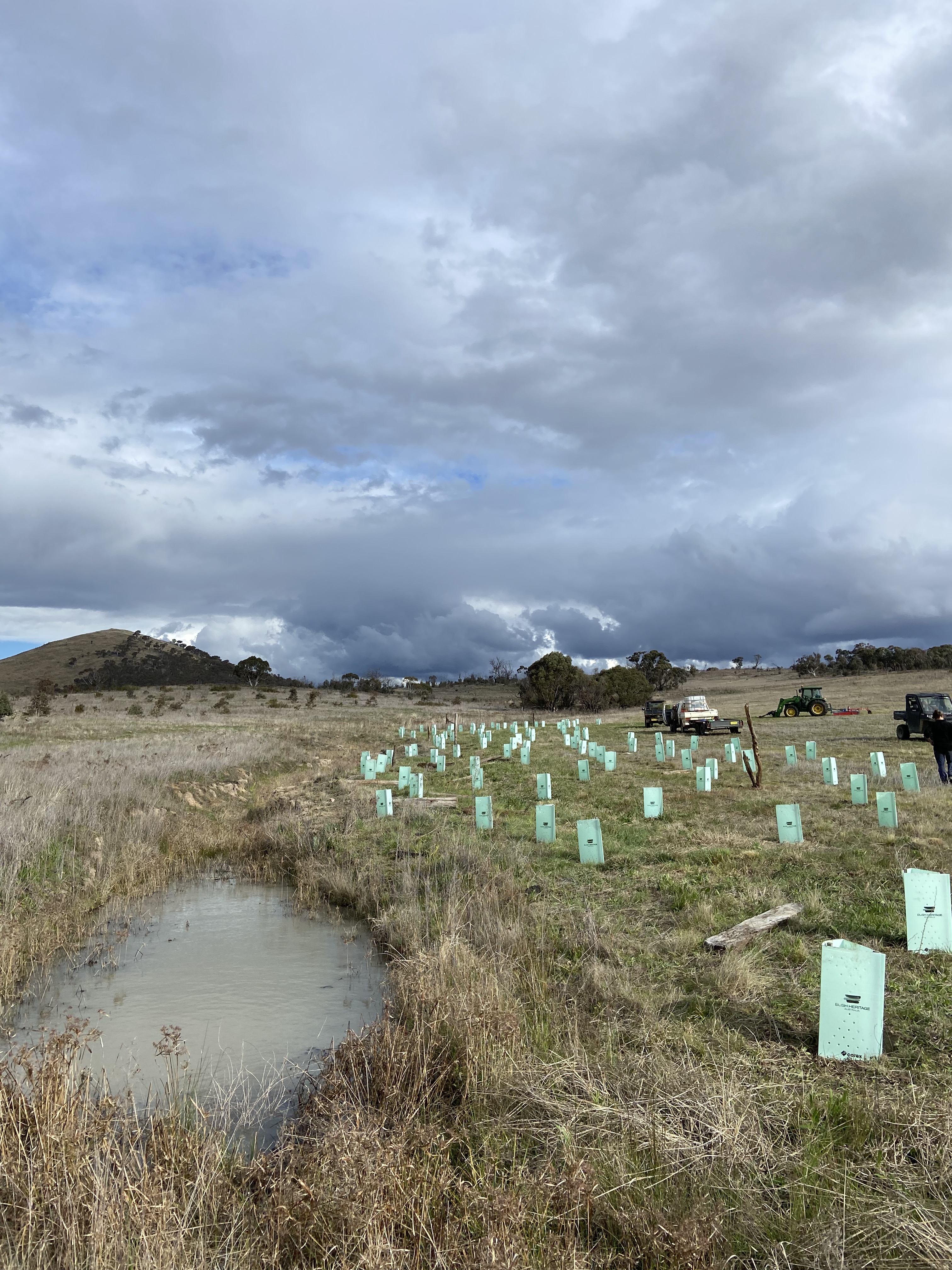
Our work experience at Scottsdale Reserve involved planting a variety of native shrubs, trees and grasses along a riparian habitat to connect two remnant patches of YBGGW. In this way, we not only established connectivity between the patches but also restored a diversity of native plant species to the area, which will help stabilise erosion within the riparian bank and may even encourage the return of threatened species to the area (based on previous reptile surveys in YBGGW).
Wrapping up…
Whilst our work experience involved time in torrential rain, it was rewarding to know that we would create adequate and biodiverse habitat connectivity between YBGGW sites well into the future. So perhaps the chicken could have safely crossed the road if habitat connectivity was restored!
Thank you to Phil Palmer and Bush Heritage Australia for providing an engaging work experience.

Word Count: 498

 Biodiversity Conservation