
Jessica Kriticos (u7126966)
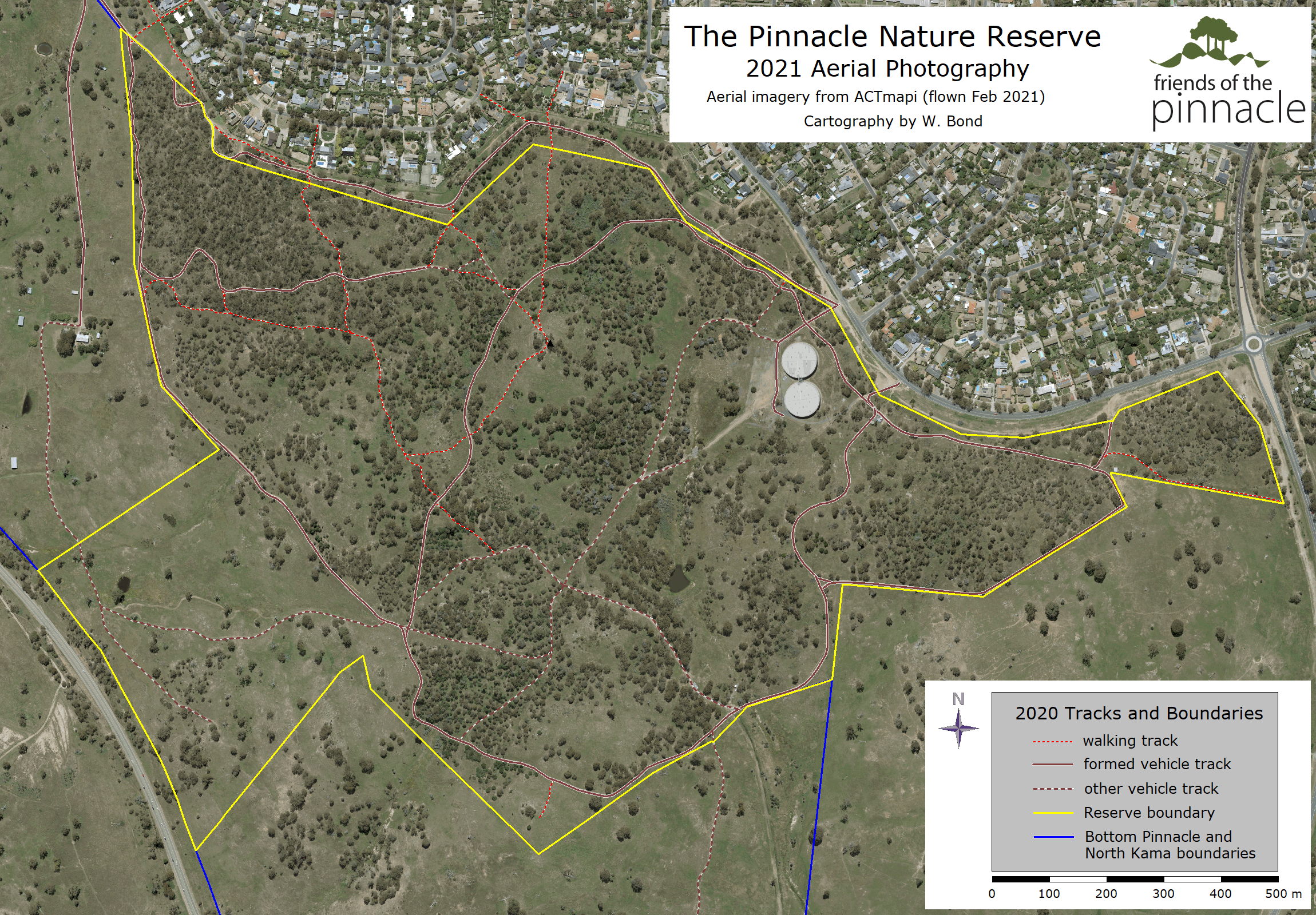
Running along the part of the upper western edge of Canberra, The Pinnacle Nature Reserve is a grassy woodland beloved by the residents of the neighbouring Belconnen suburbs. But this ecosystem hasn’t always been an idyllic spot for a bushland wander, and it bears traces of its previous near-decimation. The Pinnacle, as it is fondly known, was merely a patch of cleared grazing land until the late 1980s, when the overstorey was regenerated by mass plantings to the bush we know and love today. As a result, the understorey remains infested with agricultural weeds that require constant efforts to curtail.


Right: One of the first overstorey plantings at the Pinnacle Nature Reserve. Photo credits: Pinnacle Environment Group, 1990.
Why are weeds an issue?
Despite their ability to tolerate long droughts and our harsh summers, our grassy woodlands are surprisingly delicate ecosystems. Invasive agricultural weeds outcompete ground cover plants for nutrients, water and light, and are unpalatable to native herbivores such as our iconic Eastern Grey Kangaroos. Once they are dispersed through the grazing of livestock and the transport of their fodder, weeds reduce the stability and function of ecosystems. Increasing the biodiversity of our native understory and mid-storey plants in The Pinnacle is therefore contingent on weed control, although this is notoriously difficult once invasive plants become established.
What is being done to control them?
The Friends of the Pinnacle organisation (FOTPIN) is a local volunteer group dedicated to improving the ecological function of the Pinnacle Nature Reserve, with an especial focus on weed control. I was fortunate to participate in one of their bi-weekly manual grubbing parties, where we pulled up Mullein and Flaxleaf Fleabane from a patch of the Weetangera Paddock. To retain the nutrients held within the plants, FOTPIN pile the pulled weeds underneath large eucalypts, which has the added benefit of choking sheep sorrel by preventing it from photosynthesising. We also removed bags of weeds that had flowered, to remove the seeds from the Pinnacle.
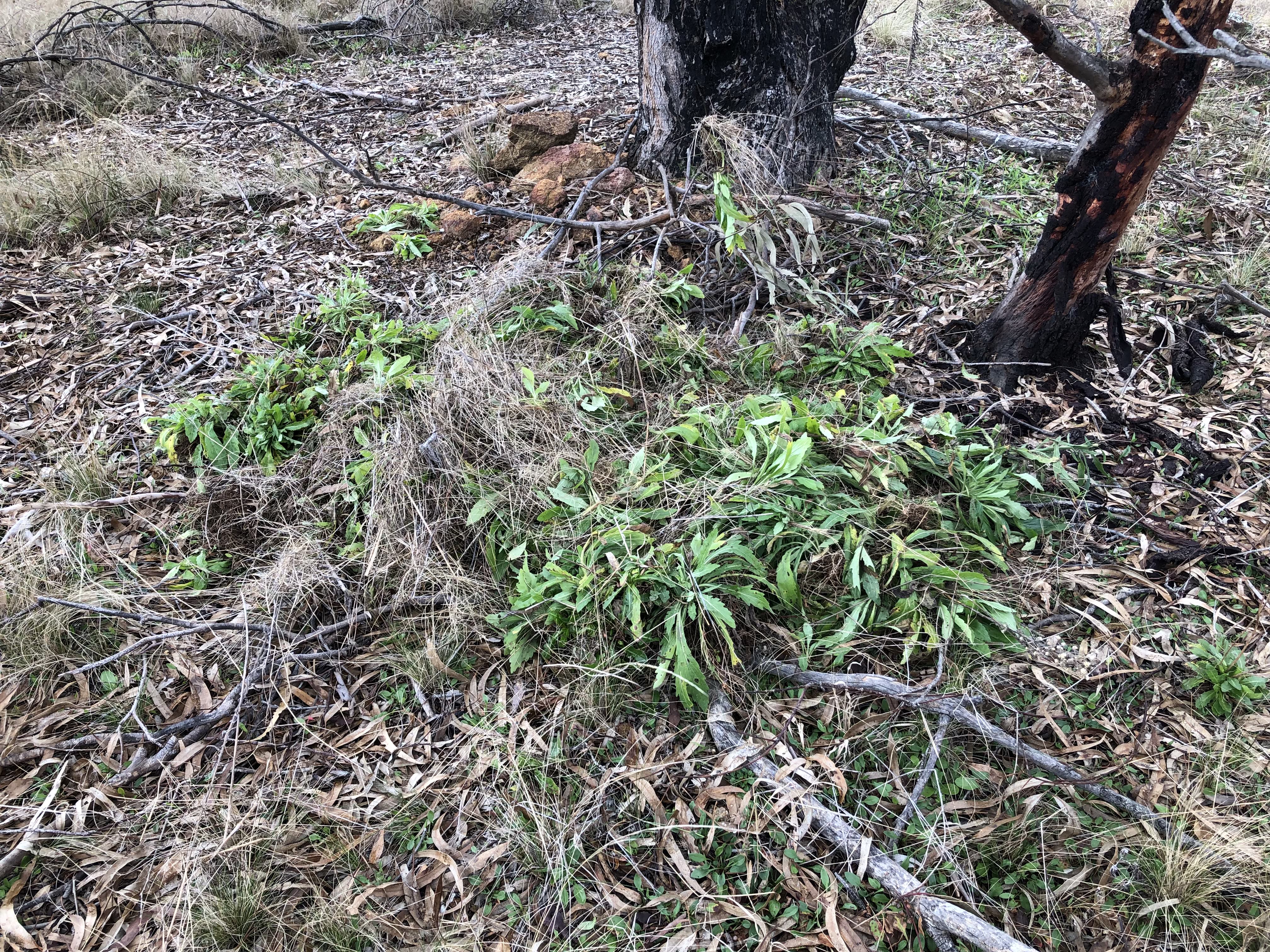

Right: Bag of flowered weeds removed from the Pinnacle to prevent seed dispersal. Photo credits: Jessica Kriticos, 14th August 2022
How does this improve biodiversity?
Weed control allows native plants to recover and revegetate previously-infested areas. Many organisms are dependent on herbs and grasses for sustenance and shelter, especially our often-overlooked invertebrates. Once patches have been cleared of weeds and revegetated with native understorey plants, they are much more resilient and less prone to re-invasions than the surrounding areas, with a higher species richness. Local species, including the delicate blush-pink paper daisies pictured below, thrive in these recolonised patches.
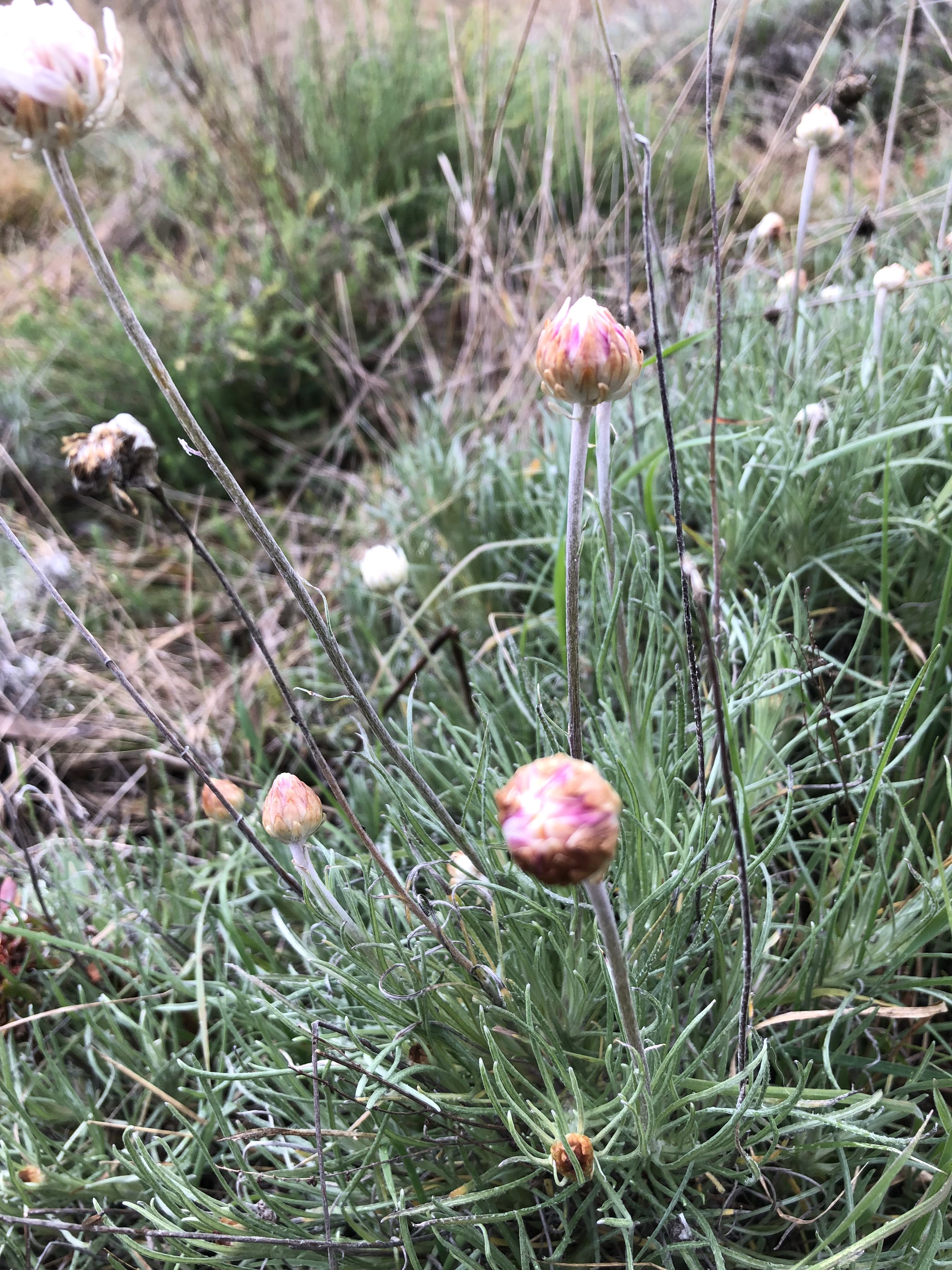
Photo credits: Jessica Kriticos, 14th August 2022.
Concluding remarks
While there is still a long way to go to improve the biodiversity and function of the understorey at the Pinnacle Nature Reserve, the efforts of the Friends of the Pinnacle are sincerely appreciated by the local community. They have reduced the abundance of multiple target weed species over the years, particularly the thorny issue of Sweet Briars, and in doing so have increased the abundance of our local native understorey grasses, herbs and forbs.
Many thanks to Len Taylor for sharing his immense knowledge and love for the Pinnacle while I volunteered with FOTPIN.

 Biodiversity Conservation

A great overview of why and how weed control is undertaken in our local reserves! Phil