By: Malin Andersson (u7523350)
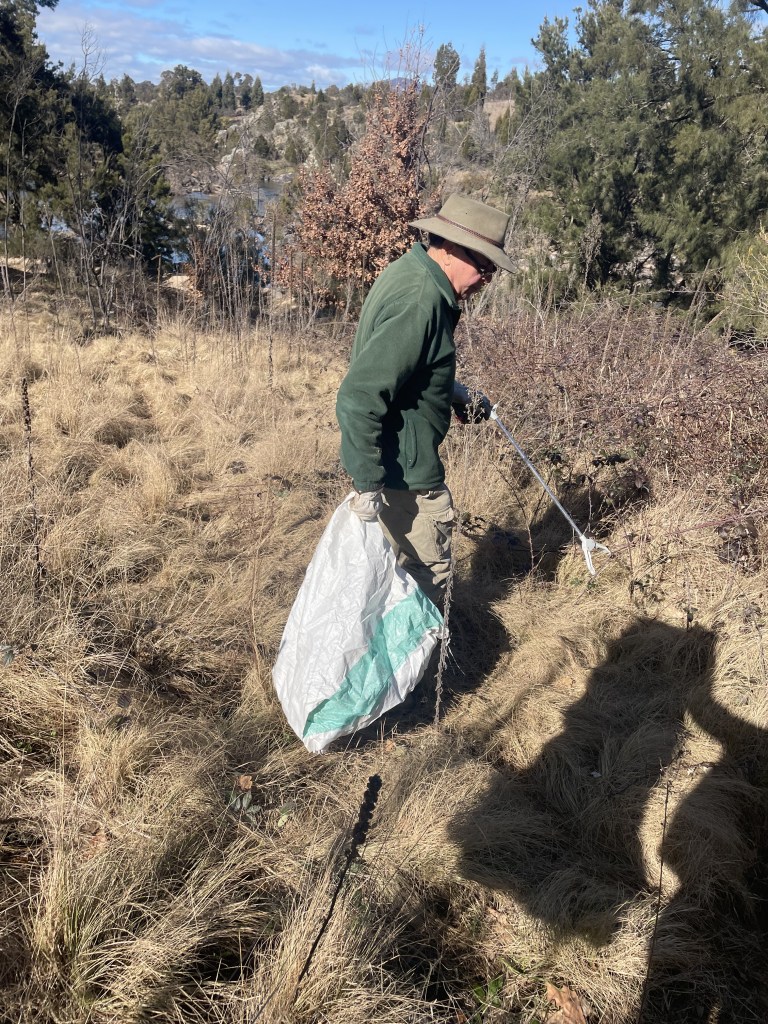
It was one of the first warm and sunny days of the semester and I arrived early to Pine Island Reserve. After standing in the sun for a few minutes I had managed to calm down, it was my first time driving in left-traffic so I had to take a moment to appreciate that I’ve made there in one piece. The other volunteers started rolling in and I quickly realized that I was going to be (1) the only girl, (2) the only non-retired person and (3) the only first-timer there. It turned out to be a very nice morning; we had coffee, talked about what brought us there and most importantly picked up litter.
In the southern parts of Canberra, on the banks of the Murrumbidgee River, is the popular Pine Island Reserve located. The reserve, created in 1980, is famous for its plantation of pine trees and is equipped with picnic areas, BBQ’s and toilettes. Due to its popularity and the nearby suburb Greenway Pine Island is prone to littering, causing not only a disturbance to the beautiful scenery but can also harm the nearby wildlife. What are the impacts of littering?

The impact littering and human activity has on Pine Island
Littering, mainly plastic debris, affects animals both physically and chemically. Microplastics can bind additives and pollutants which can affect reproductivity, immunity and protein production in both terrestrial and aquatic animals. Since Pine Island is right by the Murrumbidgee River the litter can easily enter the stream and effect the animals living there, for example by causing congestion from the animals accidentally consuming it. Studies show that the amount of litter in riverine areas is positively correlated to the nearby population density, suggesting that the Pine Island may be more exposed than reserves and national parks located in the outskirts of Canberra rather than close to suburbs. The disturbances caused by close by human activity also affect the biodiversity of a site for multiple reasons. One example is that people’s gardens often contain exotic species that may spread to the nearby nature, potentially competing out the native flora. At Pine Island reserve they have problems with blackberry bushes, which is one of the most widely spread invasive plant species in Australia. ParkCare organize activities to improve the natural environment on Pine Island. Who are they?

ParkCare Volunteering & conservation work being done at Pine Island
ParkCare is an initiative created by the ACT government. It has four different divisions focusing on different things. I volunteered for Ranger Assist, which is about helping rangers working for the ACT government with various tasks. It can be everything from picking up litter to helping with revegetation for erosion control to removing weeds.
ParkCare does more at Pine Island than just picking up litter. They’ve had big projects with planting pine trees (Pinus sp.), River red gum (Eucalyptus camaldulensis) and Messmate stringybark (Eucalyptus obliqua) by the riverside to (1) help prevent erosion in to the Murrumbidgee River and (2) to create understory vegetation in the landscape for habitat to the wildlife.

Conclusion
Initiatives like this allow people who might need a sense of community to meet like-minded people while also improving the natural environment around them. Picking up litter is a very straightforward task that quickly improves the environment for both animals and humans.

 Biodiversity Conservation