
Moss Thompson – u7119579
The Woods and Wetlands Trust has been facilitating an Echidna Sweep over two weekends annually at Mulligans Flat since 2016. Monitoring echidna populations is critical to ensuring the sanctuary remains a healthy natural ecosystem.
Ecosystem Engineering Echidnas
Short-Beaked Echidnas (Tachyglossus aculeatus) are classed as Least Concern by the IUCN, but influence the success of threatened species and ecosystems. Echidnas are important ecosystem engineers, and move 200 cubic metres of soil each year through burrowing. Bioturbation improves soil quality allowing seeds to germinate and creating better habitat for invertebrates.
Mulligans Flat
Conservation in protected areas is effective at protecting and monitoring threatened species, despite low ecosystem representation and size adequacy on broad scales. Mulligans Flat Woodland Sanctuary (MFWS) encompasses over 1250 hectares on the northern border of the ACT. The sanctuary was first established in 2004 and is the largest, most intact, contiguous area of the critically endangered Box-Gum Grassy Woodland in public ownership. Since the eradication of introduced predators, MFWS has also been an important experiment for research and studies into biodiversity conservation and the restoration of threatened species. This includes extensive monitoring as the predator-proof fence has effectively created an ‘island effect’ for many species, so we must ensure populations don’t increase or decrease rapidly.

The Project and Results
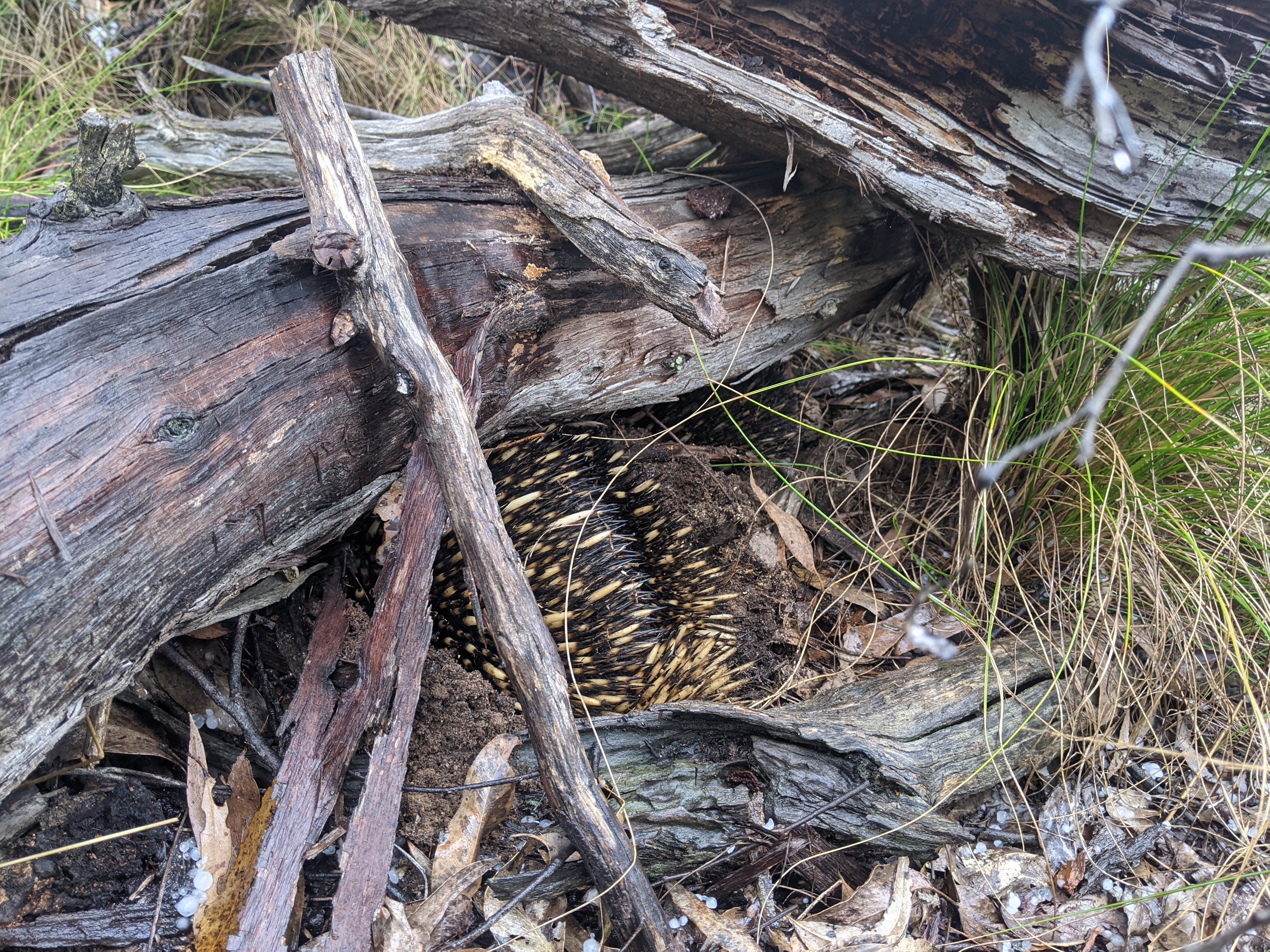
In the absence of predators including feral cats (Felis catus) and foxes (Vulpes vulpes), echidnas have been proliferating in MFWS. Monitoring is essential to maintain healthy echidna populations within MFWS and essential because of the ecosystem service they provide to the critically endangered habitat.
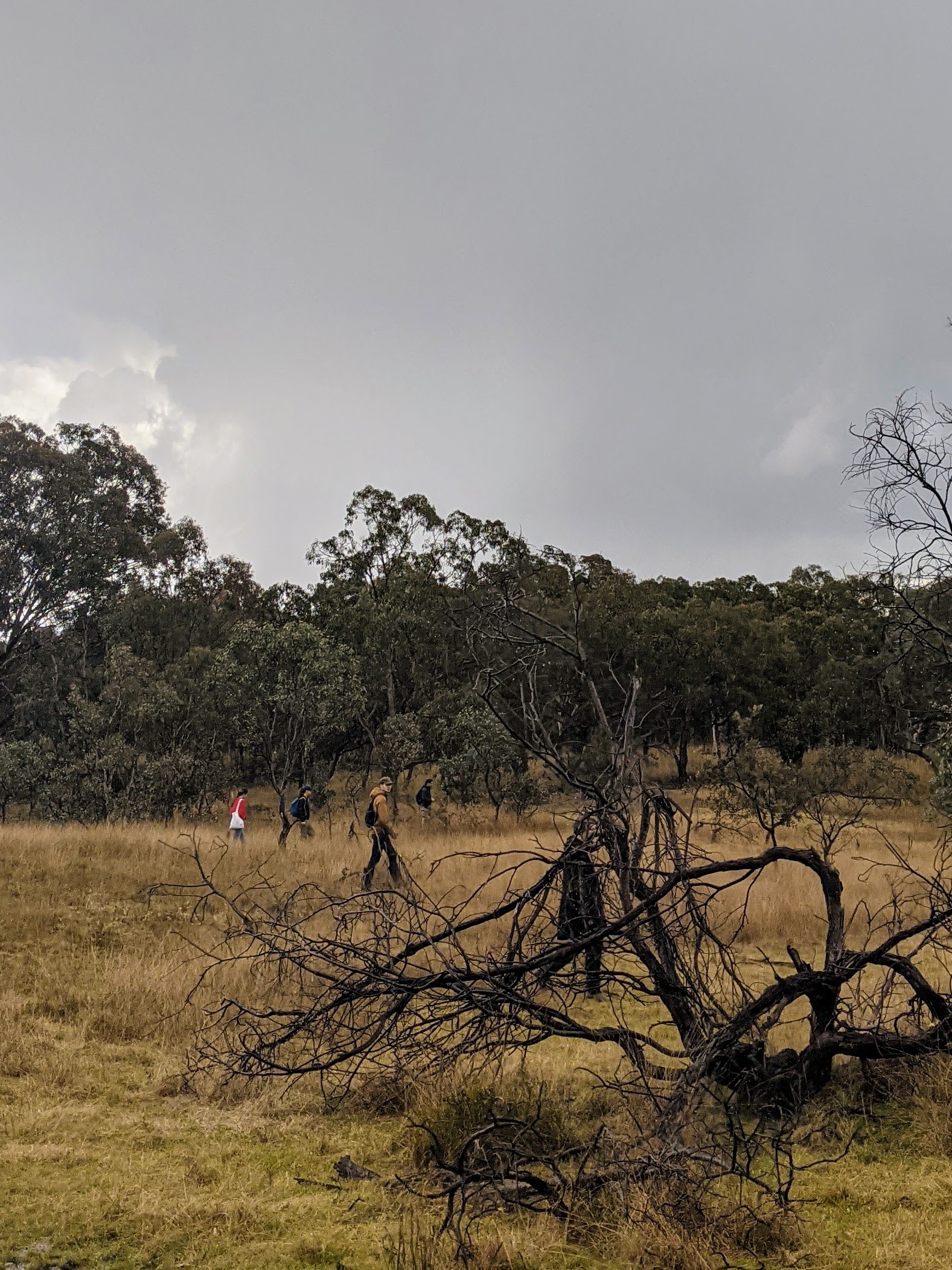
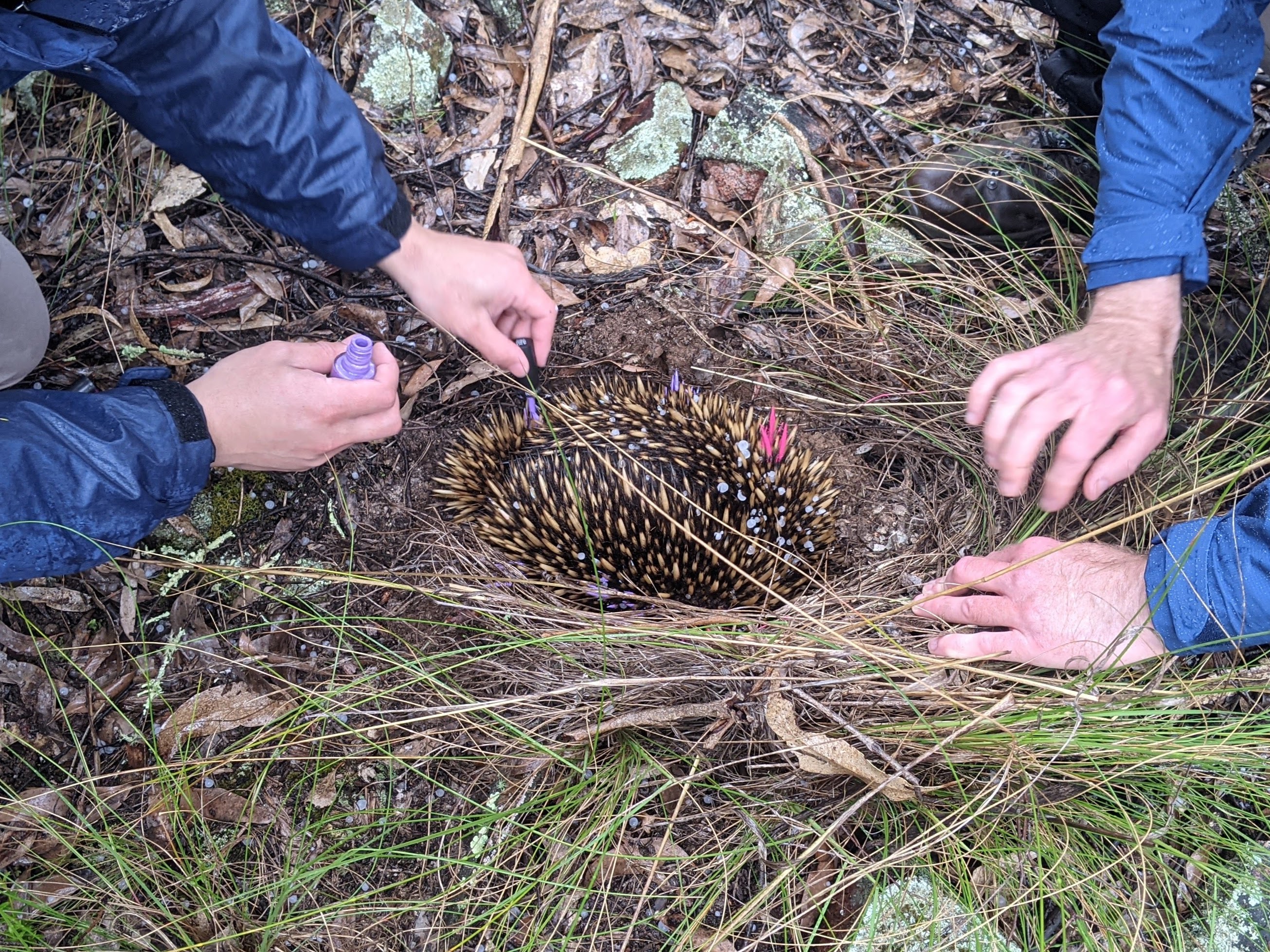
Every Spring around 50 volunteers participate in the Echidna Sweep over two weekends in 6 teams patrolling areas of MFWS in a transect to locate any Short-beaked Echidnas that could be found in the sanctuary. A capture-mark-recapture method is employed where in the first week, all echidnas found are counted and painted with a unique pattern of nail polish consisting of 6 coloured spots on spines. And in the second week, the same areas are searched and echidnas found that were counted in week one are marked with a frontal red spine and all new echidnas are marked with a unique colour combination. This allows for population estimate statistics to be conducted.
We found four unmarked echidnas in our area during week two and they were recorded as below. The number refers to the unique colour combination they were painted with.

Head Ecologist Millie Sutherland Saines notes that population counts can be biassed by environmental conditions. In wetter years, grass growth and ground biomass makes finding echidnas more difficult; echidnas are more likely to stay in burrows and are obscured by rain or fog during adverse weather conditions making population counts less accurate. Over recent years populations have been increasing, but data is skewed by recent wet years.
At the end of the day …
The engagement of the public in contributing to ongoing research at MFWS is making an essential contribution to Citizen Science in the ACT. This engages the community with research and enables the collection of more data.
If you want to get involved with next year’s Echidna Sweep find more information here: https://www.mulligansflat.org.au/volunteer.
Acknowledgements
Thank you to Millie Sutherland Saines for answering our questions and providing past data from the Echidna Sweeps.
WORD COUNT: 509

 Biodiversity Conservation