
Keri James 3080520
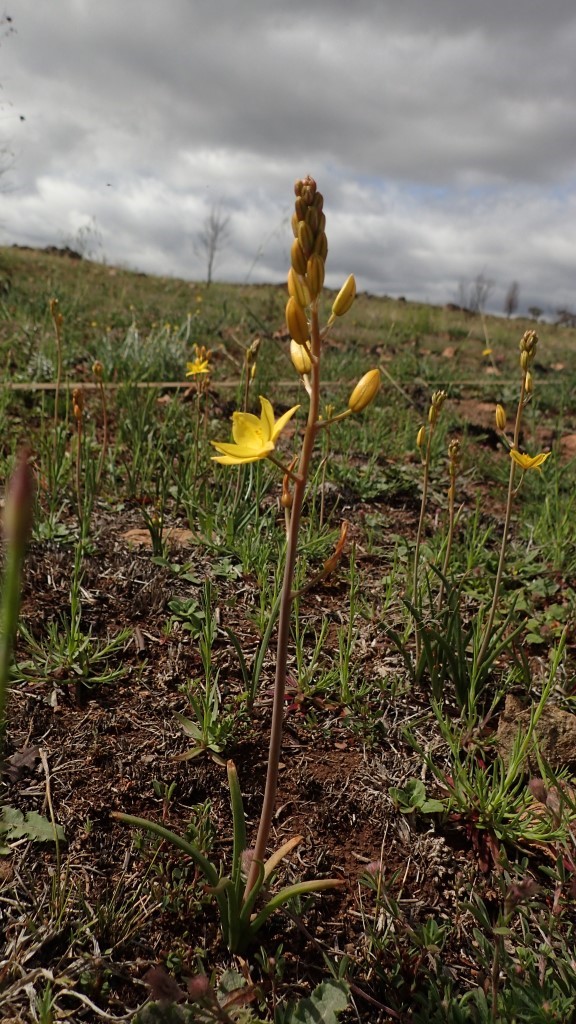

Native Forbs regenerating after fire at Scottsdale – Bulbine Lillies, Common Everlasting – October 2020 Photos David Freudenberger
The importance of Off Reserve Conservation – What is the Bush Heritage Fund?
Bush Heritage manages 36 reserves of 1.2 million hectares in Australia, as well as working in partnership with 14 different Aboriginal owners on another 10.1 million hectares of Country.

Bush Heritage reserves in Australia
As is the case for so many conservation initiatives in Australia, Bob Brown is part of this history too. He founded the Bush Heritage fund in 1990 when he bought two blocks of Tasmanian forest adjacent to World Heritage listed forests in order to save them from woodchipping.
Since then, he and others have bequeathed their own lands to the fund under ‘conservation covenants’, while also raising monies to purchase significant other places, such as endangered Cassowary rainforest habitat in the Wet Tropics World Heritage Area.
What are Conservation Covenants?
Given that so much biodiversity in the global capitalist world is now in private hands, conservation covenants are an effective way that individual land-owners can ensure that the biodiversity on their land is protected in perpetuity:
Philanthropists all around the world have been buying up biodiverse lands to save them from development. The billionaire founders of the clothing labels ‘north face’ and ‘esprit’ purchased 810,000 hectares of biodiverse South American land to become National Park.
Where is Scottsdale and why is it important?
Scottsdale lies south of Canberra near Bredbo in Ngunawal Country, and was established as a bush heritage site in 2006. It comprises 1328 hectares of the endangered ecological communities of box gum grassy woodland and temperate grassland, and is home to many rare and threatened birds, mammals, fish and reptiles:
Animals: Rosenberg’s Monitor (vulnerable in NSW), Speckled Warbler (vulnerable in NSW), Peregrine Falcon, Brown Treecreeper (vulnerable in NSW). Scottsdale also works with the Upper Murrumbidgee Demonstration Reach supporting the recovery of native fish in the river.
Plants: Currawang (spearwood), Curved Rice Flower, Button Wrinklewort, Silky Swainson-pea, and the Silver-leafed Mountain Gum (only 10 populations remaining).
Vegetation communities: Yellow-box grassy woodland (nationally critically endangered), Scribbly Gum-black Cypress-pine Forest, Tablelands Frost Hollow Grassy Woodlands, Southern Tablelands Natural Temperate Grassland (nationally endangered).
Bush Heritage collects ‘the best and the last’ of endangered ecosystems. Scottsdale was a controversial purchase as it had been cropped, grazed and cleared for decades. But as grassy biomes and woodlands have been heavily cleared for agriculture globally and in this country, it is an important addition. Less than 5% of Box Gum Grassy Woodlands survive in Australia, with some scientists like David Freudenberger predicting this percentage within Canberra to be at even less than 1%. Globally, grasslands are the world’s least protected and most threatened ecosystems. And they are actually as biodiverse as rainforests.
What’s going on at Scottsdale?
Hundreds of volunteers and organisations, including Greening Australia and Friends Of Grasslands, replant and restore yellow box woodlands. Scottsdale has a 100 year history of cropping, clearing, erosion and drought but Bush heritage aims to restore all woodland areas as well as increase native grasses on the highly degraded valley floor by 2030.
Some projects at Scottsdale include: the reintroduction of the threatened striped legless lizard, the restoration of habitat in riparian and in-stream zones (carp control, willow reduction), rabbit warren mapping and closing, and an onsite nursery of local seedlings and grasses such as Bulbines, Trigger plants, Chocolate Nodding, Yam Daisies and Blue Devils – all grown from seed.
The ANU at Scottsdale – An Interview with David Freudenberger:
The esteemed Dr. Freudenberger has been monitoring seedlings at Scottsdale for 10 years. He uses Mulligans Flat as a reference condition for the ecological restoration of Scottsdale. To recover diversity in the ground cover – which in local grasslands is usually 60 to 70 species with a handful of shrubs and only 2 or 3 Eucalypt species – Mulligans Flat has begun to restore functionality by reintroducing the small burrowing Bettong.
This semester three Biodiversity Conservation students helped Dr. Freudenberger collect data on how the Eucalypt and Acacia seedlings that were planted by the Fenner School in 2014 fared post fire.
The direct seeding technique successfully used at Barrer Hill, which removes the top 10cm of nutrient-enriched topsoil, had unfortunately proved less successful at Scottsdale.
So, in 2014 the Fenner School created 100 metre transects on the valley floor and planted a variety of BGGW species into pre-cultivated (with the sides scratched up to provide purchase for the roots to take hold), and pre-watered holes, then placing corflute protection guards around each baby plant. This requires a lot of labour and material investment.
The following photos have been taken at the same transect site in August 2019, then March 2020, and then during this month’s monitoring:

August 2019 – the dried grass is the invasive African Lovegrass (Egrogrostic curvula)

March 2020 – African Lovegrass greening up…

October 2020 – Dried seedheads of Arican Lovegrass Photos David Freudenberger
The photos reveal the invasive, but highly functional, African lovegrass (Egrogrostic curvula), which was introduced as fodder and has dominated ground cover. Whilst its thatch does eliminate erosion and provide a safe habitat for a high diversity of reptiles, it has been targeted for control at Scottsdale with effective herbicide – though its elimination is not possible and small patches will always remain.
Did some seedlings survive?
And, could those 6 year old plants who did, have survived last summer’s fires when 73% of Scottsdale burnt? David’s initial analysis is that >90% of the seedlings may have survived! Little research has been published on seedling survival rates (see Hnatiuk, S. et al The survival of native seedlings planted by volunteers: The Lower Cotter, ACT case study). Even less on post-fire survival rates (see Pickup, M. et al Post-fire recovery of revegetated woodland communities in south-eastern Australia). And this is only the second data set to record both pre and post-fire health scores of seedlings where every plant was burnt.
Regeneration photos from Scottsdale:

Acacia Dealabata regenerating at the root photo David Freudenberger

Dead burnt tussock grass, other weed species filling newly vacant spaces photo David Freudenberger

A different transect site displaying abundant native regrowth photo David Freudenberger

Native grassland candles photo David Freudenberger

Native paper daisies photo David Freudenberger
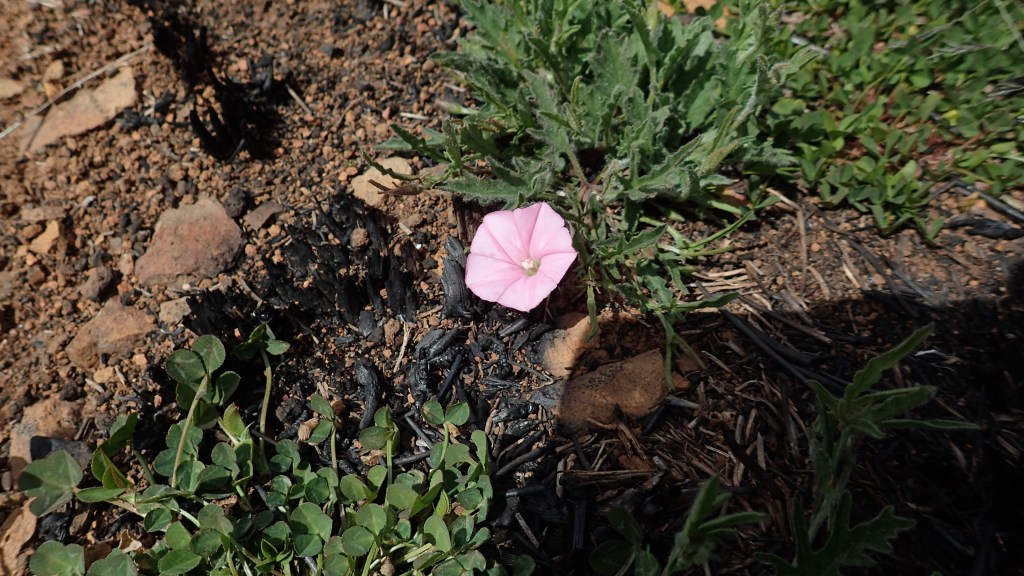
Australian Bindweed photo David Freudenberger
All biodiversity in Australia, and not just the threatened species list, is in actuality, critically endangered. There are so few places left to grow and thrive safely amidst massive ongoing landclearing, habitat disturbance and uncaring in a climate of anthropocentrism and climate change. Every off reserve haven is critical and Scottsdale is one such haven for the temperate grasslands ecosystem.
More lovely photos from Scottsdale from the bush heritage website

The Murrumbidgee River Photo Peter Saunders.
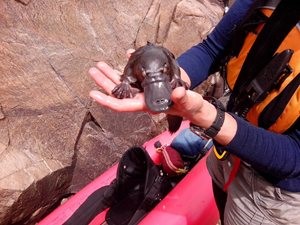
A baby Platypus rescued from a sinkhole Photo Richard Swain.

Photo Dave Watts.

Rosenberg’s Goanna Photo Jeroen van Veen

The Bare-nosed Wombat Photo Jiri Lochman
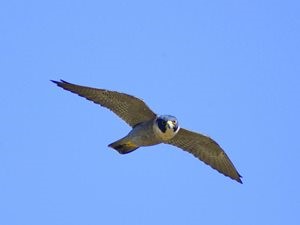
Peregrine Falcon Photo Wayne Lawler
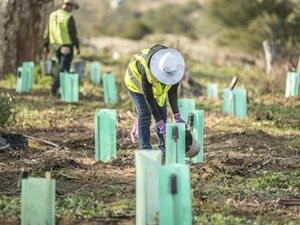
Photo Annette Ruzicka.

 Biodiversity Conservation