
Harry Logus – u6381875
I volunteered by helping an honours student, Tay Yee Seng, with his project researching brustail possums (Trichosurus vulpecula) on the ANU campus. Tay’s research involved fitting radio tracking collars to several possums, allowing them to be tracked and monitored. This can help understand possums’ behaviour and denning locations, which include buildings and infrastructureas well as trees, since possums adapt to urban environments better than many other species – because of this, possums cost the ANU over $1 million in damages each year.

Although possums are not formally classified as a an invasive species in Australia, although they are considered invasive in New Zealand where they cause similar issues to those in Australia, including competing with other species for tree hollows, damaging food crops and causing damage to buildings.
Possum Trapping
Tay is now approaching the end of his research process so I was able help him trap possums to remove their tracking collars. This is necessary for animal welfare reasons, and because the collars are expensive.
Our task was to capture four possums with collars on the ANU campus: one near the Research School of Biology (RSB), one at the Chancellery building, one near the Law building and one at the ANU Security building.

Trapping possums
On two separate nights, we set up two to three traps at each of the sites, baited with a piece of apple that we poured fish oil onto to create a strong smell to attract the possums. There are some limitations to when the traps can be set, since possums are less likely to come out in the rain, and more likely to on warmer nights.

We also radio-tracked each possum before setting traps, to ensure it was where we expected it to be. This is done using a directional antenna set to the frequency of each possum’s collar.
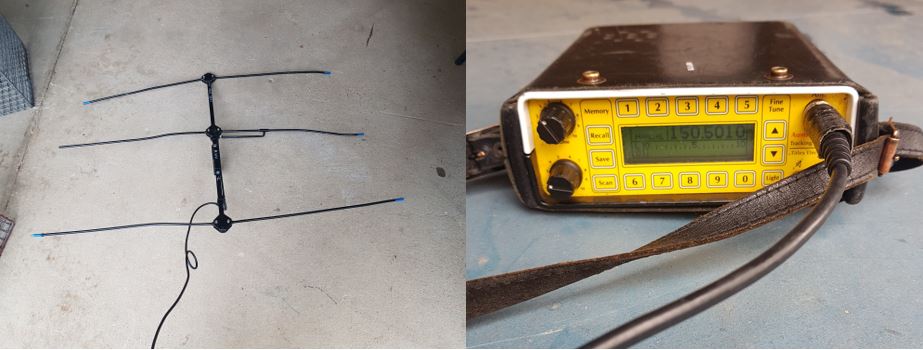
Once the traps were set, we returned to them after a few hours in the hope of having caught our possums with the collars. This was also a good opportunity to track the possums again, to see if they had moved. On the first night, we caught only one possum, near the Chancellery building, although it had no collar. We also saw a possum with its joey in a tree.

On the second night we caught no possums, but made some progress by seeing our collared possum in a tree near Chancellery.
We also came very close to catching the RSB possum, which we spotted in a tree. Enticing it with pieces of apple, it came within a couple of centimetres of the trap, but it didn’t seem hungry enough to venture into the trap and after an hour of waiting, it ran away.

Reflections
In undertaking this task, I came to realise how labour intensive ecologically focussed projects can be. I spent over 10 hours without making any significant progress, so I can only imagine how much time Tay must have invested over the year. Tay also spoke about the fact that if he was not doing this project, the ANU would face considerable expenses paying contractors to do the work, which highlights the extent to which budgets and financial constraints can have an impact on how effective ecological management can be.

 Biodiversity Conservation