
Petrea Harrison U6674509 (Word Count: 500)
Through work experience, I gained insight into the consultancy and planning processes of community Park Care initiatives whilst also being involved in planting native grasses to regenerate landscapes.
Conservation in a Changing Environment
The first component of my work experience involved attending a consultancy talk, with Grassroots Environmental Consulting, regarding vegetation in the Narrabundah Wetlands. The main goal of the consultation was to learn about plants suitable for enhancing habitat, particularly in the face of climate change.
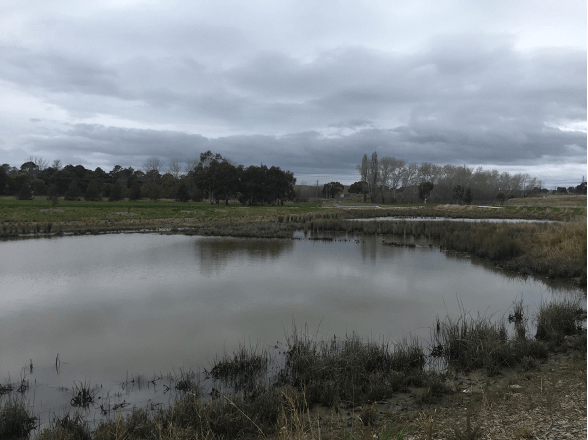
The Narrabundah Wetlands, which form part of the Murray Darling Basin, were designed to act as a haven for wildlife and local recreational use. The wetlands play an important role in removing nitrogen, phosphorous and pollutants from the water before it flows into the Jerrabomberra Wetlands. Moreover, they provide habitat for a diversity of fish, frogs and birds, such as Latham’s Snipe, a migratory bird which breeds in Japan. To enhance this diversity, ensuring sufficient habitat connectivity throughout the wetlands is imperative.
As emphasised throughout my work experience, it is important to select plant species which will survive with climate change into the future. This provides an additional component for Park Care groups to consider when undertaking conservation efforts, as climate change will have varying effects depending on the region. In the Australian Capital Territory, maximum temperatures are projected to increase by 0.7 degrees Celsius by 2030, whilst rainfall is projected to increase in spring and decrease in autumn. Tools such as climate analogues provide insight into what the climate of different regions may look like in the future, by identifying locations which currently experience similar climatic conditions. These tools are useful to identify plant species which may suit the projected environmental changes so they can be integrated into conservation efforts.
Land Degradation and Erosion Control
The second component of my work experience involved volunteering with the Friends of Aranda Bushland to plant Lomandra longifolia in an eroded gully.
Land degradation refers to processes which drive the decline or loss in biodiversity and ecosystem functions or services. One of these processes is soil erosion. There are many factors which make gullies vulnerable to erosion, including sparse ground cover, intense rainfall and unstable soils. In the case of the gully pictured below, one contributor to erosion was repeated use by kangaroos. By planting the native grass Lomandra longifolia in the gully, we were seeking to increase vegetation cover and stabilise the soils.


The Community Spirit of Park Care
It was wonderful to see a diverse range of people sharing their passion and appreciation for the local environment by volunteering their time through Park Care. As humans, we are constantly exploiting the Earth and so having the ability to care for the environment is a rewarding experience. Whilst volunteering, I was struck by the strong sense of community which had been established. If more people volunteered their time performing tasks through Park Care, not only could they benefit the environment, but also strengthen the culture of their community.

 Biodiversity Conservation