
By Alexandra Antich
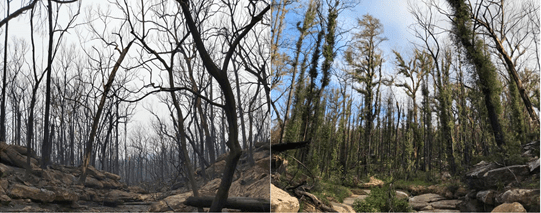
My work experience occurred with the wildlife conservation group – Wildlife Stations. Wildlife Stations is a community run conservation initiative in Kangaroo Valley. I initially did work with them in January, right after the bush-fires went through the area and completed further work in early September.
Fire
Wildfires are a natural part of the Australian ecosystem, regular fires cycle nutrients, germinate species and promote diversity in the understory. However scientists have predicted that climate change will cause increased fire severity, frequency and scope.
Frequency
Eucalyptus trees have two varying responses to fire, obligate seeders and re-sprouters. Kangaroo Valley is populated with mainly re-sprouting eucalypt trees. Re-sprouting trees are more tolerant to frequent fires however with increased frequency there is a reduction in seeds and the trees lose the ability to re-sprout. This vulnerability could result in changes to forest structure, as mature eucalypt stands may change into shrubland, subsequently posing a threat to the biodiversity of the forest.
Severity
The severity of a fire affects how the ecosystem recovers. High severity fires, such as the 2019/20 fires, result in large scale loss. A large amount of fauna is killed and many biota have a reduced regeneration capacity. High severity fires also result in a longer period of reduced habitat for species.
Scope
Large scale fires result in an increased loss of biodiversity. Due to the scale of the fires many animals could not travel far enough to escape, resulting in an increased loss of life. Furthermore, as increased proportions of a threatened species habitat are destroyed the species risk of extinction increases.
How I helped…
Pteropus poliocephalus (Flying fox)
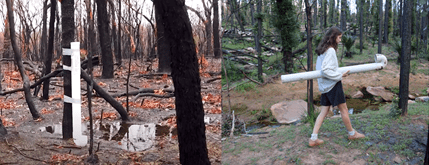
Pteropus poliocephalus are a species that live in Kangaroo Valley. The fire burnt the eucalyptus trees which are their main food source. We made garlands, which are metal loops with fruits attached (figure 2). We then went into an affected zone in Kangaroo Valley and put garlands on trees. In September I went back into the affected site to remove the left-over metal.

Vombatus ursinus (Common Wombat)
Vombatus ursinus are another native species in Kangaroo Valley. V. ursinus like to graze on native grasses, which were destroyed by the fire. We set up camera traps to know which burrows were active and then placed pellets at those locations. Due to the erosion damage we continued to put out food for the wombats as it provides a reliable food source until the ecosystem recovers.

Water
The fires occurred right after an extreme drought resulting in a server lack of water for the surviving animals. To ensure the animals had a water source we set up water stations in the affected forest. From January to September there has been an abundance of rain, resulting in the creeks filling with water. As the water stations are no longer necessary, I went in and removed the structures to ensure no plastic was left behind.
Final thoughts…
It was extremely devastating to see the effects of the wildfires however being able to help and track the recovery has been very rewarding.

 Biodiversity Conservation