
By u6361378–Haoyue Liu
The Mountain Pygmy-possum (Burramys parvus) is a mouse-sized and nocturnal marsupial that only endemic in the alpine and subalpine regions of eastern Australia. However, this species has a tiny population around 2405 adult in the wild, it is facing some key threats such as habitat fragmentation, predation from fox and feral cats as well as fire regimes. The species is listed as Critical Endangered on the 2008 IUCN Red List with a decreasing population trend. The conservation status of the species is also listed as Endangered under New South Wales Threatened Conservation Act 1995.
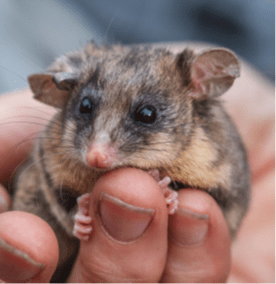
https://volunteer.ala.org.au/project/index/138300908
Recovering the Mountain Pygmy-possums in NSW
As one of the smallest Australian possums, the Mountain Pygmy-possum mainly occurs in three geographical regions: Kosciuszko Nation Park in NSW, Mt Bogong-Mt Higginbotham, and Mt Buller in Victoria. In NSW, the local population is relatively small, each subpopulation of this species is geographically isolated since they are separated by the habitats in lower elevated valleys. This decreases the probability of small patches recolonization and increases the loss of genetic diversity given a small population dynamics.
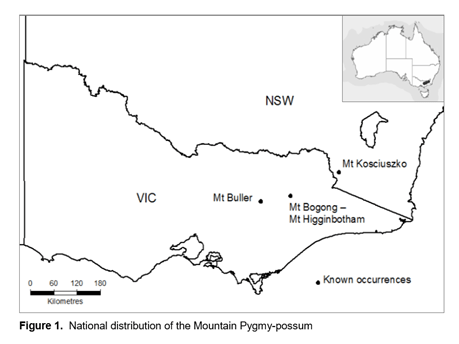
NSW Government commenced a Mountain Pygmy-possum Management Strategy under the Saving our Species Program in 2016. With the collaboration of Kosciuszko National Park and Atlas of Living Australia (ALA), this program monitor species abundance and natural conditions of the sites regularly, aiming at managing critical threats in the Kosciuszko sites and maintaining local populations to conserve the species in long term.
The collaboration of citizen science after the fires
The bushfires in early January of 2020 severely impact the flora and fauna in the Kosciuszko region, this not only wiped out the shrub cover in the surrounding habitat of the possums but also diminished all the food source in the Park including mountain plum-pine and seeds.
After the fires, researchers of the program provide emergency or supplementary food resources by installing feeders, providing “Bogong biscuits” and water until the vegetation structure is restored.
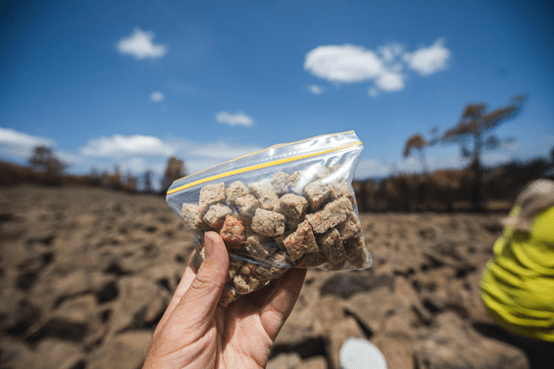
https://www.smh.com.au/environment/conservation/after-the-firestorm-hopes-rise-for-mountain-pygmy-possum-s-revival-20200212-p53zzi.html
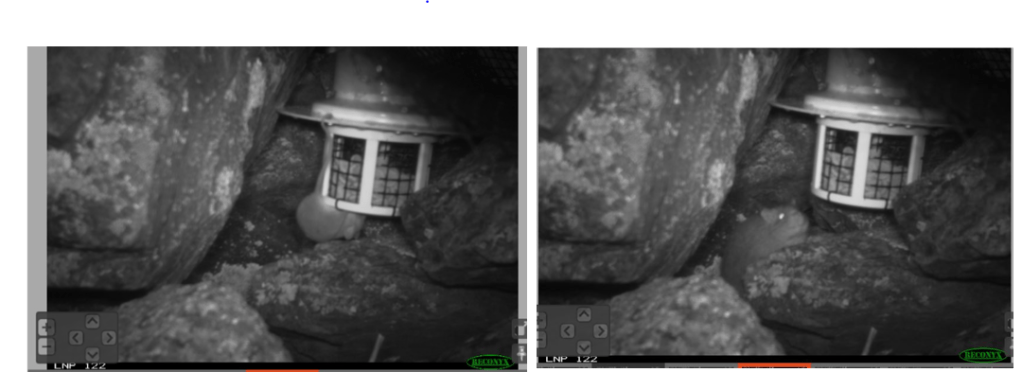
The program collaborates with the citizen scientists from the ALA online volunteering program (Digvol) by transcribing species data from the camera trap to monitor species recovery stage, aiming to analyze critical threats this species faces after the devestating fires.
Online volunteer experiences
Being an online volunteer on the ALA is a unique experience to me since It provides me opportunities to participate in biodiversity conservation program under a flexible arrangement of time.
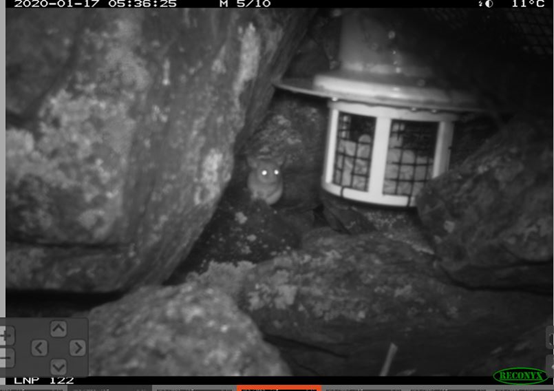
After familiarizing the species identification procedures, I noticed some interesting observations based on the identification experience from the past weeks. For example, when animals find food, the Mountain Pygmy-possums are more likely to hang upside down on the feeder use using its tail while the Bushrat (Rattus fuscipes) usually sniff around the feeder. The Mountain Pygmy-possums were often captured with images of coming in and out of their nest while the Bushrat often moves around the nest.
A single personal contribution might be limited, but the collective cooperation of people from both scientific and non-scientific background create a joint force that contributes to the recovery of Mountain Pygmy-possum from the bushfire.
References:
https://dx.doi.org/10.2305/IUCN.UK.2008.RLTS.T3339A9775825.en.
https://volunteer.ala.org.au/forum/projectForum?projectId=138300908
https://www.environment.gov.au/biodiversity/threatened/recovery-plans/mountain-pygmy-possum
https://www.legislation.nsw.gov.au/view/html/inforce/current/act-1995-101

 Biodiversity Conservation