
A Diary of the Experience
By Tan Jin Heng u6164329
My experience involved following Thea O Loughlin, a field ecologist in environmental offsets of the Parks and Conservation Service of the ACT Government. We examined the Striped Legless Lizard in our travels and it was an enjoyable and very enriching learning experience of Canberra’s environment and biodiversity.

Background of the Delma Impar
The Striped Legless Lizard, also known as Delma Impar, is designated as a vulnerable species in the ACT in 1996 and has special protection status. It is listed as vulnerable internationally and nationally and in New South Wales (NSW), and threatened in Victoria. In addition, the species was previously ubiquitous throughout south-eastern Australia wherever native grassland was present. The lizard is usually less than 300 millimeters long and weighs 3-4 grams. A pattern of alternate black and white stripes that run through the length of the body. It likes to live in naturally treeless grassland dominated by medium height tussock grasses and areas of taller grasses and in degraded grasslands dominated by exotic species.

http://www.environment.gov.au/cgi-bin/sprat/public/publicspecies.pl?taxon_id=1649
The species is threatened by loss and fragmentation of habitat due to human development, modification and degradation of grassland such as through weed invasion and overgrazing; predation by domestic, wild and native animals and environmental stochasticity such as drought and climate change.
Volunteering Experience
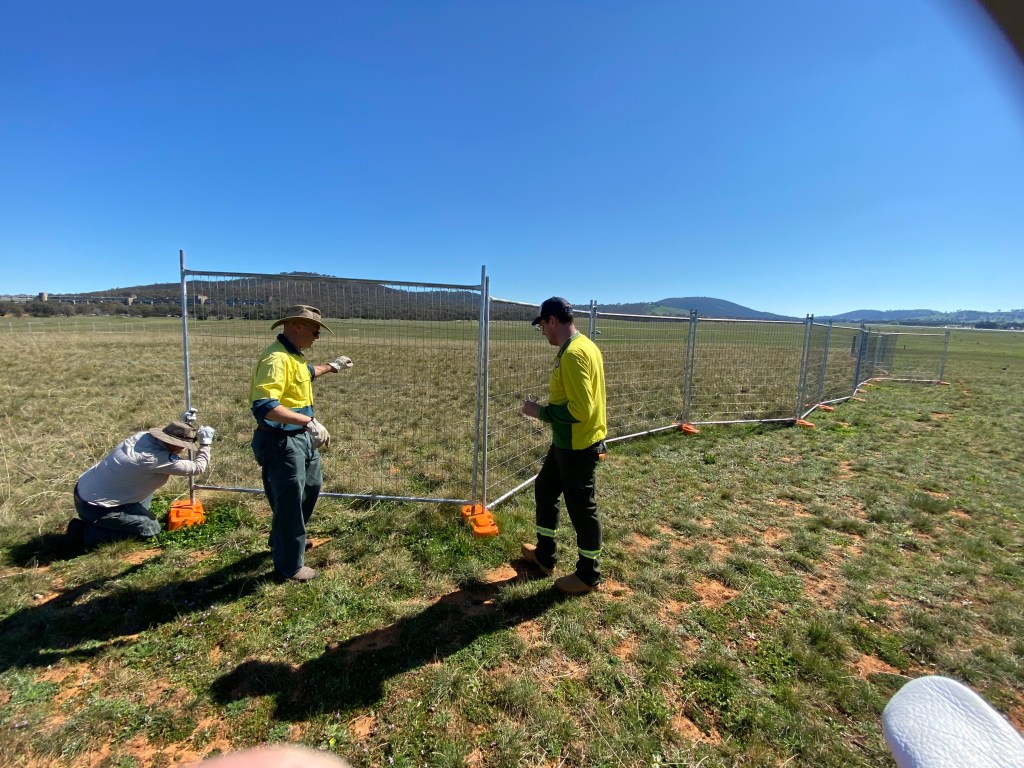
My journey started with heading to the grasslands with Thea in her car to Majura Valley. What hit me visually was the vast expanse of low quality grassland around me which was affected by overgrazing. We helped out with the erection of fences around the tall grasses which the Delma Impar likes to live in.
Following that, Thea and I travelled around Fyshwick to carry out lizard monitoring.

The monitoring sites are organised into sub-plots.
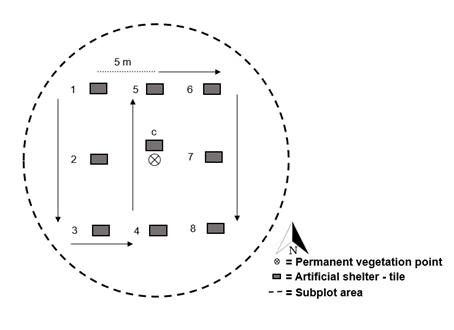
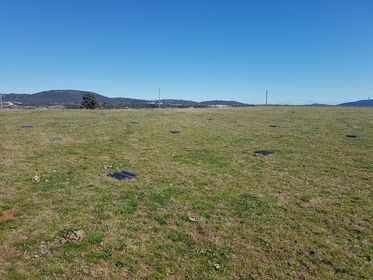
Picture source: Thea O’ Loughlin
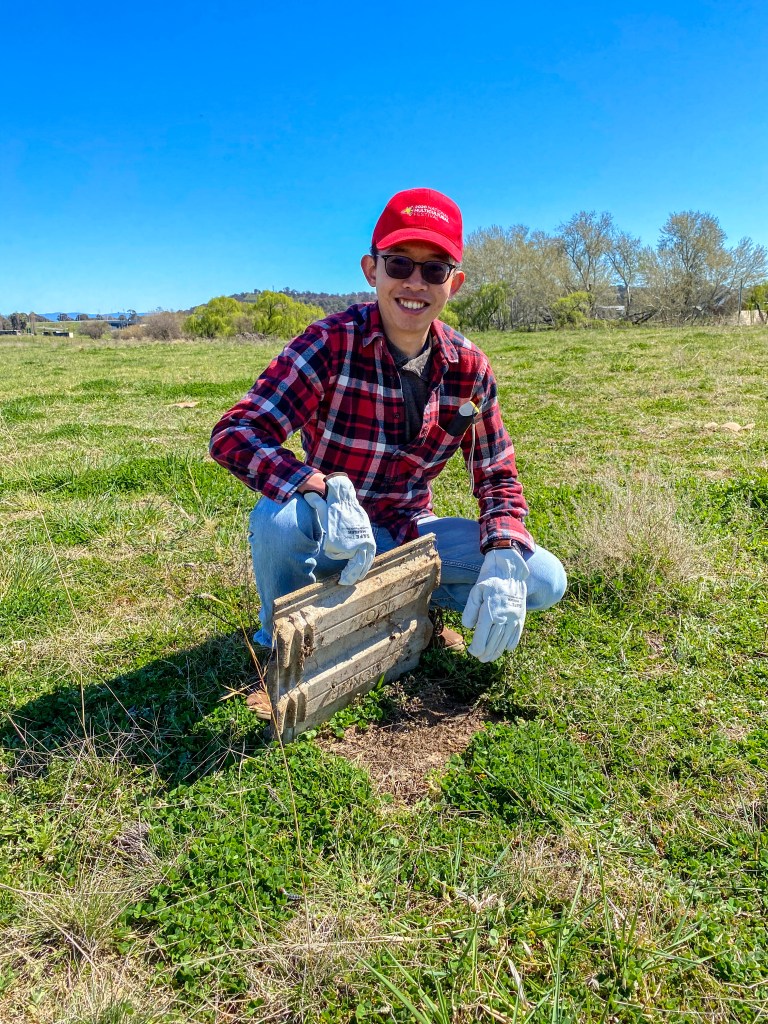
We took turns to either flip over the artificial habitat of the tiles, put in data into an iPad such as measurement of the temperature of the tiles and the patch beneath it. The flipping of the tiles is to check for the presence of the Delma Impar and other skinks. It is usually done with a crowbar and in a quick motion and then lowered back gently. In addition, we would also record if how many birds nearby.

The chances of detecting lizards were very low but there were a few cases where we were fortunate to see a few of them within the genus Delma. Thea and I even managed to see the first sighting of the Delma Impar at a particular plot in three years.


Conclusion
Through my field trip, I observed that biodiversity offsets did not manage to completely achieve their aim of reducing the impact on the species since I have came across low quality grassland in my site visits. It is paramount to maintain the quality of these offsets, since approximately 99.5 percent of natural temperate grassland has been lost and destroyed since European settlement. I hope that future conservation efforts of the Delma Impar would be improved through government policy and the efforts of ecologists.
Acknowledgements
Thea O’ Loughlin, Field Ecologist, Environmental Offsets, Parks and Conservation Service
Howland, Brett W. A., Dejan Stojanovic, Iain J. Gordon, Don Fletcher, Melissa Snape, Ingrid A. Stirnemann, and David B. Lindenmayer. 2016. “Habitat Preference Of The Striped Legless Lizard: Implications Of Grazing By Native Herbivores And Livestock For Conservation Of Grassland Biota”. Austral Ecology 41 (4): 455-464. doi:10.1111/aec.12337.
Maldonado, Susana P., Jane Melville, Garry N. L. Peterson, and Joanna Sumner. 2012. “Human-Induced Versus Historical Habitat Shifts: Identifying The Processes That Shaped The Genetic Structure Of The Threatened Grassland Legless Lizard, Delma Impar”. Conservation Genetics 13 (5): 1329-1342. doi:10.1007/s10592-012-0377-3.
Striped Legless Lizard Delma Impar Action Plan: : https://www.environment.act.gov.au/__data/assets/pdf_file/0019/1136062/Grassland-Strategy-Final-WebAccess-Part-B-8-Striped-Legless-Lizard.pdf

 Biodiversity Conservation