
By: Pham Minh Anh Dao (u6138768)
Vietnam’s topography, climate and soils combine to produce an extremely diverse and abundant forest vegetation. The country has a wide range of forest types typical of the monsoon tropics. I had an interview with Dr. Thuy Nguyen, a Vietnamese tropical forest ecology expert. We talked about conservation, biodiversity and how you can contribute to protecting the planet.
Dr. Thuy graduated with a PhD degree of forestry at the University of Melbourne and has spent more than 10 years doing research at Vietnamese Academy of Forest and Science, a leading forestry research institution in the country. The diverse environment in which she mainly does research on forest ecosystems and biodiversity in Vietnam, covers almost all forest ecosystems throughout our country’s territories.The dominant types of forest in Vietnam, which she often do research in, are tropical evergreen forest and dipterocarp forest. There are specific fieldworks depending on different research projects at various locations.

Usually, Thuy and her colleagues use the ecological quadrant method to determine the gathering location of the system that they want to study. The flora and fauna of Vietnam is significantly diverse in species as we are neighbor to other ASEAN countries such as Thailand, Laos, and Cambodia, Malaysia and Indonesia to the South, China to the North. Therefore, the country is considered as the convergence of different vegetations.
Key threats to Vietnam forest biodiversity
The most common and most dangerous threat to biodiversity of forest ecosystems is the loss of habitats. Habitat loss is caused by various reasons such as deforestation, economic development, industrialization and urbanization. Habitat loss happens due to climate change and warming temperature resulting in higher rates of desertification. For example, the limestone forests in Vietnam are endangered due to mining and quarrying. Also due to the high demand of woods, farmers now tend to turn natural forests into planted forests for economic benefits. Illegal hunting directly affects the wild animals, remaining a headache as well.
“As scientists, my colleagues and I spend most of our time doing research and providing the policy makers data, information and evidence as recommendations associated with the environment, biodiversity, and climate change. Policy makers will base on these data to propose strict legal corridors as solutions to dealing with those biodiversity issues.” -Dr. Thuy’s sharing on what she and her institution have been doing to mitigate those issues.
As mentioned above, biodiversity conservation in Vietnam is facing many risks and challenges that require appropriate policies to strengthen and link resources in biodiversity conservation for sustainable development. These challenges are main contributions to some constraints that experts like Thuy have to face in conserving biodiversity. The main problem they often encounter is the safety issue while doing research in the forest. Sometimes it is difficult to reach the place to take data samples. Researching in bad weather conditions is also a big threat to them. Moreover, the biodiversity level in Vietnam is very high thus the old ways in research are also part of the constraint. In the past, species identification was based on morphology and was not enough to classify species, now it is mainly based on genetic analysis. They also lack funding for conservation activities, therefore, sometimes it is hard for them to conduct further research.
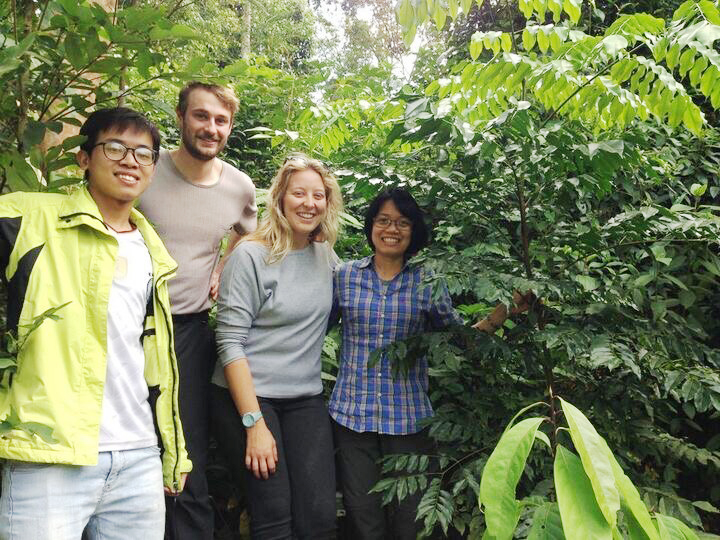
Dr. Thuy and her colleagues at Xuan Lien Nature Reserve, Thanh Hoa Province, Vietnam. Photo by: Van Trieu Le 
Dr.Thuy and her colleagues at Yokdon National Park, Vietnam. Photo by: Thuy Nguyen
Talking on what she thought she could do better to confront these challenges, Dr. Thuy believes:
“What could be done better is to get more involved in community development in terms of education purpose. I want to bring science closer to everyone thus anyone can understand what we have been doing and understand the importance of biodiversity to the environment.”

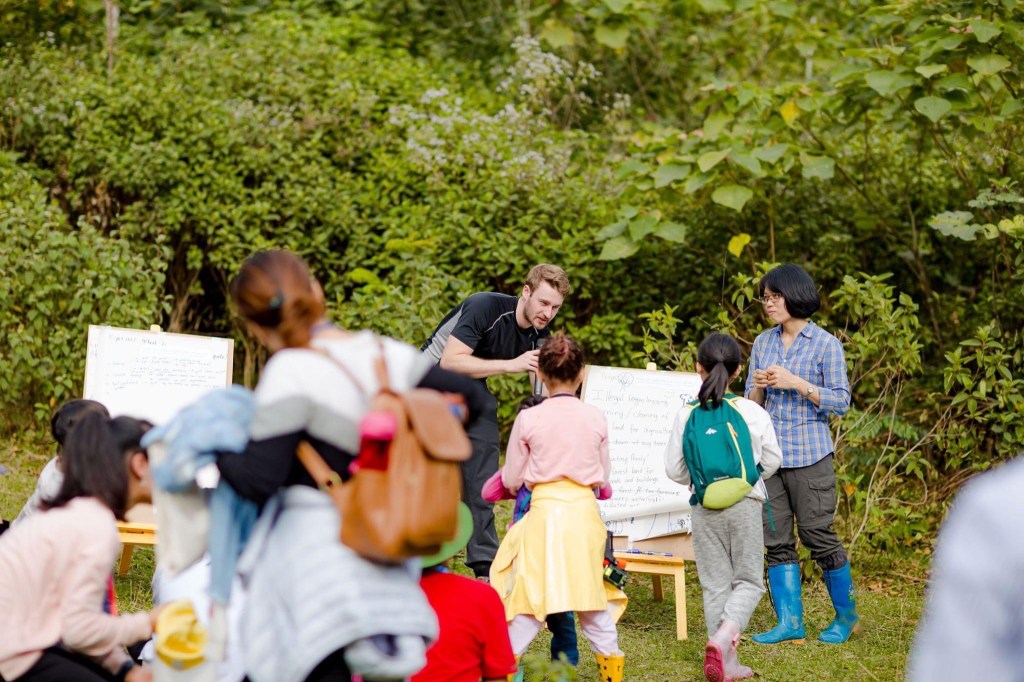
With regard to this view, Thuy is currently working on some projects aiming to educate and support students to take actions for the environment. She organizes an environmental conservation group called Actions for Climate Change and Biodiversity (ACCB) to connect people and organizations to take actions for the purpose of protecting the environment and counteracting climate change; protecting species, ecosystems and biodiversity; supporting sustainable development in agriculture and rural areas.

Last but not least, I asked for Dr. Thuy’s advice for students who were interested in biodiversity conservation, and wanted to have an impact on the cause.
“Be a good student first. What you have been studying at university is important for your career, especially in this field. Anyone who wants to obtain employment in this working area should have a concrete knowledge base related to biodiversity conservation and management. Find an organization to get involved with. It could be local or global organization. It could be anything! Connect yourself with like-minded people and be passionate about it. You will surely get more experiences and a bigger network when cooperating with them.“
If you would like to know more about what Dr.Thuy has been working on and to get involved, here are her contact details and the link to her current projects.
Dr. Thuy Nguyen
thuy.t.nguyen.um@gmail.com
ACCB Team

 Biodiversity Conservation