
By Jonah Lafferty, u6381824
Last week I had the privilege of talking to Millie Sutherland Saines from the Woodlands and Wetlands trust about her work in Ecology and Outreach. You can listen to the full interview below or read a summary of our conversation in this blog.

Mulligans Flat Woodland Sanctuary

I met with Millie on Canberra’s northern edge, where the north of Australia’s capital city backs onto critically endangered Box Gum Grassy Woodland. When I arrived work had just finished on the organisation’s entry into the Threatened Species Commissioner’s cake baking competition.
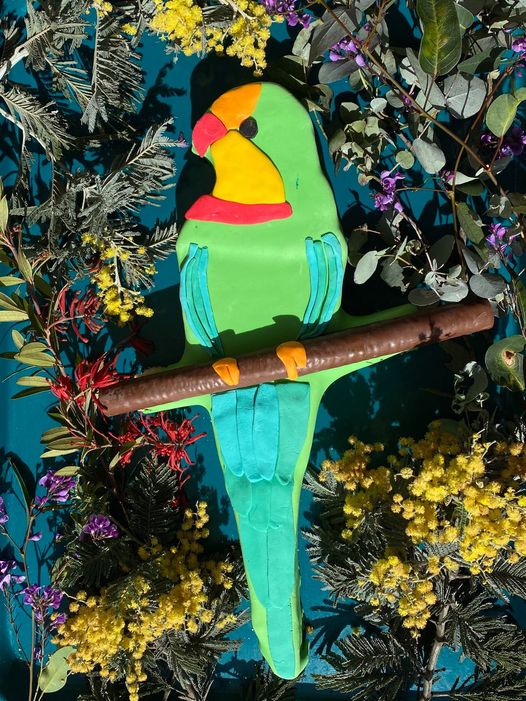
It was a fitting animal to re-create in sponge form. The Superb Parrot was the reason that Mulligans Flat Woodland sanctuary was originally established in 1994 after being identified as an important habitat for the endangered species. Moving forward a decade, the ACT Government announced it intended to build a feral animal proof fence around the sanctuary and in 2009, 485 hectares of land was successfully fenced off from feral animals.
Box Gum Grassy Woodland
Box Gum Grassy Woodland is an open woodland ecosystem, Yellow Box and Blakey’s Red Gum are the two dominant tree species (Eucalyptus melliodora and Eucalyptus blakelyi). The sanctuary is an important remnant of this critically endangered ecological community. Land clearing across NSW and Victoria has led to the clearance of over 95% of this ecosystem. This habitat loss has been driven mainly by the ecosystem doubling as prime agricultural land. Habitat fragmentation has left Mulligans Flat nature reserve as one of the largest remaining remnants in Australia.
“It’s rare to find a patch of this ecosystem that is as intact as Mulligans Flat”
Millie Sutherland Saines
Re-Introductions
By establishing a fence to keep out rabbits, foxes and cats, the Woodlands and Wetlands Trust, in collaboration with the ACT Government, CSIRO and the ANU have been able to reintroduce some locally extinct species back into the ACT. These have included the Eastern Bettong, Eastern Quoll and the Bushstone Curlew. The sanctuary is also home to a well-established population of Sugar Gliders and Echidnas. Below you can see some footage of Eastern Bettongs filmed inside Mulligans Flat.
Jerrabomberra Wetlands: A More Novel Ecosystem
Whilst the trust manages an intact critically endangered ecological community, they also manage a separate wetland at a different location. This wetland, in Fyshwick, is infested with weed and carp and is situated between a an agricultural business (Canturf) and a sewage treatment plant. As there are feral foxes and blackberry plants scattered around the wetlands it is no longer an intact native ecosystem. Even the eucalyptus and acacia planted around the edges are mostly not native to the Canberra region.
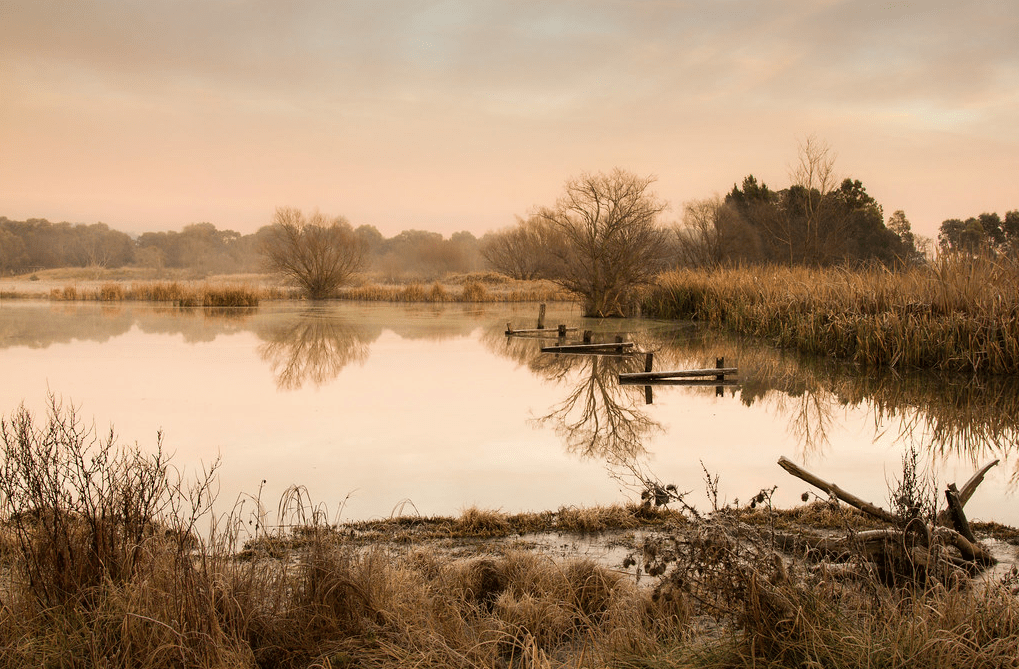
Despite the lack of local native flora surrounding the wetlands, this novel ecosystem is home to over 150 species of wetland and woodland birds, making it a hot-spot for local birdwatchers and nature enthusiasts. The Trust see it as their role to protect the value that this modified ecosystem brings to the community. Their research at the site includes studying the migratory patters of the Latham’s snipe, which travels between Japan and Canberra every year.
“With Lake Burley Griffin there, it would be impossible to restore Jerrabomberra Wetlands to its natural state”
Millie Sutherland Saines
The work of the Trust illustrates the import role of NGOs to protect and conserve biodiversity in our urban environments.


 Biodiversity Conservation