
An interview with Mallory Barnes, Senior Regional Conservation Officer at NSW Department of Planning, Industry and Environment (DPIE), Biodiversity Conservation Division.
By Jessica Noonan, u6280907
In NSW, State Significant Developments (SSDs) such as energy management facilities like wind turbines may impact on important areas of biological diversity. A development proposal is identified as an SSD if it is over a certain size, is in a sensitive environmental area or will exceed a specific capital investment.
In his role at DPIE, Mallory Barnes audits SSD development proposals to ensure the proposals have made every attempt to avoid critical areas of biodiversity and have correctly calculated biodiversity offset credits for residual impacts using the Biodiversity Assessment Method.
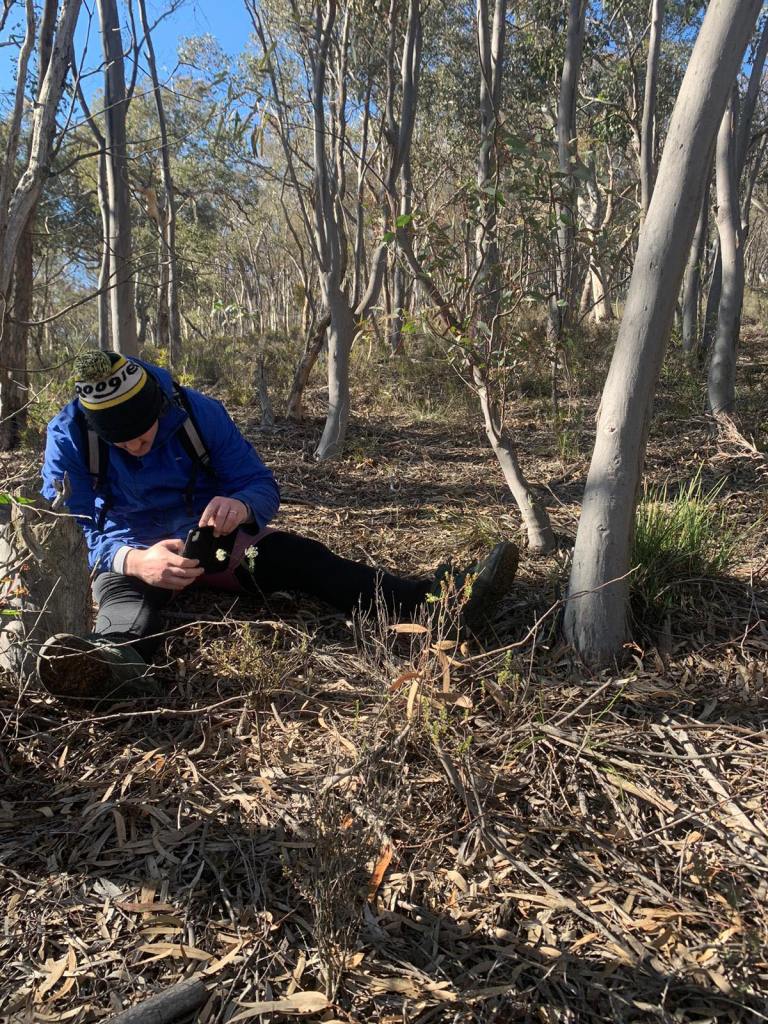
Mallory assessing a development site. Source: Mallory Barnes
SSD projects threaten Box-Gum Grassy Woodlands
Box-Gum Grassy Woodland is one the important ecological areas threatened by SSDs that Mallory seeks to protect. Box-Gum Grassy Woodland is listed as critically endangered in Australia and serves as an important habitat for Australian species.
‘Box-Gum Grassy Woodland is shrinking. Less than 1% of its pre-European range remains.’
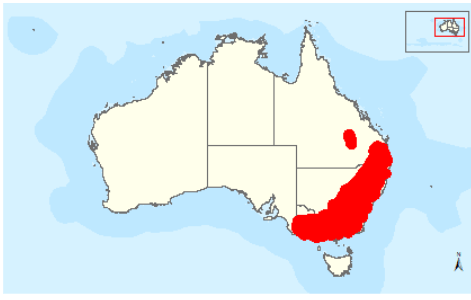
Distribution of Box-Gum Grassy Woodland. Source: Department of Agriculture, Water and Environment.
‘When you get mature Box-Gum Grassy Woodland that has big hollows, those hollow bearing trees support a huge number of species. You can get Powerful owl, Gang Gang cockatoos and Squirrel gliders’
The clearing of Box-Gum Grassy Woodlands for SSD projects destroys the habitats for these species contributing to their endangerment.
Wind turbines as SSDs: hurting or hindering the environment?

Gunning Wind Farm. Source: Acciona.
A common SSD proposal Mallory assesses is for the development of wind turbines in NSW. Wind turbines are intended to minimise environmental damage by serving as a form of renewable energy to move away from the extraction of fossil fuels. However, wind turbines can have a significant impact on biodiversity on proposals for development must be carefully assessed.
‘One wind farm has taken out four black falcons in less than 12 months.’
Direct impacts of wind turbines on biodiversity include bird strikes. Indirect impacts on biodiversity include habitat clearing for the establishment of wind turbine farms.
Strategies to prevent biodiversity loss due to SSDs
Under the NSW Biodiversity Conservation Act, the priority for SSD proposals is to avoid impacting on important biodiversity. If this is impossible, developers must then seek to minimise the impact on biodiversity. Residual impacts on biodiversity that are unavoidable require offsetting.
‘We encourage developers to reduce impacts around important ecological communities like Box-Gum Grassy Woodland and then the last option is offsetting…offsetting incentivises avoidance.’

Box-Gum Grassy Woodland. Source: Local Land Services
Developers generate species credits for impacting on biodiversity and are required to offset residual impacts. This can be highly costly for developers, particularly when SSDs are affecting large areas. Although offsetting should remain a last resort in protecting important sites of ecological biodiversity, they can motivate developers of SSD to prioritise avoiding impacting biodiversity.

 Biodiversity Conservation