
Oliver Andrews u6948917
The Friends of Aranda Bushland
The Friends of Aranda Bushland (FoAB) are a volunteer bushcare group operating as part of the ACT Parks and Conservation Service’s (PCS) Parkcare program. They have been meeting for nearly 30 years now (their birthday party is in a few weeks!) and they maintain 104hectares of rare Snowgum Grassy Woodland and critically endangered Yellow Box – Red Gum Grassy Woodland (ACT Government, 2020). Activities are on the first Sunday of every month and include weeding, planting, and track maintenance. FoAB also organises educational walks through the area for the general community.
Biodiversity Value of Canberra’s Reserves
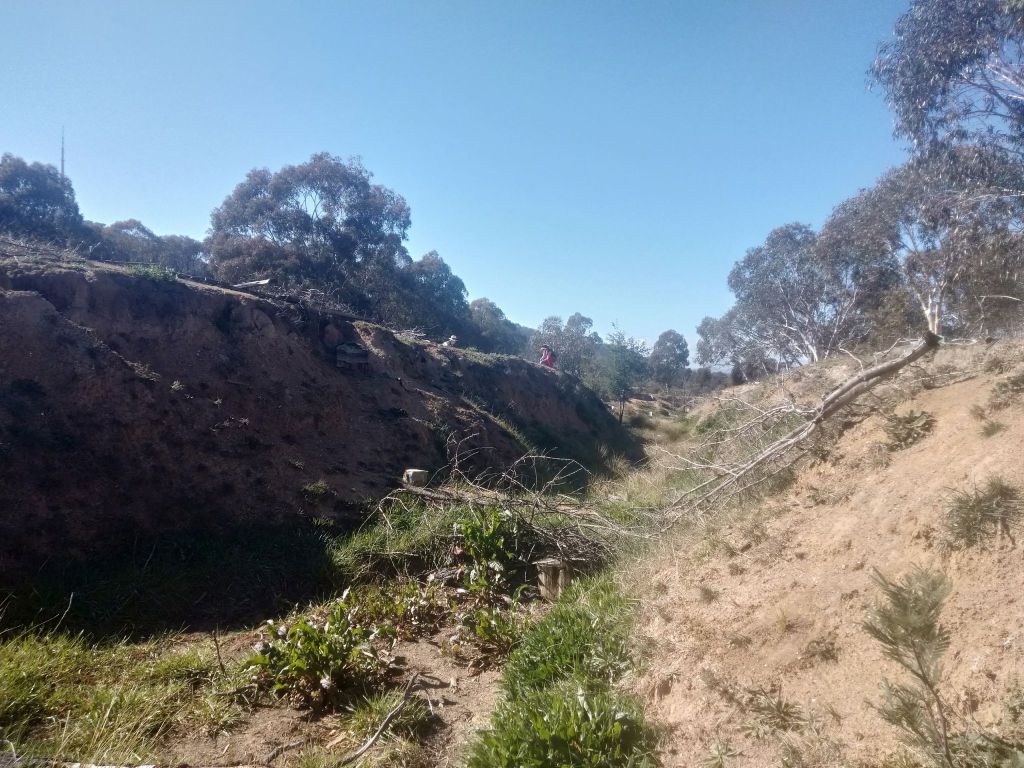
The Canberra Nature Reserve is made up of 37 separate nature parks across 11,000 hectares, all of which provide vital habitat, landscape connectivity, and biodiversity conservation value across the Canberra region (ACT Government, 2019). While urban and suburban environments and development are often causes of habitat fragmentation, the Canberra Nature Reserve ensures that large pockets of (mostly) good quality and somewhat connected habitat are available.
The Value of Volunteer Bushcare
Volunteer work in conservation is invaluable. In our little sessions on Sunday mornings that run for 2-3 hours, depending on how many people attend, many tens of hours’ worth of work can be completed. The local knowledge of these volunteer bushcarers – many of which have lived in the area for an extended period of time – is significant and largely unrecorded. It also gives locals the opportunity to directly be involved in the management of the land in and around their homes and is an avenue for participatory and consultative land management (Gooch, 2010).
This resource is absolutely essential to land managers, who are currently insufficiently funded to be able to pay for professional labour required to match the current volunteer workforce, let alone for the intimate local knowledge that current volunteer workers provide. This is not to say that volunteers can manage land better on their own – to the contrary, volunteer work is often variable in results and requires facilitation, direction, training, and some funding from an outside professional agency (Curtis et al., 2000).
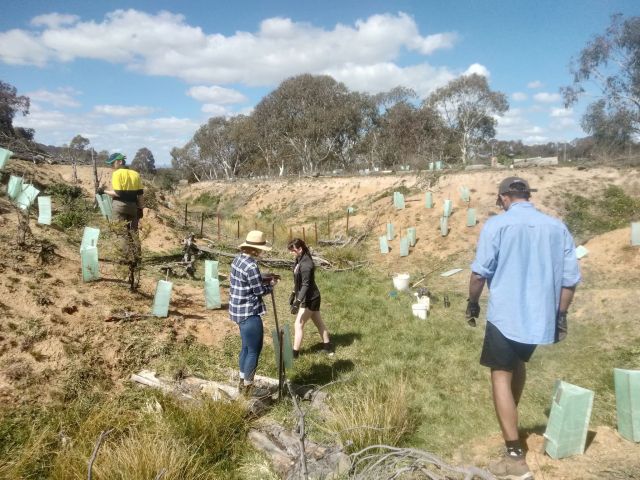
This process is made evident in the bushcare activities I took part in over the past few Sundays. We were able to get a huge amount of work done in a short space of time, but we required the assistance of the PCS to source quality tools, specialist technology and training, and plantings. The importance of the time and labour investments from volunteers in conservation is critical to maintaining and improving the ACT’s excellent Canberra Nature Reserve, and I would like to see greater funding and development opportunities available for both volunteers and those enabling them.
ACT Government, 2019. Canberra Nature Park Draft Reserve Management Plan, Available at: https://www.yoursay.act.gov.au/act-parks/canberra-nature-park (accessed 07/09/2020).
ACT Government, 2020. Aranda Bushland Nature Reserve, Available at: https://www.environment.act.gov.au/parks-conservation/parks-and-reserves/find-a-park/canberra-nature-park/aranda-bushland-nature-reserve (accessed 06/09/2020).
Curtis, A., Van Nouhuys, M., Robinson, W. and MacKay, J., 2000. Exploring Landcare Effectiveness Using Organisational Theory, Australian Geographer, 31(3): 349-366. Available at: https://search-proquest-com.virtual.anu.edu.au/docview/214575452?pq-origsite=summon (accessed 07/09/2020).
Gooch, M., 2010. Volunteering in catchment management groups: Empowering the volunteer, Australian Geographer, 35(2): 193-208. Available at: https://www-tandfonline-com.virtual.anu.edu.au/doi/abs/10.1080/0004918042000249502 (accessed 07/09/2020).

 Biodiversity Conservation