
Rhiannon Smith – u6663951
Kangaroo Island is host to several threatened species, but perhaps none as cute as the Kangaroo Island (KI) Dunnart (Sminthopsis fuliginosus ssp. aitkeni). A citizen science initiative, led by the Kangaroo Island Dunnart Recovery team (henceforth referred to as the team), in partnership with the National Parks and Wildlife Service South Australia, the Atlas of Living Australia and the Australian Museum, is harnessing the power of thousands of curious, dedicated and probably bored minds to help with their recovery.

Kangaroo Island Dunnart. Copyright: Brad Leue Photography 2020 
A Kangaroo Island Dunnart. Copyright: Jody Gates
Endemic to the island, the KI Dunnart is a small, mouse-like marsupial. It is genetically distinct from other Australian species of dunnarts and is the only dunnart species on Kangaroo Island, meaning it has high conservation priority.
Due to extensive land clearing and predation by feral cats the population has been greatly reduced and restricted to the Western part of the island.
Unfortunately, the KI Dunnart is listed on the International Union for Conservation of Nature red list for threatened species as “critically endangered”.
“Critically endangered” indicates that the species has an “extremely high risk of extinction in the wild”.
IUCN
In mid-2019 there were less than 500 individuals surviving in the wild. During the tragic bushfire season of 2019/2020, about 90% of the KI Dunnart’s habitat was burnt.
The team are attempting to determine the post-fire distribution, population numbers of and threats to the KI Dunnart. This information will help to establish the species’ resilience to bushfire and the subsequent effects of fire -including increased predation- which are expected to occur with greater frequency and intensity due to climate change.


Wildlife cameras have been set up facing “drift fences” to encourage wildlife to walk parallel to the motion-detecting cameras. When they do so, the cameras take a quick series of photos. 56 sites have been surveyed this way, with the cameras left out for 50 days.
During that time, each camera takes thousands of photos. It’s a lot for one team to sift through… So they turned to the masses!

Now the intrepid citizen scientist isn’t left to frantically google species and memory match on their own. The extremely well composed website provides categories for species, complete with descriptions of how they’ll likely look on camera and sample images for comparison.
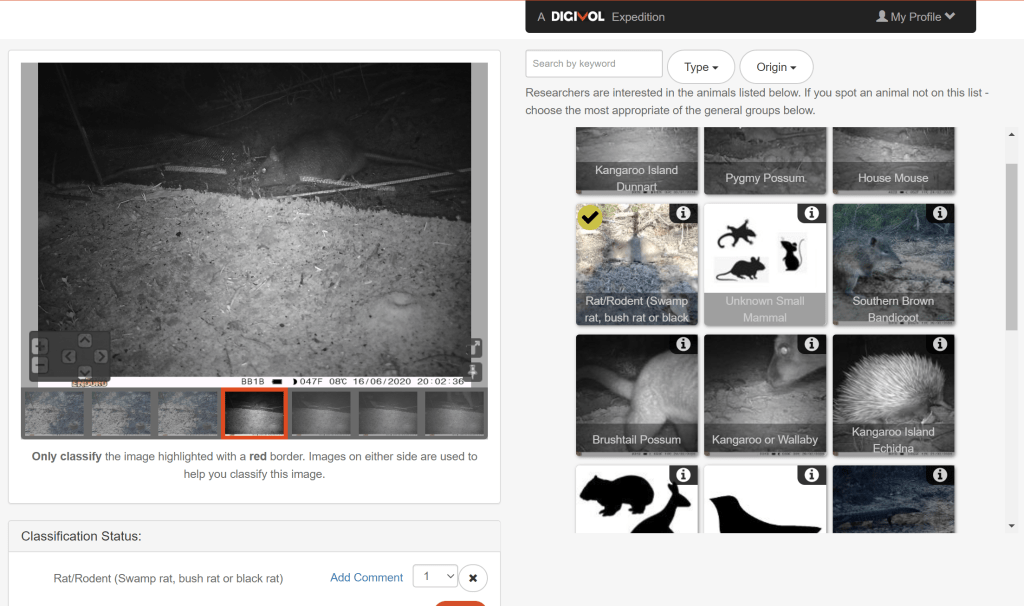
But it also isn’t as easy as it might sound… I found it remarkably difficult to distinguish between species of small mammals, such as the KI Dunnart, Pygmy Possum and House Mouse. In my first hour of sifting through photos, I only successfully classified thirty. I was feeling pretty sorry for myself.
Pretty quickly though I settled into a rhythm and achieved a rate of about ninety per hour, whether this was through skill or luck with the randomly selected photos I was assigned is undetermined (but let’s assume it’s the former).
It’s a fun experience, with an addictive quality similar to that of computer games. Funny angles and silly faces periodically left me in hysterics (much to the disdain of my housemates) but the experience was also remarkably eye-opening. I classified far more feral cats than I did small mammals combined and rarely caught a glimpse of the elusive KI Dunnart.
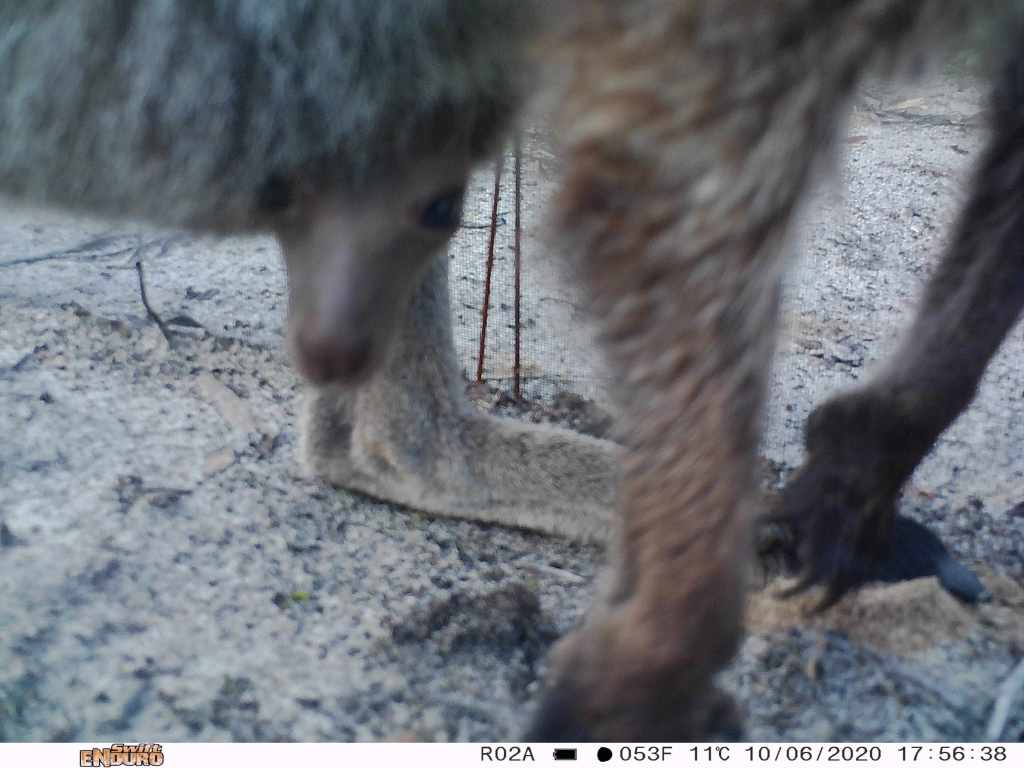
Who would have thought that sitting on the couch and flicking through some photos could help save a species?

 Biodiversity Conservation