
Zicheng Mai u6682722
Thea O’Loughlin, a field ecologist from ACT Parks and Conservation Service, offered me an opportunity to do the reptile surveys with her at two offset sites: Majura Grasslands and Amtech Grasslands, where they provide native temperate grasslands as rehabilitation habitats.
Identification: “We” are not the snakes
The Striped Legless Lizard (Delma impar) outwardly features as a small snake but is a member of the Reptilia family. It is usually grey to light brown above and cream on the ventral surface, with the darker head than the body and a series of light and dark brown longitudinal stripes along the length of the body and tail. The adult SLL can grow up to 300mm long and is slightly thicker than a pencil. It is fed by sedentary arthropod prey, especially cockroaches, spiders, moth and field crickets.

Threats: “We” flee from home
The species is listed as vulnerable under the EPBC Act. They are mainly threatened by habitat fragmentation which is due to habitat overgrazing, ploughing, weed invasion and urban development. Meanwhile, the overpopulation of kangaroos lowers the grass height and reduces the vegetation cover. They do not have a specific natural enemy but predation from feral foxes and feral cats are likely to be a minor threat.
Offset sites: where did you find “us”
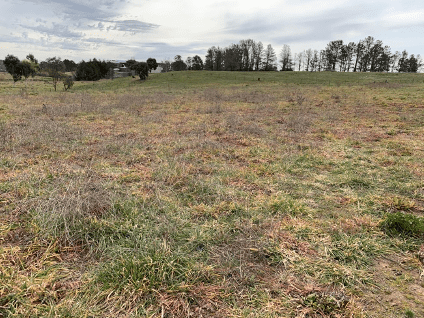
In the ACT, SLL distributes in Gungahlin, Yarramundi Reach, Majura Valley and the Jerrabomberra Valley. The daily surveys for SLL will commence in September and run through till mid-November on non-rainy days above 15 degrees, as the species is surface active during the day from early spring to late autumn. The SLL is known to inhabit lowland native temperate grasslands and they mostly are found under rocks, soil cracks or in the base of tussocks. Thus, all offset sites are required to have a grassy ground cover.
Monitoring methods: providing help for “refugees“
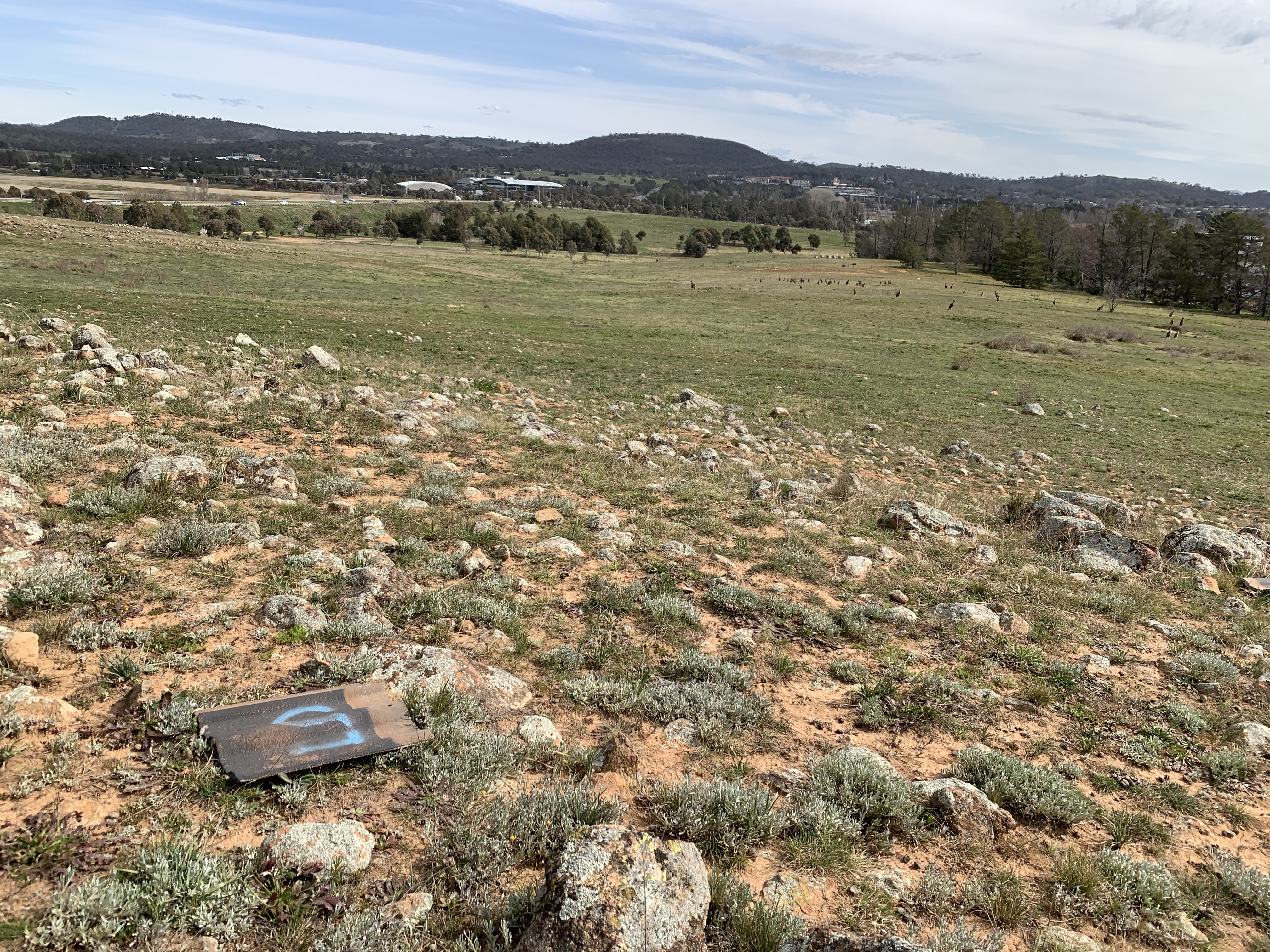
In line with the size of the reserved grasslands, there are a different number of clusters of roof tiles settled at different locations of the grassland to investigate their preferable habitat, also provide them with shelters and food source. We spent a day lifting the tiles and recording the demographic information of any reptile found, including abundance, tile number, species name, presence (i.e. living, deceased or skin), age, tail lost (i.e. yes or no) and sex if possible. The weather and humidity were recorded as well at every location in order to maintain the consistency of the surveys. According to Thea, the population monitoring process will undertake 5-6 times in a month through the season.
Findings
Unfortunately, nothing had been discovered in the morning at Majura grasslands even though there were 15 clusters of tiles laid out. However, we got the luck at Amtech that one grey skink (Menetia greyii) and three delicate skinks (Lampropholis delicata) were found under tiles.

Compared to the quality between two offset sites, the latter one consists of higher grass height and higher density of rock cover considering as high-quality habitat for survival. Based on Thea and her colleagues’ study on SLL, the best grass height is 10-20 cm to provide protection and rock coverage fosters more chances for discovering their footprints.

Summary
The Delma impar is a cryptic creature rarely discovered in the ACT region. Giving opportunities for volunteering is to trigger people’s awareness and to get involved in the environmental management process. With the major threat of habitat loss, the conservation team planned and set up the offset sites in order to retain the current population while restoring appropriate habitats for them, and therefore lessens the risk of extinction.
P.S. If you see a roof tile in native grasslands please do not disturb and know it is part of the survey.

 Biodiversity Conservation