
Hannah Evans (u6680603)
Despite maintaining their geographic range across Eastern Australia, platypus (Ornithorhynchus anatinus) populations are dropping.
At least 100 unique species have become extinct in Australia since European settlement. With the worst mammal extinction rate of any country, monitoring our unique species has never been so important.
Platypus are listed on the ICUN Red List as “Near Threatened”. At this stage, 21-30% of platypus populations are thought to exist on protected areas and initiatives like Platypus Month encourage regular monitoring to keep them from entering a “Threatened” status.
This year, Waterwatch and ParkCare joined forces to run a series of surveys at the Tidbinbilla Nature Reserve. On the first evening, Waterwatch representative, Woo, and her taxidermic assistant, “Platty”, provided an induction on platypus and their conservation.
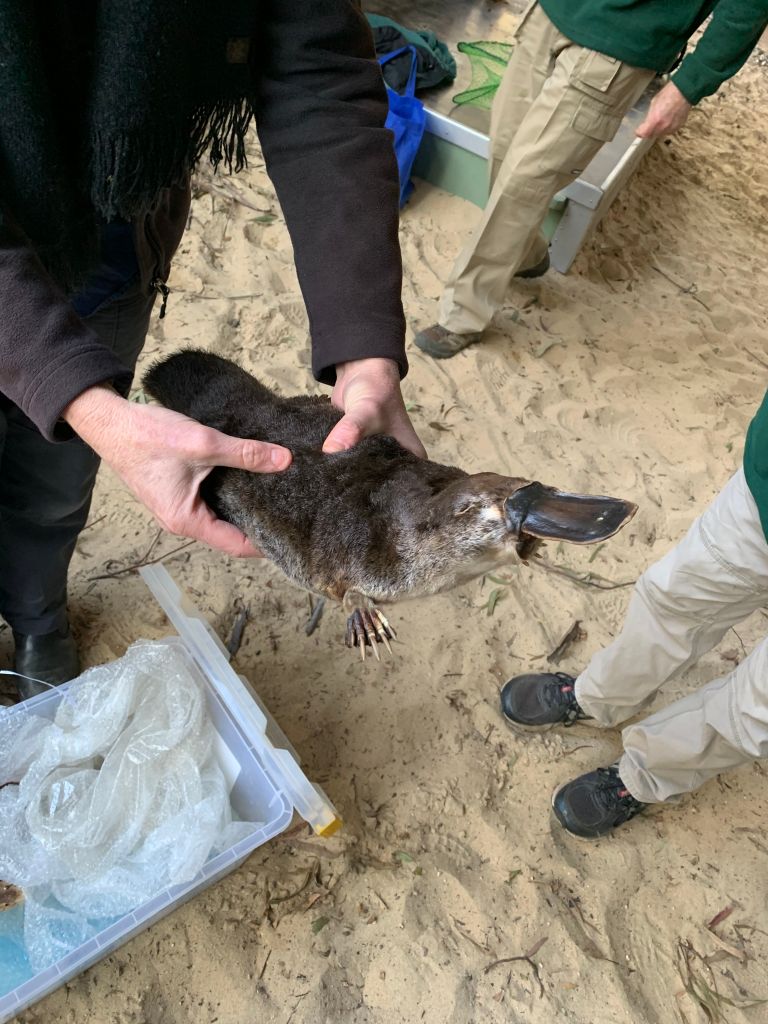
Despite being described as a hodgepodge of more familiar species, platypus have an incredible anatomy. Living amongst wetlands, they generally feed on bottom-dwelling invertebrates.
Disregarding the standard senses, they use electroreceptors located on their bill to navigate underwater and feed.
Woo revealed this unfortunately leaves them sensitive to vibrations from surrounding development.
Other known threats to platypus include water catchment modifications, invasive species, disease, pollution, and severe climate, particularly drought. However, more research is required into threat response as well as population size, distribution, trends and threats.

Successful Surveying
There are three benefits to conducting platypus surveys at Tidbinbilla:
- Through tagging, Tidbinbilla has a known population of platypus. This allows Waterwatch to test how effective their surveying method is, whilst checking in on the current population.
- The platypus politely take part in CHIP: the Catchment Health Indicator Program. Waterwatch assess catchment health through assessments of water quality, water bugs, riparian condition and… platypus!
- Advertising for platypus surveys allows Waterwatch to gather volunteers to inadvertently monitor another species: Rakali (water rats). There are approximately 1,900 threatened species listed on Australia’s federal Environment Protection and Biodiversity Conservation Act and annual funding can’t save them all. This has created a competitive conservation system where species with negative connotations (like rats) can struggle to get funding or volunteers. Sharing a habitat with platypus provided the perfect opportunity to keep up monitoring.

Dawn or Dusk
Described as a secretive and elusive species, platypus are primarily nocturnal. Therefore, surveys were carried out at dawn and dusk.
The survey itself required more vigilance than I anticipated. For one hour, my survey partner (hi mum!) and I scanned the lake for any sign of ripples. At ten-minute increments we noted any rain, cloud coverage or water surface perturbations as well as how many platypuses and rakali we had seen.
Since platypuses can swim at one metre per second, determining how many there are in a body of water can be challenging. Luckily for us, we had three pop out of the water at once and were able to list that as our final number.

The Australian Platypus Monitoring Network (APMN) state:
“By tracking population trends, conservation action can be taken sooner rather than later to help ensure this remarkable animal’s survival.”
With 85% of wetlands believed to be lost globally, continued monitoring will prove crucial.


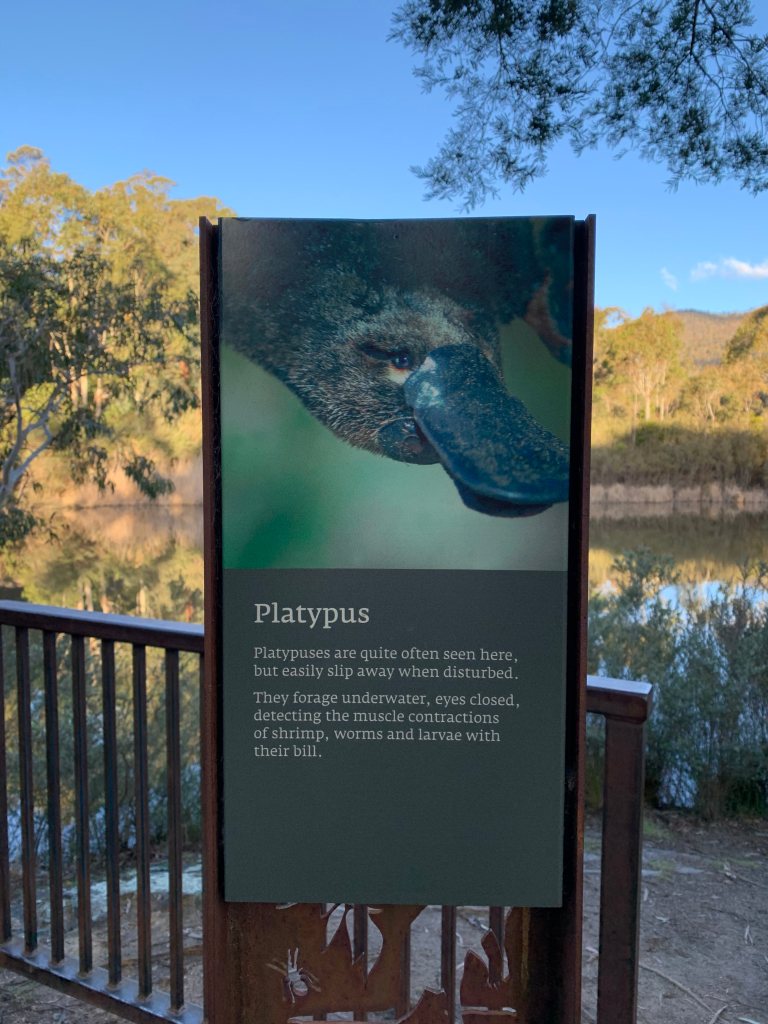

Are there platypuses near you? You can take part in Citizen Science by reporting on your platypus sighting to Waterwatch or the APMN at any time.

 Biodiversity Conservation