
Planting trees with the local community
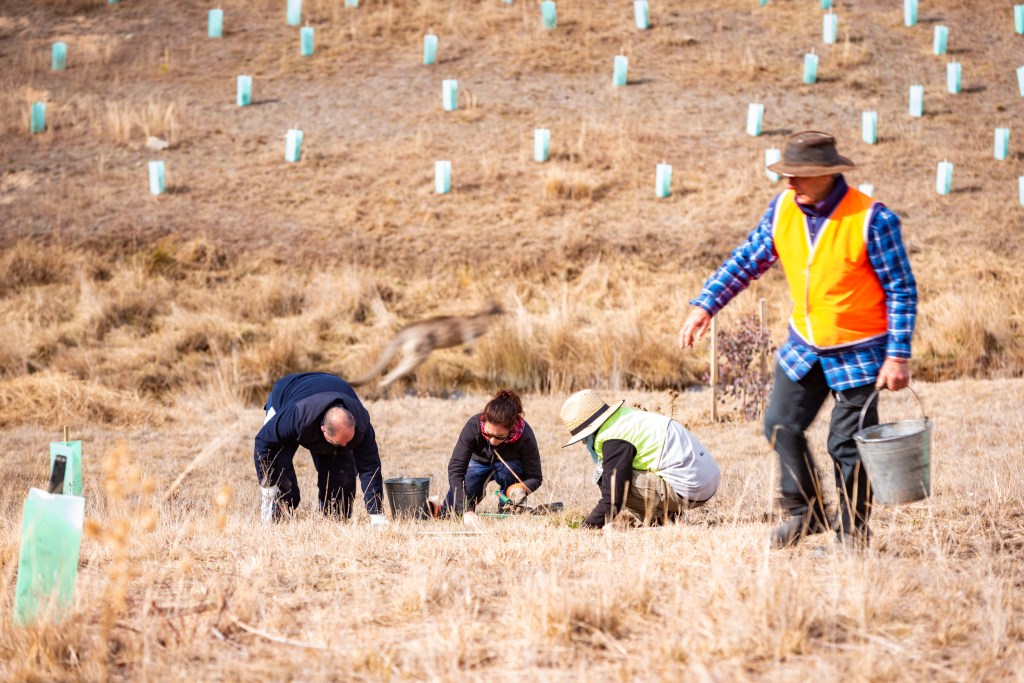
In the first weekend of October, I was privileged to participate in a volunteering event organised by the Conservation Volunteers and Forestry Corporation in the newly developed suburb of Googong. The primary goal of the event was to plant trees and shrubs to restore the native vegetation around the surrounding area of the suburb. Besides, the event also aimed to raise the local resident’s awareness of environmental stewardship, to cultivate the sense of responsible use of the natural environment and active preservation of biodiversity across the neighbourhoods.
Even though I selected forest management and my minor, I haven’t got a chance to actually plan a tree or other vegetation by myself. This volunteering event provided me with some valuable hand-on experience on tree planting and habitat revegetation. For tree planting, I learnt some practical tips such rocks and dead logs could be used as an effective shelter for small trees to against the wind, the tree protectors with different colour could be used to identify different species and provide convenience for the follow-up management etc. For habitat revegetation, I leant that the planted species should be diversified. For grasses, we planted short wallaby-grass (Rytidosperma carphoides) and river tussock (Poa labillardieri). For shrubs, we planted chamomile sunray (Rhodanthe anthemoides) – a daisy with small white flowers. For trees, we planted yellow box (Eucalyptus melliodora ) and golden wattle (Acacia pycnantha). The ration of planting grass, shrubs and trees is about 10:3:1. This ratio enables a lower mortality rate and even nutrition absorption among different species to form a rich structural complexity in the future.

Significance of afforestation to a newly developed suburb
The revegetation event itself is highly relevant to the two themes which are emphasised in the course of biodiversity conservation: habitat conservation in the urban context and stakeholder engagement. With the result of severe habitat fragmentation and deterioration, the continuous urban development could cause severe threat on some of the listed endangered species. Hence, revegetation in the urban area could help to reconnect the fragmented habitat for native birds and reptiles. Besides the ecological preservative, it could also increase the property value based on the numbers of large trees and rich biodiversity level of the adjacent area. Additionally, there is research indicates that more green space around the residential areas could also increase the mental and physical wellbeing of residents.
Alter the traditional bias of forestry company
During the lunch break, I happened to have a conversation with Sean one of the co-organisers of the revegetation event and the manager assistance manager of the Forestry Corporation. Sean shared with me a different perspective from the forestry company. He told me that for him the aim of supporting this event is to change people’s bias on forest industries. For a long period of time, people shared a bias that the forestry is a selfish business making benefit from excessive logging and land clearing. Supporting such local revegetation program showcased that the corporate social responsibility and sustainable development are fully recognised the Forestry Corporation and would hopefully change people’s mindset on forestry.
By working with other industrious volunteers as well as the enthusiastic Googong residents, about 800 trees and vegetation were planted in only two days. Even though the volunteering experience is exhausting, the sense of and excitement achievement of changing the infertile grassland into a greenery vegetated landscape is more than words can express.
Yufeng Song – U5988528

 Biodiversity Conservation