
On August 8th, I had the pleasure to spend a day in the life as a wildlife officer working alongside the Wildlife officers at Tidbinbilla Nature Reserve. Tidbinbilla Nature Reserve is a government organisation that has been supporting conservation efforts in the ACT since 1936. Tidbinbilla nature reserve was originally founded as a wildlife sanctuary, allowing the public to encounter native Australian wildlife in a natural setting. Although the sanctuary still exists and is open to the public, Tidbinbilla reserve now primarily focuses on the conservation of threatened and endangered species found in the ACT region. The reserve is currently undertaking efforts to conserve and protect three endangered species known to the ACT through the Endangered Species Breeding Program.

Southern Brush-tailed Rock-wallaby found at Tidbinbilla Nature Reserve [1]
During the day that I spent working alongside the staff at the reserve I was introduced to the conservation programs that are being undertaken. There are currently three conservation programs being carried out at the reserve, these include conservation and reintroduction of the Eastern bettong, and the captive breeding programs of the Critically endangered Southern Brush-tailed Rock-wallaby and the Northern Corroboree Frog.
Over the day I followed in the footsteps of the wildlife officers and their daily duties in caring for these species while gaining a greater understanding of how the work being done at Tidbinbilla Nature Reserve is critical for the survival of these threatened species. The breeding program set out for the conservation of the Northern Corroboree Frog was of particular interest to me as my greater interests are towards water management and species protection.
Northern Corroboree Frog Breeding Program
The critically endangered Northern Corroboree Frog (Pseudophryne pengilleyi) breeding program run by the wildlife officers at Tidbinbilla nature reserve is one of the largest captive breeding programs in Australia. The Northern Corroboree Frog are naturally found throughout the Brindabella ranges ACT and adjacent Bogong ranges and Fiery ranges of New South Wales. However, there are less than 50 known remaining individuals in these regions and are on the verge of extinction in the wild, which is predominantly due to the impact of chytrid fungus (Batrachochytrium dendrobatidis), a fungus found in many water sources around the world impacting many amphibian species not only the Corroboree frog. However, agriculture and land clearing along with trampling by introduced species has also attributed to the decline of the species abundance in the region.

Northern Corroboree Frog (Pseudophryne pengilleyi) [2]
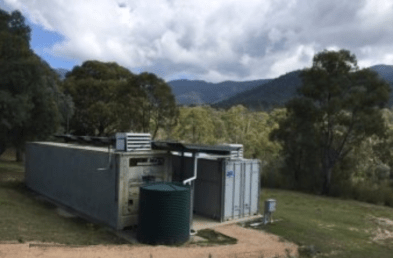
Captive breeding laboratories for the Northern Corroboree Frog at Tidbinbilla Reserve [3]
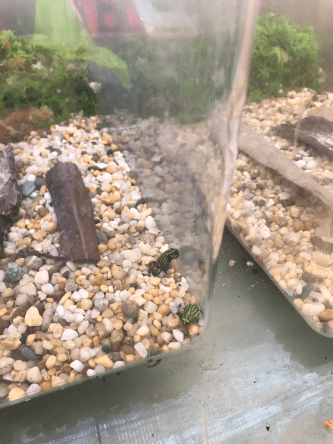
Image 4. Captive breeding enclosure for The Northern Corroboree Frog at Tidbinbilla Nature Reserve
Since the species takes 4-5 years to reach sexual maturity, only the 2011 release has successfully been monitored due to the identification of the male calling. The results showed an increase in the number of male calls that have been recorded over the past decade, showing that captive bred Northern Corroboree frogs are able to survive in the wild.
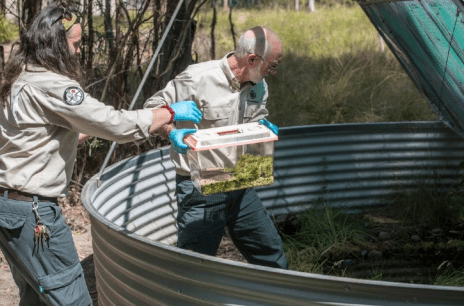
Wildlife officers Jennifer Pierson and Murray Evans delivering frogs into simulated habitat enclosure ponds before being released into their natural habitat [5]
By U6390013

 Biodiversity Conservation