
- Introduction and working site
I am very honor to attend the Friend of Mount Majura work experience, and thanks for the group of the Friend of Mount Majura (FoMM) people to work for this region. This post would be divided into four parties to display this working experience that working site, essential and challenges, working actives, and reflection. My work is Park Care in Mount Majura Nature Reserve(MMNR). The working site located at the East of the Fair, and northeast of Watson Woodland (Figure 1). I was working with the Friends of Mount Majura (FoMM), and we mainly work monitored and care for young plants.

Figure 1: The location of the Mount Majura Nature Reserve.
- Important and Challenges
The Mount Majura is a Box Gum Grassy Woodland, and it covers Eucalyptus melliodora (Yellow Box) and Eucalyptus Blakelyi (Red Gum) as the backbone species in the hill of this nature reserve. Notably, the Yellow Box has the historical and Indigenous value, and this species was declared as the endangered ecological community by Nature Conservation ACT in 1997. Regarding its environmental importance, it is the home for many fauna communities, such as birds, bats, invertebrates, dwelling or other arboreal mammals. However, many of the woody weeds growing in the Mount Majura nature reserve have escaped from Hackett gardens. Most of these species introduce plants that birds spread the seeds in their droppings after eating the fruits of plants invade the bushland (such as Privet, Cotoneaster, Firethorn and African Olive). Besides, large numbers of new trees seedlings have emerged across the landscape, which poses a potential threat to the Yellow Box conservation because these seedlings are Red Gums rather than Yellow Boxes. As a result, the absence of recruitment, isolated patches, dieback often occurs in some area which contributes to the declining condition of those trees (Gibbons and Boak, 2002). - Working activities (23th Aug and 15th Sept)
The first work was adding tree guards to the growing saplings, and the purpose of this behavior is to prevent grazing kangaroos and rabbits. After that, we laid wood chips on the woodland. This work would improve ecological function such as soil structure, permeability, bioactivity, and nutrient availability (Figure 2). Besides, using woody debris to create a zone to protect young plants. In Mount Majura, gazing of the rabbit is a significant problem in biodiversity losing since over-grazing rabbits damage the surface of the ground, which would cause soil erosion in this area. Besides, the impacts of grazing rabbits on environment cause competition with their native animals. Therefore, we enhance the number of branches to protect the seeding plant form animals. According to Waltraud’s speaking, branches are not only being fences to protect animals’ tracking, but also be brush piles. This is an ecological method to provides an open soil texture for invertebrates to occupy. Also, brush piles provide an excellent way to increase organic soil surface and composition. Brush piles contain nutrients and water to both the surrounding the Eucalyptus melliodora (Yellow Box) and Eucalyptus Blakelyi (Red Gum). The second week’s working is counting to work following first week’s work, and this week we mainly work are spread wood chip mulch across the bare ground and place woody debris around new national tree day plantings (Figure 3).
Figure 2: the activities of first work experiences.
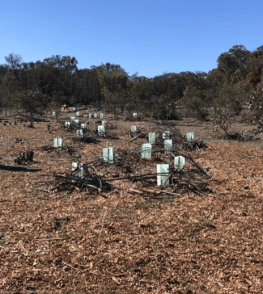
Figure 3: the activities of second work experiences
- Reflection
Friends of Mt Majura aims to restore the natural and cultural heritage of Mt Majura. FoMM work to rehabilitate some native species, which are influenced by kangaroos crushing. Waltraud (who is the leader of FoMM) pointed out the eastern grey kangaroo threatened to the growth of young plants. Kangaroos are present at most sites and can provide some reduction in the native grass biomass since it relative with dietary habits of the eastern grey kangaroo. Therefore, heavy grazing by kangaroos can threaten the livelihoods of other animals. Controlling kangaroo numbers may be necessary to help keep the balance and support a healthy ecosystem. Besides, FoMM work to protect cultural heritage. Mt Majura covered in a hard rock called “chert”, which protrudes from the soil surface. According to speaking with Waltraud, chert formed sharp shards when broken and was often used by aboriginal people to make tools. Therefore, FoMM conserves cultural heritage in Mt Majura.
This two week increased my knowledge to protect native Australian plants, and I know more resistance to conservation efforts such as kangaroos and rabbit grazing. During this work experience, I have some recommendations to manage Yellow Box because it is the endangered species. First, FoMM encourages more and more people to join monitoring plan, which would increase public awareness to protect the natural environment. Second, we research the genomic and phenotypic variation on seed sourcing. To ensure the success of the restoration project as it may predict the future climate, which helps the population of the Yellow Box may resilient to environmental change. Lastly, implement the process of strategic grazing management, exotic plants removing, and perennial grass biomass controlling. - Acknowledgement
I gratefully acknowledge the help from FoMM volunteers, and thanks for their efforts to restore the environment of Mt Majura. Finally, thanks again for Waltraud give me this opportunity to attend this project.
Student ID:u5971623
- Reference
1. Gibbons, P. & Boak, M. (2002). The value of paddock trees for regional conservation in an agricultural landscape. Ecological Management & Restoration, 3, 205-210.
2. Broadhurst, L.M. (2013). “A genetic analysis of scattered Yellow Box trees (Eucalyptus melliodora A.Cunn. ex Schauer, Myrtaceae) and their restored cohorts”, Biological Conservation, vol. 161, pp. 48-57.
3. CLARKE, P. J. (2002). Experiments on tree and shrub establishment in temperate grassy woodlands: seedling survival. Austral Ecology, 27, 606-615.
4. Supple, M. A., Bragg, J. G., Broadhurst, L. M., Nicotra, A. B., Byrne, M., Andrew, R. L.,Borevitz, J. O. (2018). Landscape genomic prediction for restoration of a Eucalyptus foundation species under climate change. eLife, 7, e31835

 Biodiversity Conservation