
I have recently developed a keen interest in the natural beauty of Tidbinbilla Nature Reserve, particularly through my treks up Gibraltar Peak with friends.
To further immerse myself in Tidbinbilla, I went ‘behind the scenes’ by doing some work experience with Ranger Sam for a day, and taking a dip into biodiversity conservation, focusing on invasive species and native species.
From pest invasive species…
I was first exposed to the invasive species management problem, specifically wild pigs (Sus scrofa) and European rabbits (Oryctolagus cuniculus). It was easy to spot the damage they had done to the landscape, with pig “rippings” visible in riparian areas (Photo 1), and damage to vegetation from three rabbits at the Historic Rock Valley Homestead (Photo 2).
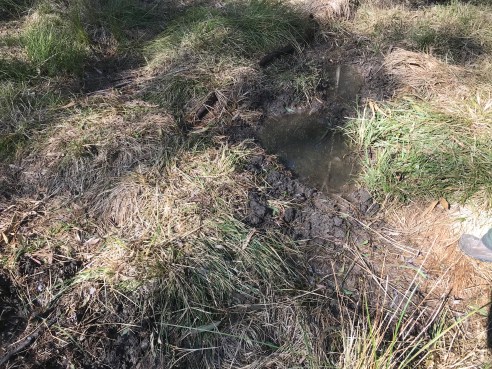
Photo 1: Pig rippings from wild pigs near a riverbank.

Photo 2: Rock Valley Homestead, where three European rabbits roam. Inset: a wildlife camera used to monitor the rabbits.
This experience further opened my eyes to how much damage invasive species can cause to nature reserves (especially being one of the largest drivers in native biodiversity decline), and the complexity of monitoring and removing them. Feral pigs have presented a widespread issue in Australia – in nearby Namadgi National Park, for example, pigs have damaged the native plant species richness there too. Studies quantifying the relationship between rabbit population density and vegetation damage show the complexity in controlling the rabbit populations.
…To treasured native species
To balance out the day, I was also exposed to our native captive animals by providing food for the koalas (Phascolarctos cinereus) and brush-tailed rock-wallabies (Petrogale penicillata) in their respective enclosures. I helped the wildlife officers cut off some gum branches for the koalas (Photo 3), and I learned they are quite fussy eaters, with preference for a select few eucalyptus species!

Photo 3: Up close and personal with two of the Tidbinbilla koalas in their enclosure.
Unfortunately, these two furry species are just some of our native fauna under threat. Nationally, koalas and brush-tailed rock-wallabies are listed as Vulnerable under the Environment Protection and Biodiversity Act 1999, meaning they face a high extinction risk in the wild, and need protection. Brush-tailed rock wallabies are threatened by invasive species and habitat degradation, and koalas are primarily threatened by habitat loss from development.
Protecting these native species can prove to be challenging, especially when faced with ongoing threats such as habitat loss and introduced predators. One challenge is understanding biological responses – one study showed that removal of eucalyptus trees and bushfires can increase physiological stress in koalas, which can contribute to population declines. Another challenge is determining the spatial scale required to determine species distributions for conservation purposes, such as demonstrated in a study on brush-tailed rock-wallabies. The breeding program at Tidbinbilla for the rock-wallaby is particularly important in helping protect this vulnerable species, with 70% of Australia’s captive population residing here.
Concluding remark
Overall, being able to observe in the field the invasive and threatened native species issues covered in my Biodiversity Conservation course at ANU has given me considerable insight into the ecological problems in Australia’s environment. The volunteering opportunities open to the public in our native reserves are great for educating the public about these issues too.
Further reading: https://www.tidbinbilla.act.gov.au/place/planning/plan-of-management
Kara Tedman (U5564341)

 Biodiversity Conservation