
On Wednesday mornings, for the past three weeks, I have been volunteering at the Greening Australia nursery, in Kubura Place, Aranda. They have a fairly small nursery, with large benches of various species of seedlings and a small green house. I have encountered various native plants, such as, Daviesia mimosoides, Microseris lanceolata and some native tussock grasses at their nursery. They also had a broad range of Eucalyptus seedlings, many of which, I have not encountered before.
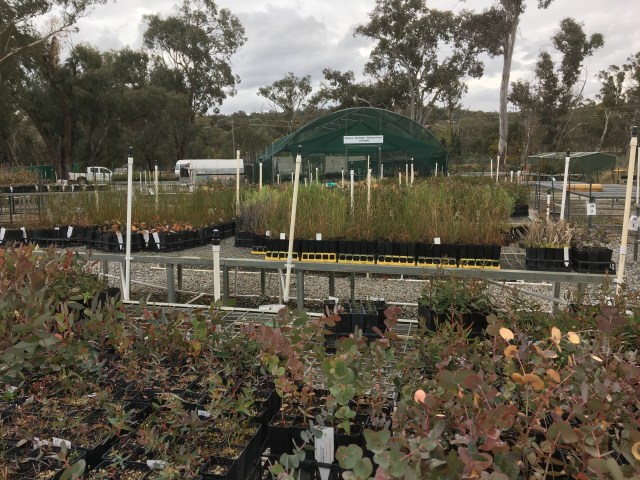
Figure 1. Nursery at Greening Australia, in Aranda
Every Wednesday, a list of task will be written on the white board for volunteers to carry out from 9.30am till 12.30pm. Majority of tasks consisted of weeding and consolidating pots of seedlings onto trays, that would eventually be planted, during their volunteer plantation day on Thursdays. Being a newbie at the nursery, weeding is a common task. However, some regular ‘green thumb’ volunteers are commonly involved in the repotting of seedlings and the administrative aspect. During weeding, we would also have to ensure that only one seedling is growing in each pot, to avoid root competition.
Though, there was no particular plant that I remember from the first week. It was exciting seeing the growth of the various seedlings, over the past three weeks. The average heights of all the seedlings have increased significantly. This change can be observed between Figure 2 and Figure 1 (which was taken on my third week there).
 Figure 2. My first Wednesday weeding at the Nursery. On the left is a bucket filled with weeds and on the right, is a tray of weeded out seedlings
Importance of Weed management
The importance of weed control has been widely acknowledged and practiced (Davies, 1985). Weeds commonly establish root competition with native plants. As for young trees, the competition for nutrients and moisture by invasive plants, can reduce their chances of survival and growth (Davies, 1985). The presence of weeds ultimately affects the soils ability to retain moisture (Davies, 1985). As such, the most effective way to manage weeds, as we have practiced at the nursery, is to eliminate the root competition (Davies, 1985).
Oddly enough, weeds are commonly the ones that look pretty but clearly, damaging to threatened biodiversity (Coutts-Smith and Downey, 2006). This is especially the case for Australia’s flora and fauna species, as over 400 listed species are largely threatened by weeds (Coutts-Smith and Downey, 2006). The Australian rangelands are highly susceptible to major changes in the composition of native plant species, which will consequently impact the country’s biodiversity (Grice, 2004). Hence, it is essential to monitor the impacts of weeds on biodiversity in the Australian rangelands, so as to develop weed management programmes that would be successful (Grice, 2004). The management of weeds has evidently developed into an economy as large investments are required to control these invasive plants and protect biodiversity (Sinden et al., 2004). Based on a traditional generalised invasion curve (Fleming et al., 2018), control and quarantine in the early stages of invasion is essential to avoid asset based protection of biodiversity, which would require consistent investment.
Reference List:
COUTTS-SMITH, A. & DOWNEY, P. O. 2006. Impact of weeds on threatened biodiversity in New South Wales, CRC for Australian Weed Management Adelaide.
DAVIES, R. 1985. The importance of weed control and the use of tree shelters for establishing broadleaved trees on grass-dominated sites in England. Forestry: An International Journal of Forest Research, 58, 167-180.
FLEMING, P. J., BALLARD, G., REID, N. C. & TRACEY, J. P. 2018. Invasive species and their impacts on agri-ecosystems: issues and solutions for restoring ecosystem processes. The Rangeland Journal, 39, 523-535.
GRICE, A. C. 2004. Weeds and the monitoring of biodiversity in Australian rangelands. Austral Ecology, 29, 51-58.
SINDEN, J., JONES, R., HESTER, S., ODOM, D., KALISCH, C., JAMES, R., CACHO, O. & GRIFFITH, G. 2004. The economic impact of weeds in Australia. Technical Series, 8.
Written by: U6125900

 Biodiversity Conservation
It’s great how you linked your volunteering with a broader issue. Phil