
This title is said by whales. They cannot speak human language but they are not silent.

Figure 1: a humpback whale. (Source: San Diego Zoo Animals)
Whales have lived on this planet for millions of years. They are all giant and living in the ocean away from human society. One species—the Blue Whale (Balaenoptera musculus)—is the biggest mammal that ever appears on the planet, which is even bigger than dinosaurs—the distinct “domination of the Earth” (Ruud, 1956)

Figure 2: comparisons of various species from the blue whale to human. (Source: Twitter)
Don’t be scared by the big guy. Actually, most of them relay on small plankton. In the past thousands of years, they lived peacefully with human beings until the Industrial Revolution. From then, people were able to go whaling on a large scale by advanced technology. They went to every corner of the world chasing whales. That began the nightmare of whales.
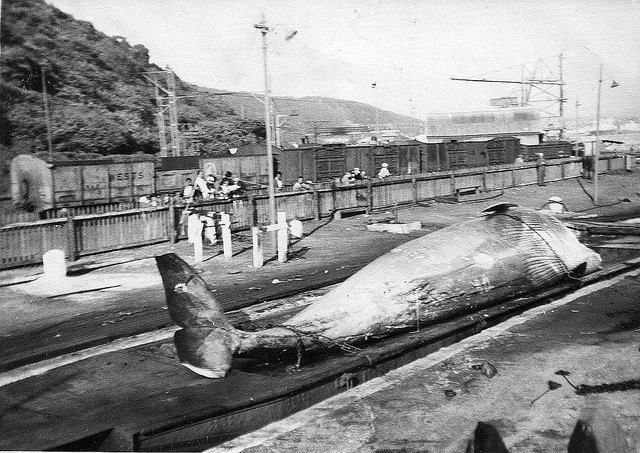
Figure 3: a “trophy” was transported by train. (Source: oneworld.org)
The industry of whaling developed rapidly since the 18th century. In late 1930’s, every year more than fifty thousand whales were killed (history of whaling, 2017). What behind the bloody killing was the great commercial profit. Megatons of meat, blubber and other parts of body were used to satisfy the demands of human beings. At the same time, the number of whales declined dramatically due to multiple artificial reasons. One of the direct reasons was overfishing; meanwhile, international trade promoted the global navigation development which damaged the habitats of whales. Therefore, in 1946, 15 nations signed the International Convention for the Regulation of Whaling in Washington, D.C. (International Whaling Commission, 1993). This agreement aimed to protect whales and stabilize the population of communities. However, they also wanted to continue the whale industry. Under that term, the International Whaling Commission (IWC) was established in the same year.

Figure 4: the logo of IWC. (Source:en.wikipedia.org)
Since then, the counterviews about commercial whaling were aroused. In 1982, a moratorium was issued by the IWC about commercial whaling. From 1986, the ban of commercial whaling officially went into effect. But some countries including Japan, Norway, Iceland, and Russia opposed this moratorium; some of them objected and kept whaling. Japan began to hunt whales under the cover of scientific research (Hirata, 2005). Often they departed from north to south hemisphere for whaling in the Southern Ocean. So, in 1994, the IWC founded the Southern Ocean Whale Sanctuary for protecting whale community in this area (Zacharias, Gerber, and Hyrenbach, 2006). But did the killing of whales stop there?
Unfortunately, the answer is “No”. Although most countries follow the rules, some counties still ignore the ban till now. According to a report on the official website of the International Fund for Animal Welfare (IFAW), Japan, Norway and Iceland are still “whale killers” 31 years later since the globally commercial whaling ban went into effect.
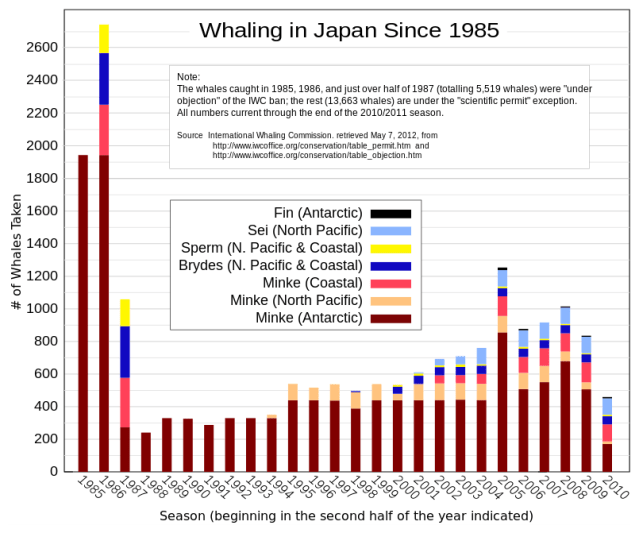
Chart 1: this chart indicated the species and number of whales killed by Japan since 1985. The number boosted in 1986 like the last frenzy. (Source: data from http://www.iwcoffice.org; modified by Grolltech)
Japan immediately implemented so called “scientific whaling projects” after knowing the moratorium by IWC. By using that excuse, 200 Minke whales, 50 Bryde’s whales, 100 Sei whales and 10 sperm whales were killed for “science” twice a year in the North Pacific. In the Southern Ocean Sanctuary, 935 Minke whales and 50 Fin whales were killed every year by Japan. After the illegal whaling, the meat of whales will be sold on markets and some even given to schools and hospitals for free (IFAW, 2017). Many countries including Australia publicly oppose this anti-nature behaviour. In 2014, the World Count judged that Japan must stop whaling in the case by Australia against Japan (IFAW, 2014). However, Japanese continue illegal “scientific” whaling till now.

Figure 5: the news reported by the Australian Broadcasting Corporation (ABC) showed that Japan were still killing Minke whales on March, 2017. (Source: ABC News, 2017)
At the same time, just like Japan, Norway and Iceland are doing illegal hunting. The data shows that in 2010, 148 endangered Fin whales were killed by Icelandic whalers (IFAW, 2017). People there claimed that whales around their sea area threatened local fisheries and ecosystems. But this point did not receive supports from scientists. Meanwhile, local people began to object killing of whales.
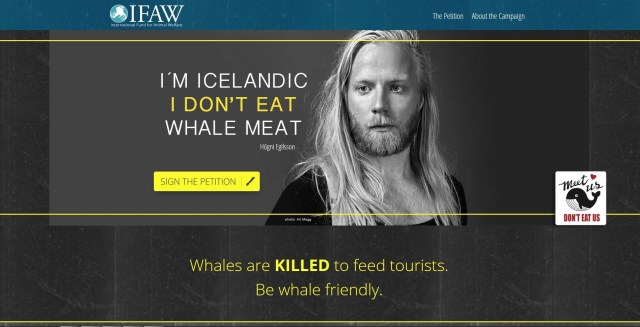
Figure 6: an Icelandic publicly objected to eat whale meat. (Source: IFAW, 2017)
Tourism about whaling is one driver of whale hunting (see figure above). Therefore, many people appeal to develop whale watching instead of killing. Whale watching as a tool to attract tourists has existed for decades. Only in 2008, the global gross values produced by whale watching were up to 2.1 billion US dollars. Whale watching develops rapidly in recent years due to its enormous economic benefits. But, new problems accompany with that. On the 2014 International Marine Conservation Congress (IMCC), a report showed that whale watching influenced the behaviours of whales and increased the number of death caused by collision (Cressey, 2014). Some species of whales are highly sensitive about human disturbances. Researchers are worried about the consequences brought by “Ecotourism”. However, the whale watching is at least better than hunting.
Lack of conservation, over-fishing, and climate change, etc. all exacerbate the habitats of whales. Whales are facing a powerful enemy—whaling fleet. If they cannot get help, they may disappear from this planet forever in the close future. Don’t let these beautiful creatures die out in our generation. It is time to stop killing.
References:
Cressey, D., 2014. Ecotourism rise hits whales. Nature, 512(7515), p.358.
Hirata, K., 2005. Why Japan supports whaling. Journal of International Wildlife Law & Policy, 8(2-3), pp.129-149.
International Whaling Commission, 1993. International Convention for the regulation of whaling, 1946.
O’Connor, S., Campbell, R., Cortez, H. and Knowles, T., 2009. Whale Watching Worldwide: tourism numbers, expenditures and expanding economic benefits, a special report from the International Fund for Animal Welfare. Yarmouth MA, USA, prepared by Economists at Large, 228.
Ruud, J.T., 1956. The blue whale. Scientific American, 195(6), pp.46-51.
Zacharias, M.A., Gerber, L.R. and Hyrenbach, K.D., 2006. Review of the Southern Ocean Sanctuary: marine protected areas in the context of the International Whaling Commission Sanctuary Programme. Journal of Cetacean Research and Management, 8(1), p.1.
http://www.whalefacts.org/history-of-whaling/
http://www.ifaw.org/united-states/our-work/whales/which-countries-are-still-whaling
U6132486
Yuying Zhao

 Biodiversity Conservation
It’s great to know some knowledge about the humpback whale!