
Alexander Pecenko (u5333012)
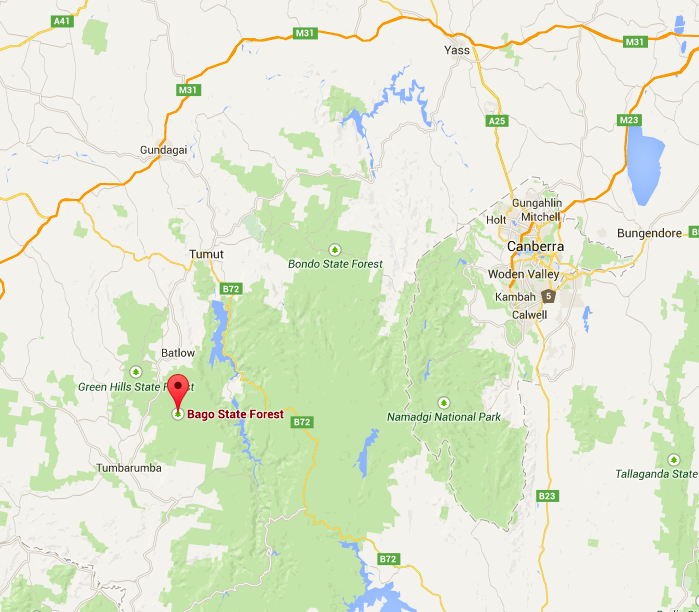
My work experience for the ENVS3039 Biodiversity Conservation course (4–7 April 2015) involved assisting Dr Heather Kieth with data collection at Bago State Forest, NSW, for research of the forest’s carbon cycle (more information here).
|
|
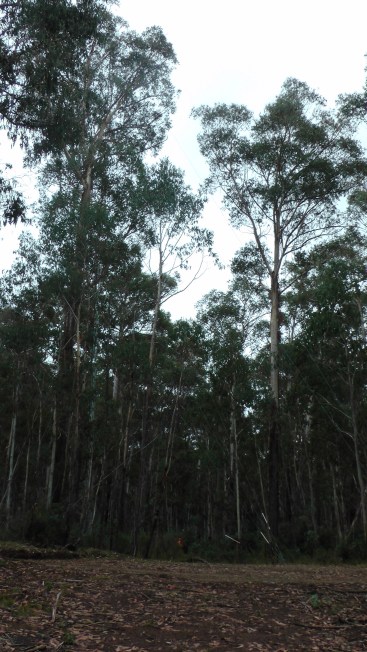 Vertical profile of Bago State Forest (Photo credit: author) Vertical profile of Bago State Forest (Photo credit: author) |
The fieldwork had three primary aims: (1) assessing the subordinate (i.e. undergrowth) vegetation; (2) recording and tagging woody seedlings; and (3) determining the state of the coarse woody debris. The fieldwork was carried out on a one hectare plot, demarcated by 110 pegs (Grid Point Map).

|
Subordinate vegetation
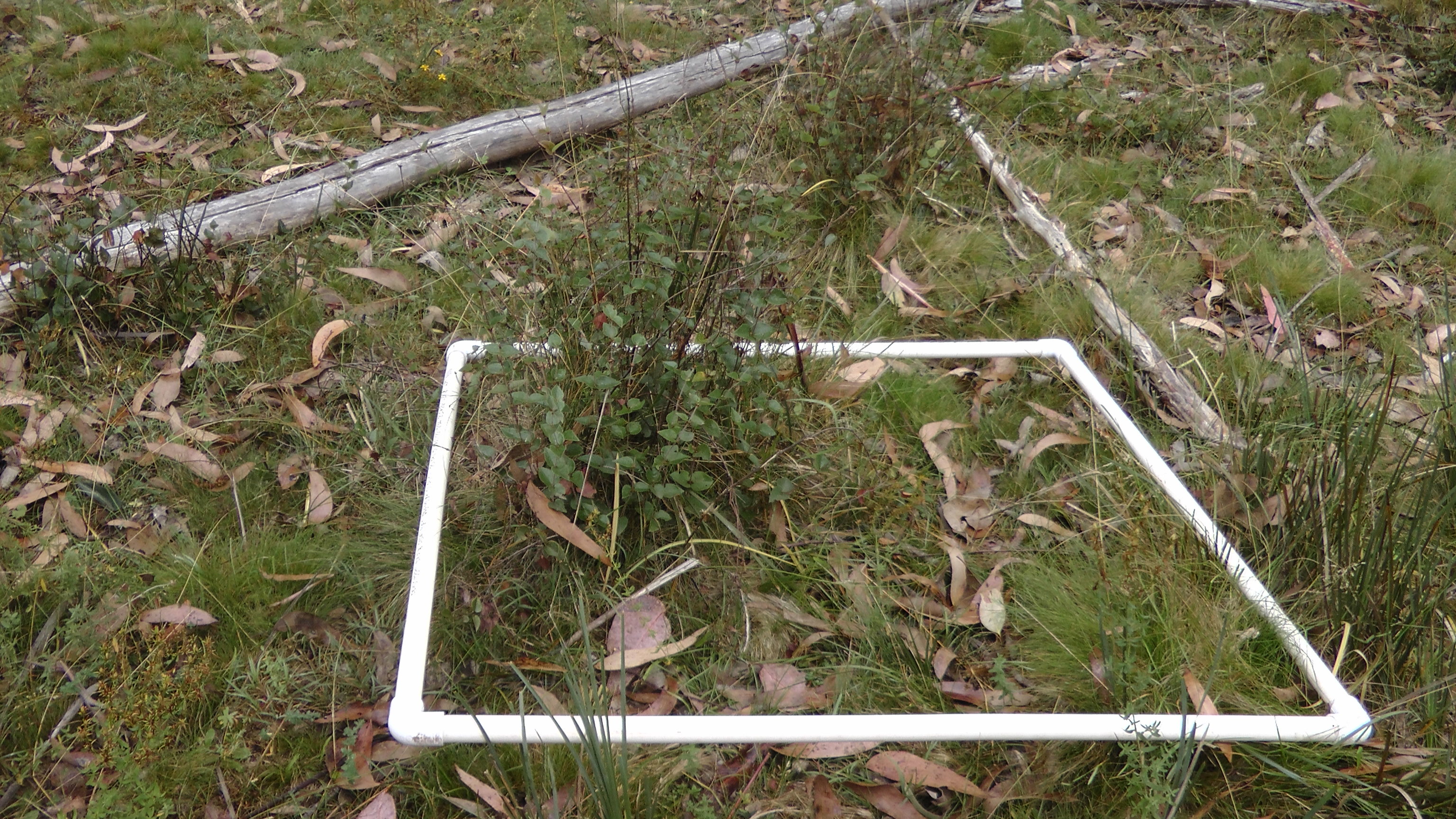
We assessed along six transects (Grid Point Map), at 10 m intervals, the subordinate vegetation cover within 1 m2 quadrats.
|
We estimated and recorded the types of vegetation ground cover. Most plants were known; the samples of those not recognised were collected for later identification.
Woody seedling
All woody seedlings in six 20 m transects (Grid Point Map) were tagged. I prepared the transects and recorded the species of seedlings, their heights and positions.

|

|
Having anticipated that a lush forest would harbour a wide range of undergrowth species, I was surprised by their low diversity: there were predominantly only three types of shrubs (Mountain pepper, Coffee berry, Handsome flat-pea).
Woody debris
The coarse woody debris on ten 60 m transects was assessed: I measured the diameter of the logs crossing the transects, and determined their state of decay.

|
I learned how to distinguish, by sight, the standard five log decay classes, and estimated the percentage of void (hollow). I had expected more accurate measurement methods, however, I learned that estimation by sight is the most feasible one (more information here).
Reflections
Witnessing the extensive logging of Bago State Forest, I became strongly aware that sustainable management of these habitats is vital to maximise their ecosystem services and biodiversity.

|
 Commercial harvesting of Eucalyptus delegatensis and E. dalrympleana (Photo credit: author) Commercial harvesting of Eucalyptus delegatensis and E. dalrympleana (Photo credit: author) |
The vegetation data collected during this fieldwork will be used to determine the interactions in carbon exchange among the soil, live and dead plant matter, and atmosphere. This research is important for better understanding of the implications of climate change.
The fieldwork was a very fascinating and enjoyable experience where I observed first-hand how scientific research is carried out. Throughout the four days it rained a lot and hence, a positive attitude, dedication, a good sense of humour, and wet weather gear were vital for making the fieldwork a success and fun.

 Biodiversity Conservation
Thanks Alexander. This is interesting research. Yes, some of our field techniques are not sophisticated, but sometimes a more complicated alternative is not worth the effort for the marginal gain in information. I’m keen to hear more about the area of knowledge that this research seeks to inform. Cheers, Phil