
Heading out to Mount Majura for the first time, I was quite nervous. I had been there before, when I was little (apparently, I cannot remember), but nothing in the landscape looked familiar. Suddenly I had a feeling of déjà vu and realised we had been quite close on one of the biodiversity conservation field trips, so at least I had some idea where I was.
Arriving early as I nearly always do, I waited at the entrance, apprehension again rising. However, as the time ticked by, the nervousness began to settle, other biodiversity students began to arrive. The day was cold and cloudy; rain threatening in the distance, a few of us checked our phones, to make sure the activity was still going ahead….
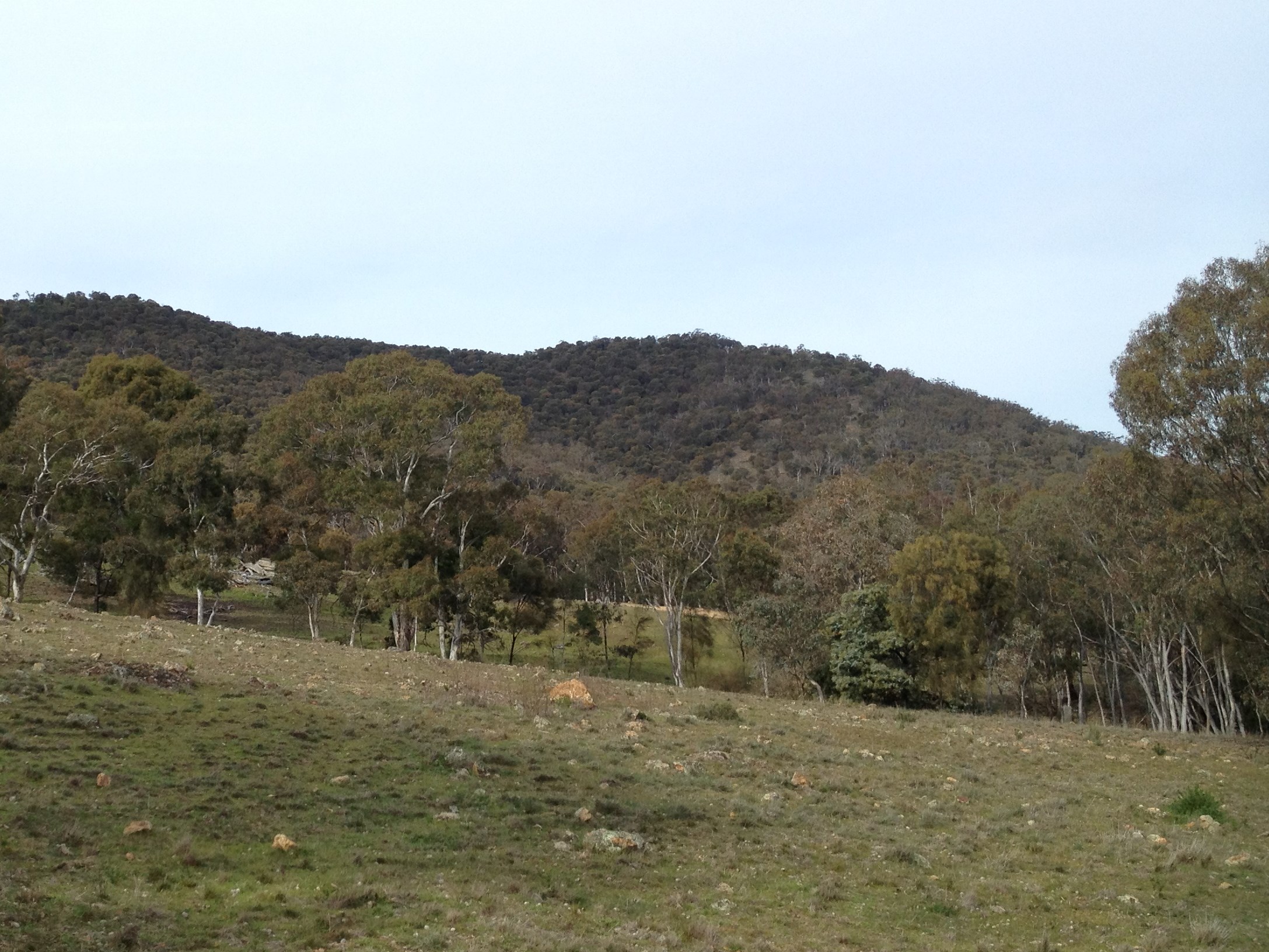
Landscape around Mount Majura
Mount Majura is a reserve is located on the outskirts of Canberra. It is an area of grassy woodlands and includes some areas of the critically endangered Yellow Box-Red Gum Grassy Woodland.
The Friends of Mount Majura aim to improve the site, but complete restoration is impossible, as it not known what species were on the site originally. I helped with two of their main projects, tree planting and removal of woody weeds.
One of the main problems in the reserve is the presence of introduced weeds. Woody weeds are often removed using a cut and spray approach. Weeds are cut as near to the base as possible and then quickly sprayed with herbicide (Roundup), before the plant has time to activate its defence. A pink dye is added to the spray to make it easier to see where you have sprayed. In larger trees, a process known as frilling is undertaken. Frilling is similar to ring barking, with small cuts being made right around the base of the tree; herbicide is then sprayed into these cuts.
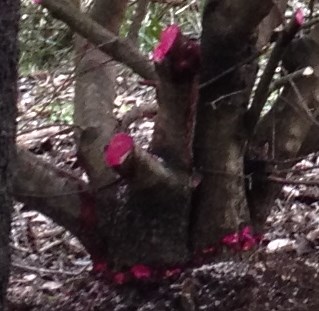
Frilling on a woody weed
Some of the weeds are Australian species, which are not native to the area, such as Cootamundra wattle (Acacia baileyana), which out competes native wattles, such as sliver wattle (Acacia dealbata).
The removal of woody weeds usually leads to a succession of leafy weeds, such as Patterson’s Curse (Echium plantagineum).
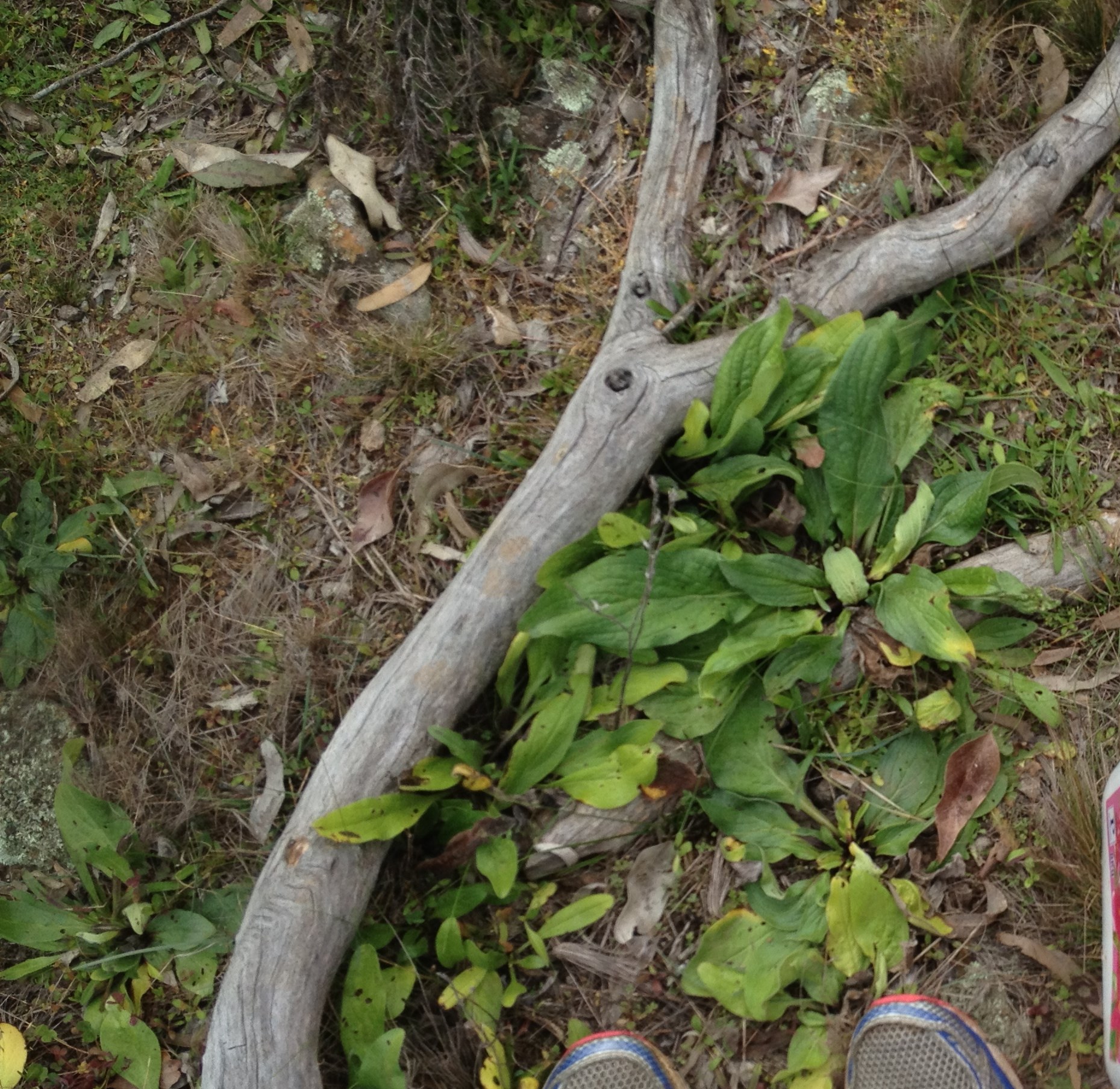
Patterson’s Curse (Echium plantagineum)
Once the weeds are removed, the area is revegetated with by planting of species that are thought to be native to the area including sliver wattle and Apple Box (Eucalyptus bridgesiana).
Care is taken to try to maximum the chance that each seedling survives. We placed water crystals in the hole to help maintain water supply to the growing seedling. The seedlings were then surrounded by newspaper and woodchips to prevent weeds coming up. Each seedling was then protected with a tree guard which is held in place by wooden stakes.

Seedling, with guard and newspaper before planting
The tree guard is not enough, to prevent grazing by kangaroos. So we placed woody debris from dead Cootamundra Wattle around the tree guard to try to prevent kangaroo access.
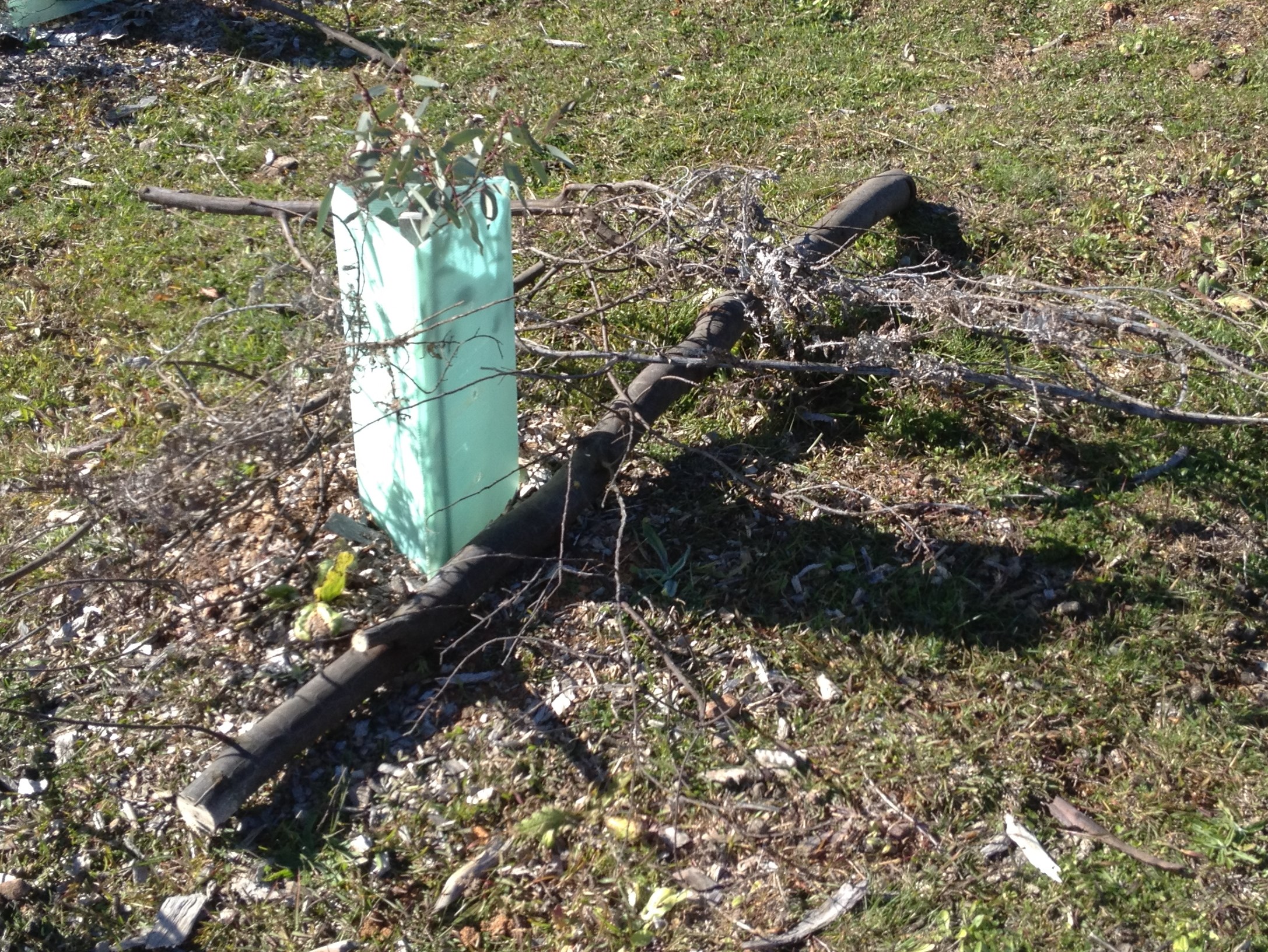
Woody debris protecting seedling
My apprehension about volunteering was unjustified; volunteering was a really enjoyable experience. It was a nice atmosphere, you do it at your own pace and people were always happy to share their knowledge.
Tegolin Spink

 Biodiversity Conservation
Thanks Tegolin for this insight to volunteering with FOMM and their restoration efforts. Phil