
Hong Kong was originally covered in tall and dense rainforest rich in species with the only clearings being cliffs and beaches. Previously there were definitely tigers, leopards and there is also evidence of elephants, rhinos and gibbons (1). As the islands have long coastlines and rugged topography there is a diverse range of natural ecosystems in a small area ranging from coral reefs to mangrove forests and high altitude forests. There are now man made habitats such as fire maintained hillside grasslands that are quite species poor and freshwater wetlands formed from abandoned rice fields which house many diverse species.
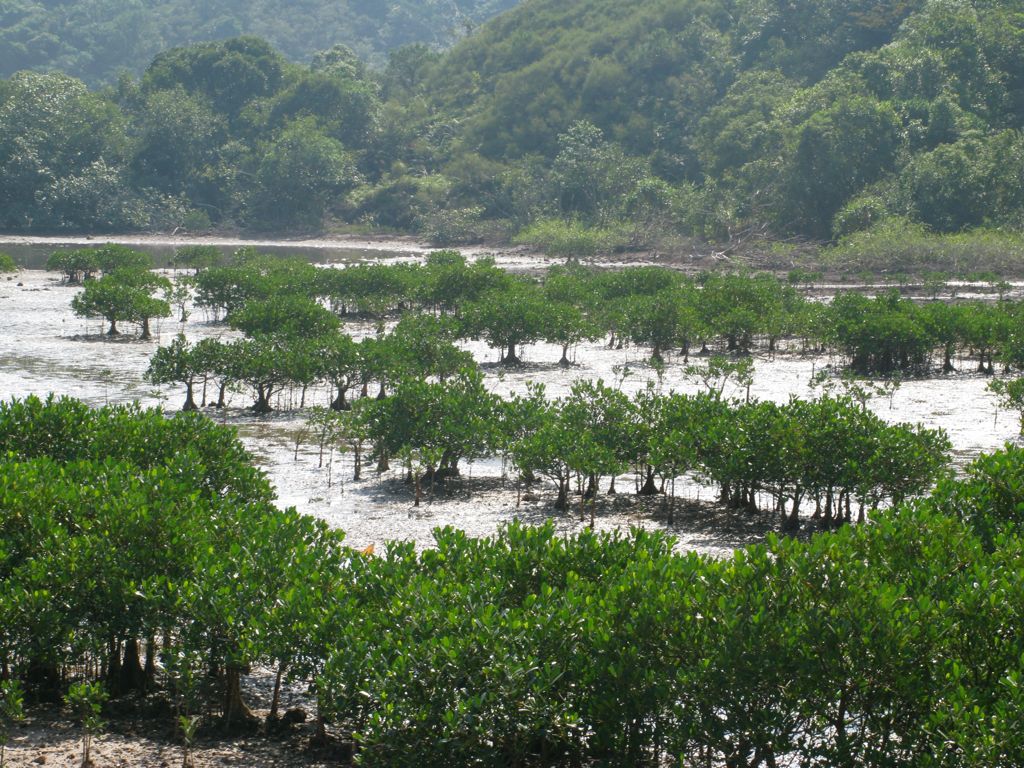
Figure 1: Mangroves in Sai Kung
Several centuries of human impact
- Deforestation and erosion
- Burning not natural in this system
- Hunting of larger animals
- Constant expansion and growth of urban areas that are not suitable for wildlife habitation
- Commercial and industrial waste dumping is now a huge problem
There has been return from fire controlled grassland to more natural shrub and secondary forests. Also 40% of Hong Kong’s land is country parks and most high altitude areas are unaffected by humans (2). There are healthy remnants of each ecosystem but all environments are in danger from development.
The diversity
There has been very few recorded extinctions in the last 150 years, probably as only the resilient species are left. Its an immensely diverse place, although being 200 times smaller than the United Kingdom there are more species in every group of animal (Table 1).

Table 1: Numbers of species recored in Hong Kong (1100km2) and the United Kingdom (244000km2) for various animal groups
Endemic species
Romer’s frog, Hong Kong paradise fish, many wild orchids and the Hong Kong asarum
Endangered species
Three banded box terrapin, the black faced spoonbill and the Hong Kong rhododendron
Mai Po wetland is a major resting spot for over 30 000 migratory birds in flight from Siberia to Australia each year. It is a perfect habitat with marshes, mangroves and connected ponds containing fish and shrimp. There have been 24 endangered species seen in the area at once and previously 200 black faced spoon bills have been seen simultaneously, a quarter of the global population (3).

Figure 2: Black faced spoonbills, one of Hong Kong’s most endangered residents
Hong Kong’s oceans are affected by warm and cold sea currents therefore around 1000 species of tropical and temperate fish, Chinese white dolphins and over 80 hard coral species are present (1). Populations maybe decreasing rapidly as scientists are predicting a collapse in the marine system due to unsustainable fishing practices, inadequate regulation and marine protected areas which have shown no improvement after 10 years. Fish stocks are looking extremely low because of no regulations on fishing licenses, quota or methods.
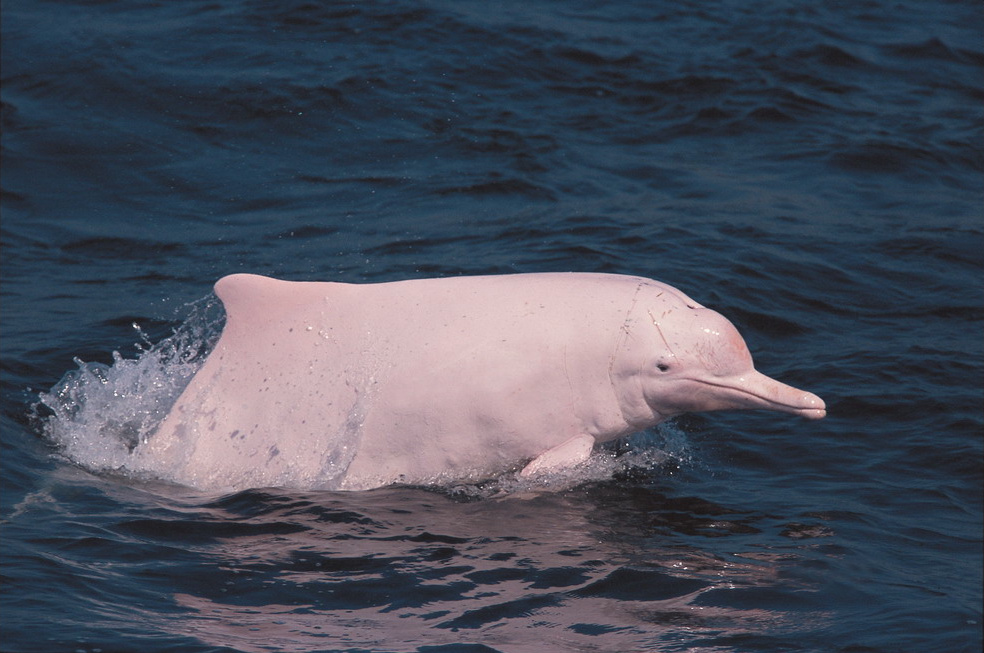
Figure 3: A Chinese white dolphin swimming near the shore
An attitude problem
- Land is extremely rare and economic incentives must be offered
- Both the government and public think that the owner of land has the right to make as much profit possible from their investment
- People won’t admit that the largest problem is habitat degradation
- Public awareness of biodiversity conservation is inadequate – proactive educational programs on conservation for children would help
By living in Hong Kong all through my teens I have learnt to appreciate the diverse animals and unique landscape. Though I do hope to see a change from development always trumping conservation.
Sophie Acton
References
(1) Courlett, R. T. “Sustainability and Biodiversity Conservation in Hong Kong.”Sustainable Development in Hong Kong. Hong Kong: Hong Kong UP, n.d. N. pag. Print.
(2) Mottershead, T. “Sustainable Development in Hong Kong – A Road Yet To Be Travelled?” Singapore Journal of International & Comparative Law 6 (2002): 809-54. Web
(3) “Conservation: Marine.” WWF – Hong Kong. http://www.wwf.org.hk/en/whatwedo/conservation/marine/ WWF, 01 Sept. 2011. Web. 10 May 2013.

 Biodiversity Conservation
I guessed early while reading this that you must’ve lived in Hong Kong. It’s great to read about these places that most Australians identify for other reasons.